


If you plan to visit the Fongshan area by taking the Kaohsiung Metro to Fongshan station, your first port of call should be the Fongyi Academy. Steeped in history and literature and situated within the old Qing Dynasty-era Fongshan City, Fongyi Academy was where young Qing Dynasty-era students went to receive an education. The academy also served as an examination hall and was the highest seat of learning in southern Taiwan at the time.
Following a five-year-long restoration, the academy reopened to the public on Nov. 1, 2014. Visitors to the academy should first take a moment to admire the beautiful architecture. The academy is arranged around three interconnecting courtyards which house an entrance gate, lecture room and hall, while the left and right sides house student dormitories.
To ensure that visiting an old building is not a dull experience, adorable molded statues have been placed in many spaces in order to return the building to its original historic setting and recreate the appearance of old Fongshan. Weary travelers can sit in one of the former students’ dormitories and order a cup of tea and light snacks.
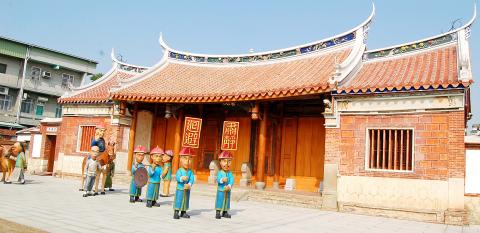
Photo: Chen Wen-chan, Liberty Times
照片:自由時報記者陳文嬋
(Liberty Times, translated by Edward Jones)
搭捷運玩鳳山的首站,就先從充滿歷史、書香氣息的鳳儀書院開始。在清朝的鳳山古城內,鳳儀書院乃是當時學童求學的教室和考場,可說是當時南部地區的最高學府。
歷經五年整修後,二○一四年十一月一日重新開放,參觀就從其建築之美看起,前後共三進式的書院格局,包括頭門、講堂、廳堂,左右側還分別設有學生宿舍。
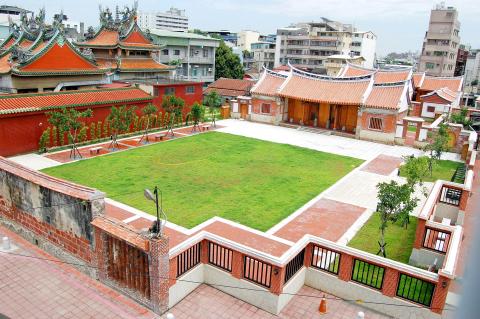
Photo: Chen Wen-chan, Liberty Times
照片:自由時報記者陳文嬋
為了不讓參觀傳統建築過於單調,多處空間還擺設了可愛的塑像群,還原當時的歷史場景及重現鳳山老面貌,逛累了還可坐在學舍內點些茶飲和茶點。
(自由時報記者黃文茹)
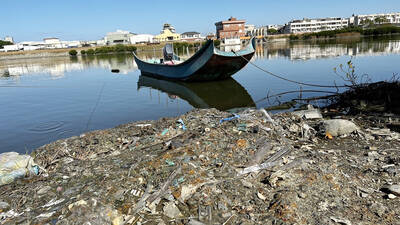
Many consumers are guilty of filling drawers or closets with old laptops, cellphones, fitness trackers and other electronic devices once they are no longer needed. It’s hard to know where to recycle such items, or it seems costly and inconvenient to do so. The world generates millions of tons of electronic waste — also called e-waste — each year. According to the UN’s most recent estimate, people worldwide produced 62 million metric tons of e-waste in 2022, and only about 22 percent of it was properly recycled. The US’ Environmental Protection Agency estimates that less than a quarter of e-waste is

You’re sitting in class when a classmate asks to borrow a pencil. It seems like a small favor, so you agree without hesitation. The following week, the same classmate asks to share your notes. Later, they request help with a group project. You agree each time — after all, you helped out the first time — but before you know it, it has become automatic. This scenario demonstrates the “foot-in-the-door technique,” a psychological concept that shows how agreeing to small, acceptable demands makes it easier to accept larger ones later on. The name for this strategy comes from door-to-door

A: The four-day Tomb Sweeping Day long weekend begins Friday and will run until Monday. Are you going to sweep your ancestors’ tombs? B: I did in advance last weekend, so I can go to Kaohsiung to see the musical “The Phantom of the Opera.” A: Wow, is “Phantom” touring Taiwan again? It debuted in 1986, so this year marks the 40th anniversary of the show. B: And it’s not just touring Kaohsiung starting March 31, but also Taipei starting April 21 and Taichung starting May 26. A: “Phantom” is one of the world’s Four Major Musicals. I’ve seen all of them, except “Les

Continued from yesterday(延續自昨日) https://www.taipeitimes.com/News/lang Gig Tripping “Gig tripping” combines concerts with travel. People fly to see their favorite artists perform — usually abroad—and spend a few days sightseeing before or after the show. While die-hard fans have done this since the 1960s, the post-pandemic travel boom changed the game. Even people who aren’t superfans are now booking international concert trips because they want to make the most of travel opportunities. This trend exploded in the US, as the math makes sense. Domestic concert tickets are so costly that flying abroad for the show plus tourism expenses often matches or even beats the price


 RSS
RSS