


SpaceX, an American aerospace manufacturer and space transport company founded by entrepreneur Elon Musk, did something on March 30 that really hadn’t been done before: launch a cheaper, partially-used rocket into orbit.
That may be a stride toward slashing the price tag of sending payload to space. For Musk, successfully flying reusable rockets is a crucial step toward his dream of sending people to Mars.
The rocket, carrying a telecommunications satellite, launched from the Kennedy Space Center in Florida.
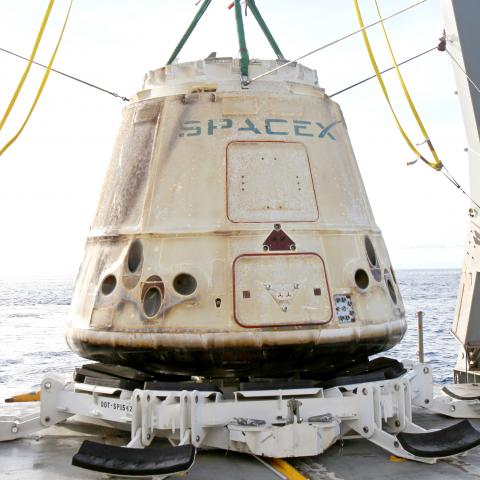
Photo: EPA
照片:歐新社
Until now, rockets have almost all been single-use. Once the fuel is expended, a rocket stage plummets to Earth, a quick demise for a complex machine that cost tens of millions of dollars to build.
Musk has likened that to scrapping a 747 jet after one flight, which would make air travel impossibly expensive.
He has suggested that rocket launches could eventually be much cheaper since the cost of the rocket propellants are less than 1 percent of the full-price ticket for a launch. So, if a rocket could be simply refueled like a jetliner for another flight, the cost of space travel could drop to a fraction of what it is now.
The stresses of spaceflight on reused boosters, however, are much greater than those on jetliners. The economics will depend on how many times a booster can be flown, and how much the individual expense will be to refurbish the booster — and particularly the engines — each time.
Reusable spaceships are not a new idea. NASA’s space shuttles were the first real attempt at a reusable spaceship, but the shuttles proved more delicate than hoped, requiring an army of technicians to refurbish them between flights. As a result, they ended up being more expensive, not cheaper, than expendable rockets — close to half a billion dollars a flight.
SpaceX’s next launch for NASA, a cargo mission currently scheduled for May, will continue the reusability theme. The rocket will be entirely new, but the mission will reuse one of the capsules from one of the earlier cargo runs.
This article is an edited version of a piece that originally appeared in the New York Times
(Kenneth Chang, New York Times)
由企業家伊隆‧馬斯克所創設的SpaceX航太製造商暨太空運輸公司,在三月三十日完成了一項創舉,將一枚價格較低廉的半二手火箭發射進入軌道。
此舉有希望大幅減低太空酬載價格。對於夢想送人類上火星的馬斯克而言,成功地讓使用過的火箭再度啟航是一項關鍵進展。
這枚火箭搭載了一個通訊衛星,由美國佛羅里達州甘迺迪太空中心發射。
在此之前,火箭幾乎都是單次使用的。一旦燃料耗盡,火箭節墜落回地球,一個造價幾百萬美金的複雜機具就這樣迅速報銷了。
馬斯克把這比喻為一架七四七噴射機只飛過一次,就被報廢了,這會使搭飛機超乎想像地昂貴。
馬斯克認為未來的火箭發射會便宜許多,因為火箭推進燃料的成本其實不到發射一次的花費的百分之一。因此,如果火箭能像噴射客機一樣只需補充燃料便可再度飛行,太空航行的成本就會遠低於現在。
但噴射客機所需承受的壓力遠遠比不上太空航行對推進器產生的耗損。其經濟性端視推進器可重複使用的次數,以及每次整修所需的花費,尤其是每一次的引擎整修。
其實,太空船的重複使用並不是什麼新概念。美國太空總署的太空梭即為首次實際嘗試重複使用的太空船,但實飛結果發現,太空梭比預期中脆弱,每次飛行後都需要大批技術人員來整修,每次航行要五億美元,最後反而比消耗性火箭還要昂貴得多。
SpaceX下次為太空總署發射火箭是執行一項載運任務,目前時程訂在五月,會繼續追求重複使用機具的目標。該任務將使用全新的火箭,並搭配先前的載運任務所使用過的太空艙。
本文為編輯後的版本,英文原文已於紐約時報刊登。
(台北時報編譯林俐凱譯)
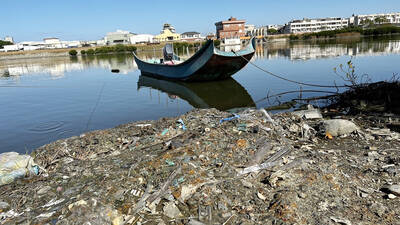
Many consumers are guilty of filling drawers or closets with old laptops, cellphones, fitness trackers and other electronic devices once they are no longer needed. It’s hard to know where to recycle such items, or it seems costly and inconvenient to do so. The world generates millions of tons of electronic waste — also called e-waste — each year. According to the UN’s most recent estimate, people worldwide produced 62 million metric tons of e-waste in 2022, and only about 22 percent of it was properly recycled. The US’ Environmental Protection Agency estimates that less than a quarter of e-waste is
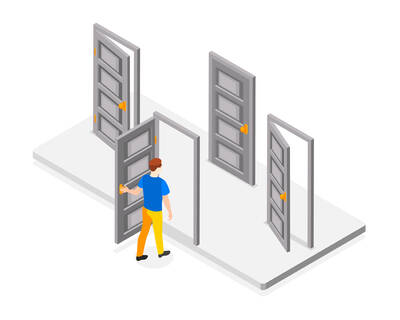
You’re sitting in class when a classmate asks to borrow a pencil. It seems like a small favor, so you agree without hesitation. The following week, the same classmate asks to share your notes. Later, they request help with a group project. You agree each time — after all, you helped out the first time — but before you know it, it has become automatic. This scenario demonstrates the “foot-in-the-door technique,” a psychological concept that shows how agreeing to small, acceptable demands makes it easier to accept larger ones later on. The name for this strategy comes from door-to-door

A: The four-day Tomb Sweeping Day long weekend begins Friday and will run until Monday. Are you going to sweep your ancestors’ tombs? B: I did in advance last weekend, so I can go to Kaohsiung to see the musical “The Phantom of the Opera.” A: Wow, is “Phantom” touring Taiwan again? It debuted in 1986, so this year marks the 40th anniversary of the show. B: And it’s not just touring Kaohsiung starting March 31, but also Taipei starting April 21 and Taichung starting May 26. A: “Phantom” is one of the world’s Four Major Musicals. I’ve seen all of them, except “Les

Dos & Don’ts — 想想看,這句話英語該怎麼說? 1. 我們很早到達電影院。 ˇ We arrived at the theater very early. χ We arrived the theater very early. 註︰arrive 為不及物動詞,後面如果有受詞要用 at 或 in。例如:They arrived in Taipei yesterday.。一般大地方,如國家、省、大城市等前面用 in,凡小地方城鎮、學校等則用 at。 2. 開車半小時以後,我們到達了海灘。 ˇ After half an hour’s drive, we got to the beach. χ After half an hour’s drive, we got the beach. 註︰come, go, get(來、去、到達)某地時,在表示地點的名詞前面應該用 to,如 go to school, go to Taipei, come to Shanghai 等。如果這些動詞後面所跟的是 here, there, home 等副詞,則不用 to。 3. 明天我會回辦公室。 ˇ I will be back in the office tomorrow. χ I will be back to office tomorrow. 註︰to be back 一語裡的 back 是副詞,不是介詞,所以後面要用 at (the market) 或 in (the office)。 假如假期結束,要回學校上課了則可說: ? Kids will be back


 RSS
RSS