


The Taiwanese artist Chen Cheng-po was born in Chiayi in 1895, the year China ceded Taiwan to Japan in the Treaty of Shiminoseki. During the period of Japanese rule, Western-style education and exhibitions were introduced into Taiwan by its new colonial masters, and oil painting, sculpture and the traditional Japanese nihonga style were to gradually replace the Chinese literati ink painting style that had held sway through the Ming and Qing dynasties.
Chen studied under Kinichiro Ishikawa in the painting division of the Taiwan Governor-General’s Language School — present day University of Taipei and National Taipei University of Education — before going on to graduate from the Tokyo School of Fine Arts, now Tokyo University of the Arts. From there he went to Shanghai to teach art, finally returning to live in Taiwan, forced to leave during the wave of anti-Japanese sentiment in China that resulted from the Shanghai Incident. Chen’s travels between China, Taiwan and Japan allowed him to explore and synthesize Chinese and Western elements, and he was to become a major figure in the Taiwanese art movement.
Academic oil painting at that time was very much influenced by the French Impressionists, with their emphasis on painting en plein air and rendering scenes with an accurate depiction of natural light. Chen pushed his art beyond the rigorous academic training he had received, opting for a naive style and seemingly unstudied rendering of perspective to create space, imparting his works with a unique energy, dynamism and emotional weight.
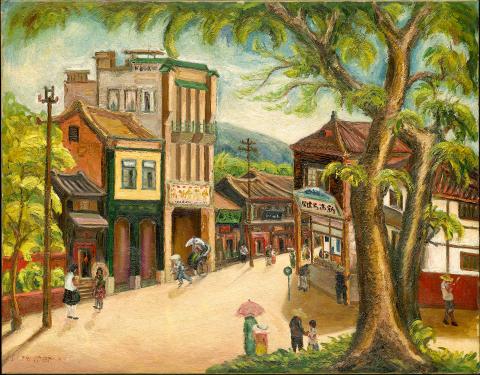
Photo courtesy of the Chen Cheng-po Cultural Foundation
圖片:陳澄波文化基金會提供
This painting, named Chiayi Street Scene and painted by Chen in 1934, depicts, in his unique rich palette and artistic voice, the place of his birth. Southern Taiwan’s bright sunlight bounces off the yellows of the ground, providing a contrast with the lush leaves and branches of the foreground trees. Passersby shield themselves under straw hats or parasols against the harsh sun beating down on them and the buildings lining the streets on which they walk, casting stark shadows on the ground below. This seemingly random street scene effortlessly presents life lived by ordinary people of the time, from their attire to the rickshaws to the appearance of the neighborhood itself, with the store signs, the new year couplets and the telegraph poles, and the Western-style buildings side-by-side with roofs in the southern Chinese architectural style providing further visual interest.
World War II ended, the Japanese surrendered, and the Chinese Nationalist (KMT) government assumed control over Taiwan. Chen, like many others among the Taiwanese elite, welcomed them in. Then, in 1947, came what was to become known as the 228 Incident. Chen was arrested by KMT government forces, taken into the streets of Chiayi, and summarily executed.
(Translated by Paul Cooper, Taipei Times)
台灣前輩畫家陳澄波在一八九五年出生於台灣嘉義,亦即甲午戰爭後中國將台灣割讓予日本的馬關條約簽訂之同年。日治時期經由日本引進西式學院教育及展覽體制,使油畫、雕塑、膠彩畫等媒材逐漸取代明清以降之文人水墨畫而成為學院主流。
陳澄波於台灣總督府國語學校(為台北市立大學及國立台北教育大學之前身)就讀期間師事石川欽一郎,畢業後於一九二四年考入東京美術學校,學成後舉家遷至上海擔任美術教授,一九三三年因中日一二八事變後之中國反日浪潮而返台定居。陳澄波穿梭於兩岸及日本,在風格上勇於探索、融會中西,而為台灣美術運動的重要人物。
當時學院的油畫風格源自法國的印象派,注重戶外寫生,在自然的光線下捕捉真實的光影。陳澄波經歷嚴謹的學院訓練而超越之,選擇以「素人」般的樸拙粗獷,以及古樸的透視法營造空間,使其作品充滿了特有的活力、動態與熱情。
本幅油畫《嘉義街景》為陳澄波先生於一九三四年繪製之作品,以他特有的濃郁色彩與熱情,來描繪其故鄉嘉義。亮黃色的土地反射南台灣的艷陽,與畫面近景枝葉森然的大樹形成對比。熾烈的陽光在地上投出人與建物鮮明的影子,路上行人或撐傘,或戴斗笠以遮陽。這看似尋常隨意一瞥的場景,非常自然地呈現了當時的庶民生活,包括裝束、人力車、街坊樣式、店鋪招牌、春聯、電線杆等,以及西式洋樓與傳統閩南式屋頂並列的視覺趣味。
二次世界大戰結束後日本投降,國民政府接收台灣,陳澄波如多數台籍菁英般熱烈歡迎,然而卻在一九四七年二二八事件中遭拘禁,未經審判而被當街槍決。
(台北時報林俐凱)
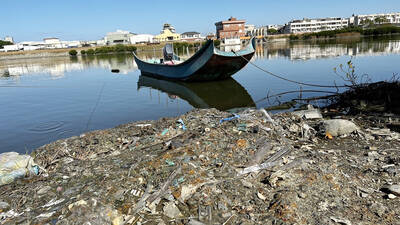
Many consumers are guilty of filling drawers or closets with old laptops, cellphones, fitness trackers and other electronic devices once they are no longer needed. It’s hard to know where to recycle such items, or it seems costly and inconvenient to do so. The world generates millions of tons of electronic waste — also called e-waste — each year. According to the UN’s most recent estimate, people worldwide produced 62 million metric tons of e-waste in 2022, and only about 22 percent of it was properly recycled. The US’ Environmental Protection Agency estimates that less than a quarter of e-waste is
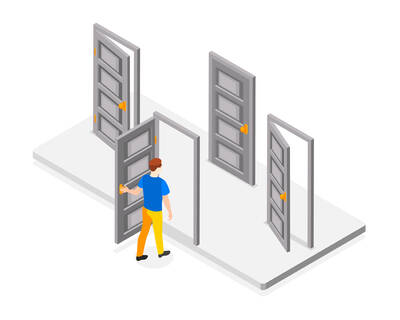
You’re sitting in class when a classmate asks to borrow a pencil. It seems like a small favor, so you agree without hesitation. The following week, the same classmate asks to share your notes. Later, they request help with a group project. You agree each time — after all, you helped out the first time — but before you know it, it has become automatic. This scenario demonstrates the “foot-in-the-door technique,” a psychological concept that shows how agreeing to small, acceptable demands makes it easier to accept larger ones later on. The name for this strategy comes from door-to-door

A: The four-day Tomb Sweeping Day long weekend begins Friday and will run until Monday. Are you going to sweep your ancestors’ tombs? B: I did in advance last weekend, so I can go to Kaohsiung to see the musical “The Phantom of the Opera.” A: Wow, is “Phantom” touring Taiwan again? It debuted in 1986, so this year marks the 40th anniversary of the show. B: And it’s not just touring Kaohsiung starting March 31, but also Taipei starting April 21 and Taichung starting May 26. A: “Phantom” is one of the world’s Four Major Musicals. I’ve seen all of them, except “Les

Dos & Don’ts — 想想看,這句話英語該怎麼說? 1. 我們很早到達電影院。 ˇ We arrived at the theater very early. χ We arrived the theater very early. 註︰arrive 為不及物動詞,後面如果有受詞要用 at 或 in。例如:They arrived in Taipei yesterday.。一般大地方,如國家、省、大城市等前面用 in,凡小地方城鎮、學校等則用 at。 2. 開車半小時以後,我們到達了海灘。 ˇ After half an hour’s drive, we got to the beach. χ After half an hour’s drive, we got the beach. 註︰come, go, get(來、去、到達)某地時,在表示地點的名詞前面應該用 to,如 go to school, go to Taipei, come to Shanghai 等。如果這些動詞後面所跟的是 here, there, home 等副詞,則不用 to。 3. 明天我會回辦公室。 ˇ I will be back in the office tomorrow. χ I will be back to office tomorrow. 註︰to be back 一語裡的 back 是副詞,不是介詞,所以後面要用 at (the market) 或 in (the office)。 假如假期結束,要回學校上課了則可說: ? Kids will be back


 RSS
RSS