


Chinese Practice
雞鳴戒旦
(ji1 ming2 jie4 dan4)
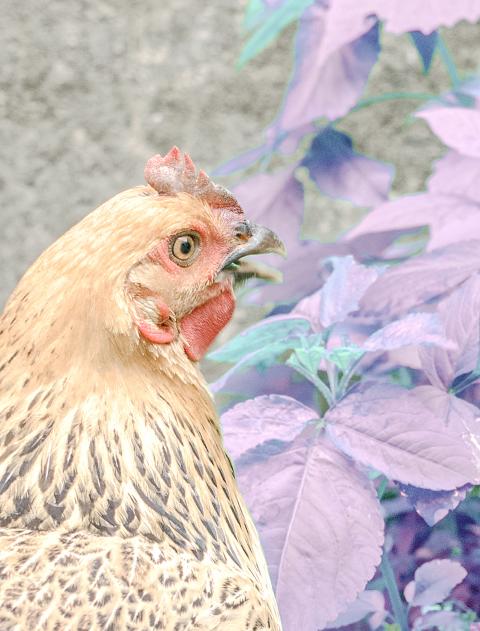
Photo: Paul Cooper, Taipei Times
照片:台北時報記者古德謙攝
Cock crows, announcing dawn
成語「雞鳴戒旦」字面上的意思是「雞叫告知天亮了」,語出《詩經.齊風.雞鳴》。該詩描述了賢淑的妃子在雞鳴時一再警醒荒淫的齊哀公參加早朝,勸他不要把公務留到太陽都下山了,任由眾官員聚集在朝中空等君王指令。描述這故事的詩句如下:
蟲飛薨薨、甘與子同夢。
會且歸矣、無庶予子憎。
意即「蟲子嗡嗡地飛,我寧可繼續跟你同眠溫柔鄉,一起做著美夢。但是上朝的官員們就快就要解散回去了,別讓他們鄙視我們吧。」
此成語後來便意指,因害怕沒有足夠的時間完成所有該做的事,一大早便起床。
在英語中也有類似的成語,即the early bird catches the worm。最初見於John Ray在一六七○年出版的《英語諺語集》,原文作the early bird catcheth the worm。該書的書名意味早在當時,這片語即已被當作諺語使用。
(台北時報編譯林俐凱譯)
他為了即將來臨的考試雞鳴戒旦,深怕沒有足夠的時間把每一科都唸完。
(He is going to get up when the cock crows every morning to prepare for his impending exams. He’s scared he won’t have enough time to finish studying all the courses.)
沒有必要為了搶首賣而雞鳴戒旦,把自己搞得緊張兮兮。
(There’s no need getting yourself all worked up about getting up with the crack of dawn to be the first to buy.)
英文練習
the early bird catches the worm
The idiom 雞鳴戒旦, literally “the cock crows, announcing the dawn” originates from a poem called the Cock Crows in the Odes Of Qi in the ancient Chinese classic the Book of Poetry. The poem imagines a virtuous woman repeatedly cautioning the licentious and dissolute Duke of Ai to attend to affairs of state when the cock crows, and not to leave things until sundown, ignoring the court crowded with officials awaiting his orders. Here is one stanza:
“The insects buzz around; it would be sweet to lie by you and dream.
But the assembled officers are soon to leave; Let them not despise us.“
The idiom has come to mean, then, needing to rise early in the morning to allow sufficient time for your affairs.
It has an English equivalent in the proverb “the early bird catches the worm,” the first recorded reference of which appears in John Ray’s “A collection of English proverbs” published in 1670, written as “the early bird catcheth the worm.” The title of the book suggests that, even this early, the phrase was considered a proverb.
(Paul Cooper, Taipei Times)
I need to get up bright and early tomorrow. The early bird catches the worm.
(我明天得要早起。早起的鳥兒有蟲吃。)
There is a special offer on the Early Bird breakfast, only available until 7:30am.
(早餐有早鳥特惠價,只到早上七點半。)

In 2023, an 80-year-old woman in Taipei suffocated her paralyzed son after over five decades of caring for him. Turning herself in immediately, she confessed that worsening health and anxiety about who would care for him after her death had driven her to act. The court, acknowledging her difficult situation, sentenced her to two-and-a-half years in prison while recommending a presidential pardon. This rare judicial recommendation drew a complicated social response. Supporters argue that the mother’s half-century of caregiving renders her deserving of compassion instead of incarceration, believing that allowing her to live her final years in dignity and

★ Bilingual Story is a fictionalized account. 雙語故事部分內容純屬虛構。 The mango looked perfect. It sat on the fruit stand like a small sunset, red on one side and gold on the other. “I’ll take this one,” said Daniel. The fruit seller shook her head. “Not that one.” Daniel was surprised. “Why not? It looks beautiful.” “Yes,” she said, “but beautiful is not always ready.” She picked up another mango and held it near his nose. “First, smell here.” Daniel smelled the top of the mango. It was sweet and warm. “Good mangoes have a smell,” she said. “Next, feel the weight.”

Put the Cart Before the Horse 本末倒置 Iris: I think I’m in love. Carl: What? Iris: We just have so much in common. We like all of the same things. Carl: Yes, but you’ve only chatted with him online. Iris: It doesn’t matter. I know we’ll end up getting married. Carl: I’m afraid you’re putting the cart before the horse. You should at least meet him first. Iris: OK, OK. I’ll do that. 艾瑞絲: 我想我戀愛了。 卡 爾: 什麼? 艾瑞絲: 我們就是有那麼多的共通點。我們喜歡的東西都一樣。 卡 爾: 是沒錯,不過妳和他只在網路上聊過天而已。 艾瑞絲: 那不重要。我知道我們最後一定會步入禮堂。 卡 爾: 妳恐怕是本末倒置了吧。妳至少應該先跟他見個面。 艾瑞絲: 好啦,好啦。我會的啦。 A tough cookie 強悍的人∕堅強的人 Tracy: I heard you went out with Iris last night. Justin: Yeah. We

A: Over 130,000 college graduates are about to enter the workforce upon graduation. B: According to a survey, the top 10 most desired careers among Taiwanese are: independent content creator, civil servant, information engineer, financial professional, medical worker, content planner, flight attendant, news anchor, designer and fitness trainer. A: What are the “dream jobs” for young Gen Zers? B: The top three for men are YouTuber, pro gamer and engineer. For women, they are writer, social media editor and YouTuber. A: Every profession has its champion. Just look at Taiwanese fire dancer Yang Li-wei — who was on fire


 RSS
RSS