


Chinese practice
畫龍點睛
(hua4 long2 dian3 jing1)
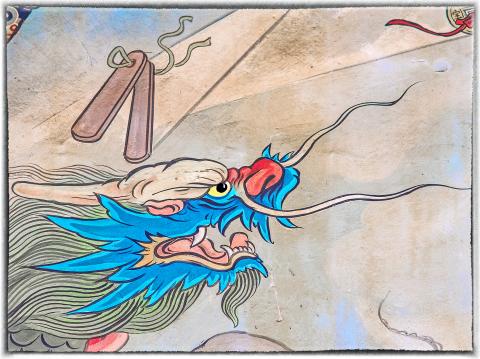
Photo: Paul cooper, Taipei Times
照片:台北時報記者古德謙攝
Painting in the dragons’ pupils
張僧繇(活躍於西元四九○至五四○年)是魏晉南北朝時期知名的「畫家四祖」其中一人。他在梁武帝時期專管繪畫事務,並因習得天竺東傳的繪畫技巧、佛學及人物畫,而受益良多。就像大多數的文化融合及其衍生的綜合成品一樣,它們讓文化的演進又向前邁進了一步,而圖像藝術也因此變得更具有立體感,凹凸有致。雖然張僧繇向來以山水畫聞名,但接下來要談的成語卻與他在廟宇的牆上所畫的四條龍有關。
這是四條活靈活現的龍。一開始,張僧繇認為不要為龍畫眼睛比較好,因為他擔心一旦畫了眼睛,假龍就變真龍了。不過,他最後還是拗不過大家的慫恿,而為其中的兩條龍畫了眼睛。張僧繇這麼畫龍點睛之後,晴天霹靂,那兩條畫了眼睛的龍立時活了過來,凌空而起,飛上雲霄,留下另兩隻未完成的龍在牆上。
這個成語後來就用來指稱為事情加上臨門一腳,譬如繪畫或文字創作,而讓作品更出色。
他的這個新點子為我們本來平淡無奇的專案畫龍點睛。
(This latest point really adds a flourish to what was originally a flat and lifeless project.)
沒有她為你的文章編輯、畫龍點睛,你連初賽都進不去,就別提決賽了。
(Had she not edited this article for you, and added that extra something, it would never have got into the first round, let alone the final.)
英文練習
To add the final touches
Zhang Sengyou (active circa 490-540 A.D.) was known as one of the Four Great Painters of the Six Dynasties period. He was in charge of royal painting affairs under Emperor Wudi of the Liang kingdom, and was one of the painters to benefit from new techniques that arrived in China from India, together with Buddhism and the iconography associated with it. Like most infusions of culture, and the hybrid forms that it produces, this resulted in some major advancements in art, and pictorial art acquired a more three-dimensional quality. Zhang was known as a landscape painter, but the story from which this idiom comes from concerns a painting of four dragons he did on the walls of a temple.
The story goes that the dragons were extremely life-like. It is said that Zhang felt it advisable not to paint in the pupils of the dragons, because he feared that would actually bring them to life. He was eventually persuaded to do so, however, and when he painted the pupils on two of them, thunder broke, and lightning flashed across the sky. The two dragons on which he had painted the pupils came to life and flew into the sky, leaving behind the uncompleted dragons.
The idiom has come to mean putting the final touch on something, such as a painting or a piece of writing, to bring it to life.
I’ve almost finished the article, I’m just putting the final touches to it.
這篇文章就快完成了,只差最後的點綴。
I don’t want you to see the painting yet. I still think it needs me to add the final touch.
我還不想讓你看這幅畫,我最後還要再加些點綴。
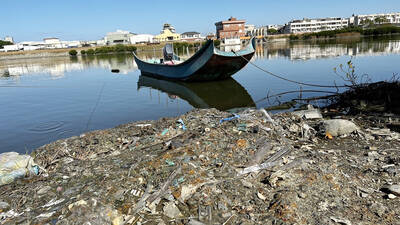
Many consumers are guilty of filling drawers or closets with old laptops, cellphones, fitness trackers and other electronic devices once they are no longer needed. It’s hard to know where to recycle such items, or it seems costly and inconvenient to do so. The world generates millions of tons of electronic waste — also called e-waste — each year. According to the UN’s most recent estimate, people worldwide produced 62 million metric tons of e-waste in 2022, and only about 22 percent of it was properly recycled. The US’ Environmental Protection Agency estimates that less than a quarter of e-waste is
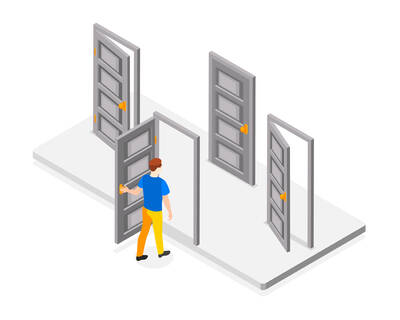
You’re sitting in class when a classmate asks to borrow a pencil. It seems like a small favor, so you agree without hesitation. The following week, the same classmate asks to share your notes. Later, they request help with a group project. You agree each time — after all, you helped out the first time — but before you know it, it has become automatic. This scenario demonstrates the “foot-in-the-door technique,” a psychological concept that shows how agreeing to small, acceptable demands makes it easier to accept larger ones later on. The name for this strategy comes from door-to-door
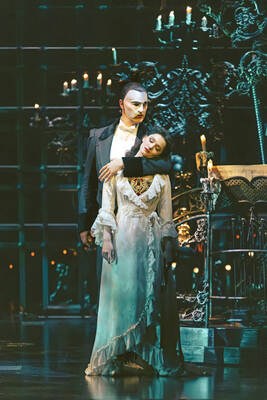
A: The four-day Tomb Sweeping Day long weekend begins Friday and will run until Monday. Are you going to sweep your ancestors’ tombs? B: I did in advance last weekend, so I can go to Kaohsiung to see the musical “The Phantom of the Opera.” A: Wow, is “Phantom” touring Taiwan again? It debuted in 1986, so this year marks the 40th anniversary of the show. B: And it’s not just touring Kaohsiung starting March 31, but also Taipei starting April 21 and Taichung starting May 26. A: “Phantom” is one of the world’s Four Major Musicals. I’ve seen all of them, except “Les

Dos & Don’ts — 想想看,這句話英語該怎麼說? 1. 我們很早到達電影院。 ˇ We arrived at the theater very early. χ We arrived the theater very early. 註︰arrive 為不及物動詞,後面如果有受詞要用 at 或 in。例如:They arrived in Taipei yesterday.。一般大地方,如國家、省、大城市等前面用 in,凡小地方城鎮、學校等則用 at。 2. 開車半小時以後,我們到達了海灘。 ˇ After half an hour’s drive, we got to the beach. χ After half an hour’s drive, we got the beach. 註︰come, go, get(來、去、到達)某地時,在表示地點的名詞前面應該用 to,如 go to school, go to Taipei, come to Shanghai 等。如果這些動詞後面所跟的是 here, there, home 等副詞,則不用 to。 3. 明天我會回辦公室。 ˇ I will be back in the office tomorrow. χ I will be back to office tomorrow. 註︰to be back 一語裡的 back 是副詞,不是介詞,所以後面要用 at (the market) 或 in (the office)。 假如假期結束,要回學校上課了則可說: ? Kids will be back


 RSS
RSS