


Before National Freeway No. 5 was built, New Taipei City’s Pinglin had been a major midpoint between Taipei and Yilan going all the way back to the Japanese colonial era. The Pinglin Bridge, now called the Old Bridge, used to be a simple beam bridge spanning the Beishih River one hundred years ago. The Pinglin Tea Museum is currently holding a special exhibition on Pinglin, its tea and its stories. It has a picture showing the late Japanese colonial administrator Shinpei Goto inspecting Pinglin. Compared with what the Old Bridge in front of the museum looks like now, the old bridge in the historical picture speaks of a bygone era .
The construction of the Pinglin Old Bridge began in 1908 and was completed in 1911. The original beam bridge was destroyed by floods in 1924, and engineers had to be sent from Japan to repair it. At that time Taiwan lacked the necessary building materials, and so reinforcement steel and cement had to be shipped to Taiwan from Japan, transported through Shenkeng and Shiding, and then carried through the mountains by men and horse-drawn carts.
After the Beiyi Road was inaugurated in 1946, the bridge was heavily used. It was not until 1970, when the Pinglin New Bridge was built, that the Old Bridge was finally relieved of its responsibilities. In 1996 the Pinglin Arch Bridge was built, with the Old Bridge sandwiched between the two larger bridges.
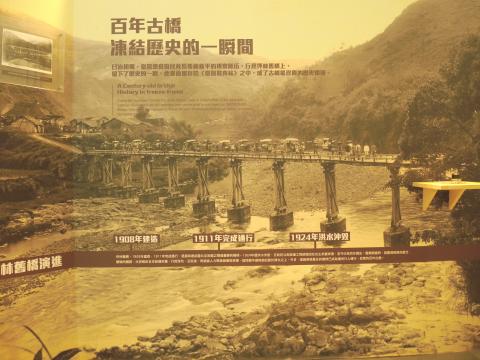
Photo: Screengrab by Weng Yu-huang, Liberty Times
照片:自由時報翁聿煌
The museum hopes to promote Pinglin’s local culture. This special exhibition is a collection of memories of Pinglin’s past, leading visitors back in time to learn how Pinglin evolved.
(Translated by Ethan Zhan)
國道五號高速公路未通車前,坪林從日治時期就是台北宜蘭的重要中點站,其中跨越北勢溪的坪林橋(現稱舊橋),百年前還是條木棧橋。坪林茶業博物館正在舉行「任意門—坪林.茶.故事」特展,展出民間珍藏的台灣總督府民政長官後藤新平巡視坪林照片,再與茶博館前的舊橋現況比對,充滿懷古幽情和跨越時空的趣味性。
坪林舊橋於一九○八年動工興建,一九一一年完工啟用,原本的木橋於一九二四年遭洪水沖毀,日本派工程師來台修復,當時台灣物資缺乏,搭建橋墩的鋼筋水泥皆由日本船運來台,途經深坑、石碇,再用人力馬車載運翻過山頭,過程艱辛。
西元一九四六年北宜公路通車後來往車輛頻繁,直到一九七零年「坪林新橋」完工,舊橋才卸下重擔,一九九六年「坪林拱橋」完工,舊橋便夾在兩座大橋中間。
茶博館希望能為坪林地區推展在地文化,此一特展蒐羅坪林的過往記憶,帶領觀眾穿越時空界限,以在地故事認識坪林的歷史演變。
〔自由時報翁聿煌〕
FOLLOW UP 讀後練習
1) Which river does the Pinglin Bridge cross?
坪林橋跨越哪一條溪流?
2) There is a museum in Pinglin. Does it show modern art, tea, or dinosaurs?
坪林有一座博物館,請問這是一間當代藝術博物館、茶業博物館、還是恐龍博物館?
3) Exactly how many bridges are there near the museum in the previous question?
上題提及的博物館週邊究竟蓋了幾座橋?
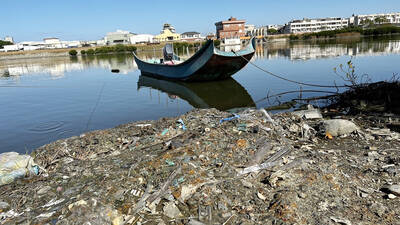
Many consumers are guilty of filling drawers or closets with old laptops, cellphones, fitness trackers and other electronic devices once they are no longer needed. It’s hard to know where to recycle such items, or it seems costly and inconvenient to do so. The world generates millions of tons of electronic waste — also called e-waste — each year. According to the UN’s most recent estimate, people worldwide produced 62 million metric tons of e-waste in 2022, and only about 22 percent of it was properly recycled. The US’ Environmental Protection Agency estimates that less than a quarter of e-waste is
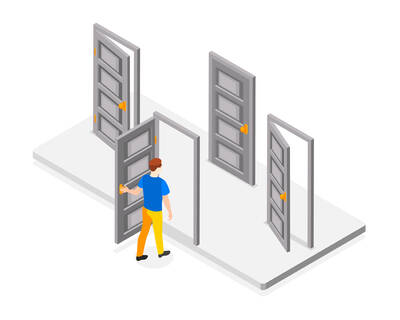
You’re sitting in class when a classmate asks to borrow a pencil. It seems like a small favor, so you agree without hesitation. The following week, the same classmate asks to share your notes. Later, they request help with a group project. You agree each time — after all, you helped out the first time — but before you know it, it has become automatic. This scenario demonstrates the “foot-in-the-door technique,” a psychological concept that shows how agreeing to small, acceptable demands makes it easier to accept larger ones later on. The name for this strategy comes from door-to-door

A: The four-day Tomb Sweeping Day long weekend begins Friday and will run until Monday. Are you going to sweep your ancestors’ tombs? B: I did in advance last weekend, so I can go to Kaohsiung to see the musical “The Phantom of the Opera.” A: Wow, is “Phantom” touring Taiwan again? It debuted in 1986, so this year marks the 40th anniversary of the show. B: And it’s not just touring Kaohsiung starting March 31, but also Taipei starting April 21 and Taichung starting May 26. A: “Phantom” is one of the world’s Four Major Musicals. I’ve seen all of them, except “Les

Continued from yesterday(延續自昨日) https://www.taipeitimes.com/News/lang Gig Tripping “Gig tripping” combines concerts with travel. People fly to see their favorite artists perform — usually abroad—and spend a few days sightseeing before or after the show. While die-hard fans have done this since the 1960s, the post-pandemic travel boom changed the game. Even people who aren’t superfans are now booking international concert trips because they want to make the most of travel opportunities. This trend exploded in the US, as the math makes sense. Domestic concert tickets are so costly that flying abroad for the show plus tourism expenses often matches or even beats the price


 RSS
RSS