


害群之馬 (hai4 qun2 zhi1 ma3)
害群之馬的概念源自於莊子外篇的「徐無鬼」。文中,黃帝與一名牧馬童子談論治國的道理,說:「夫為天下者,亦奚以異乎牧馬者哉?亦去其害馬者而已矣。」(國家統治者要遵循的原則跟牧馬有什麼不同呢?沒什麼差別,就是除去對馬群不好的事物而已。)其後演變出害群之馬這個成語,用來比喻任何以個人言行傷害到群體的人。
我們都受不了了,不願讓這個害群之馬繼續留在我們社區裡。
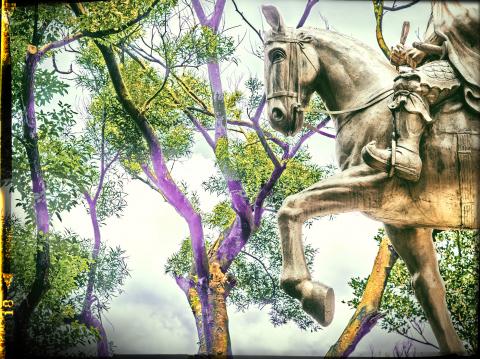
Photo: Paul Cooper, Taipei Times
照片:台北時報記者古德謙攝
(We’ve had enough. We don’t want this trouble-maker to remain in our community.)
我覺得他是個害群之馬,千萬不要和他打交道。
(He’s a bit of a black sheep, that one. I wouldn’t have anything to do with him if I were you.)
Loose cannon; black sheep; trouble-maker
The Chinese idiom 害群之馬 literally means “the horse that harms the herd,” and can usefully be compared to the English “loose cannon,” “black sheep of the family,” or “trouble-maker.” We can describe the sort of person that is unpredictable or uncontrollable, to the extent that they could well cause damage to those around them, as a loose cannon. The “black sheep of the family” is generally a member of an otherwise upright, reputable or well-brought-up family with a character that is, for whatever reason, frowned upon by others, and is regarded as the exception, rather than the rule, in that family. The word “trouble-maker” is pretty self-explanatory.
The original reference to the horse that would harm the herd was actually in one of the Miscellaneous Chapters of the teachings of ancient Chinese philosopher Zhuang Zi (莊子), in which the writer compares herding horses to governing a country. All that a ruler need do, he says, is to discard all that would harm the populace.
We don’t really talk about Keith. He’s kind of the black sheep of the family.
(我們不太談到凱斯,他算是家裡的害群之馬。)
Could you please rein him in a bit? He’s a bit of a loose cannon.
(可以請你管一下他嗎?他也太肆無忌憚了。)
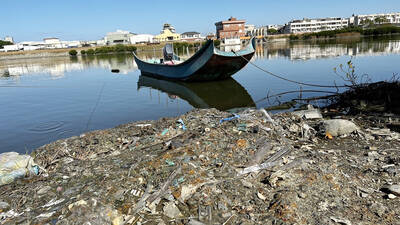
Many consumers are guilty of filling drawers or closets with old laptops, cellphones, fitness trackers and other electronic devices once they are no longer needed. It’s hard to know where to recycle such items, or it seems costly and inconvenient to do so. The world generates millions of tons of electronic waste — also called e-waste — each year. According to the UN’s most recent estimate, people worldwide produced 62 million metric tons of e-waste in 2022, and only about 22 percent of it was properly recycled. The US’ Environmental Protection Agency estimates that less than a quarter of e-waste is
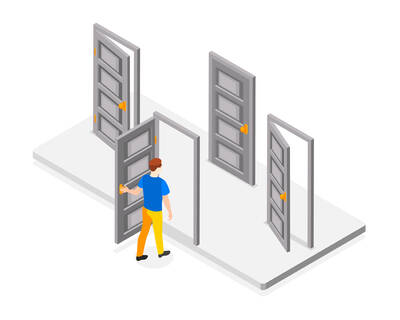
You’re sitting in class when a classmate asks to borrow a pencil. It seems like a small favor, so you agree without hesitation. The following week, the same classmate asks to share your notes. Later, they request help with a group project. You agree each time — after all, you helped out the first time — but before you know it, it has become automatic. This scenario demonstrates the “foot-in-the-door technique,” a psychological concept that shows how agreeing to small, acceptable demands makes it easier to accept larger ones later on. The name for this strategy comes from door-to-door

A: The four-day Tomb Sweeping Day long weekend begins Friday and will run until Monday. Are you going to sweep your ancestors’ tombs? B: I did in advance last weekend, so I can go to Kaohsiung to see the musical “The Phantom of the Opera.” A: Wow, is “Phantom” touring Taiwan again? It debuted in 1986, so this year marks the 40th anniversary of the show. B: And it’s not just touring Kaohsiung starting March 31, but also Taipei starting April 21 and Taichung starting May 26. A: “Phantom” is one of the world’s Four Major Musicals. I’ve seen all of them, except “Les

Dos & Don’ts — 想想看,這句話英語該怎麼說? 1. 我們很早到達電影院。 ˇ We arrived at the theater very early. χ We arrived the theater very early. 註︰arrive 為不及物動詞,後面如果有受詞要用 at 或 in。例如:They arrived in Taipei yesterday.。一般大地方,如國家、省、大城市等前面用 in,凡小地方城鎮、學校等則用 at。 2. 開車半小時以後,我們到達了海灘。 ˇ After half an hour’s drive, we got to the beach. χ After half an hour’s drive, we got the beach. 註︰come, go, get(來、去、到達)某地時,在表示地點的名詞前面應該用 to,如 go to school, go to Taipei, come to Shanghai 等。如果這些動詞後面所跟的是 here, there, home 等副詞,則不用 to。 3. 明天我會回辦公室。 ˇ I will be back in the office tomorrow. χ I will be back to office tomorrow. 註︰to be back 一語裡的 back 是副詞,不是介詞,所以後面要用 at (the market) 或 in (the office)。 假如假期結束,要回學校上課了則可說: ? Kids will be back


 RSS
RSS