


A lot of people send postcards back to Taiwan when they are traveling abroad, but when it comes to writing the country name in the address column, should they put “R.O.C.” (the Republic of China), Taiwan or Formosa? An Internet user exercised her spirit of experimentation by sending out postcards with the different country names on them and then waited to see which would be the first to arrive.
The three postcards had the same address, except for the country names, which were, respectively, “Republic of TAIWAN,” “Republik of Formosa e Pescadores” and “Republic of China.” All were mailed from Berlin, Germany, on April 17.
As it turns out, the two postcards that had Taiwan and Formosa written on them both arrived in Taiwan on April 25, whereas the one with the “Republic of China” on it took a month, not arriving until May 19. The Internet user said the experiment showed that the Deutsche Post recognizes Taiwan and Formosa and that writing “R.O.C.” only will make foreigners think it means “China,” and the People’s Republic of China is the only China that is internationally recognized.
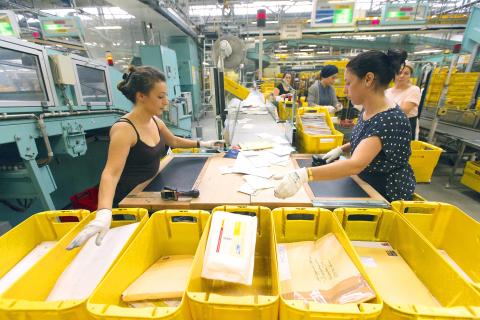
Photo: Martin Leissl/Bloomberg
照片:彭博攝影記者 Martin Leissl
(Liberty Times, translated by Ethan Zhan)
許多人去國外旅遊都會寄明信片回台,但在地址欄填寫國家名稱時,到底是該寫「R.O.C.(中華民國)」、「Taiwan(台灣)」還是「Formosa(福爾摩莎)」?就有網友發揮實驗精神,同時寄出寫著不同收件國名的明信片,然後看哪一封最快到達。
這三張收件地址都相同僅國名不同的明信片,國名分別寫的是「Republic of TAIWAN(台灣)」、 「 Republik of Formosa e Pescadores(福爾摩沙與澎湖)」及「Republic of China(中華民國)」。三封同時於四月十七日從德國柏林寄出。
結果,寫著台灣與福爾摩沙的兩張明信片四月二十五日就同時抵達台灣,反觀寫著中華民國的那張,拖了一個月,到五月十九日才收到。這名網友表示,實驗證明德國郵政是認得台灣與福爾摩沙的,寫R.O.C.只會讓外國人士想到China,而國際上只承認對岸那個P.R.C.。
(自由時報)
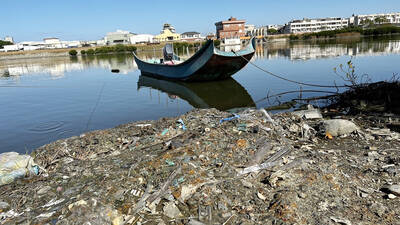
Many consumers are guilty of filling drawers or closets with old laptops, cellphones, fitness trackers and other electronic devices once they are no longer needed. It’s hard to know where to recycle such items, or it seems costly and inconvenient to do so. The world generates millions of tons of electronic waste — also called e-waste — each year. According to the UN’s most recent estimate, people worldwide produced 62 million metric tons of e-waste in 2022, and only about 22 percent of it was properly recycled. The US’ Environmental Protection Agency estimates that less than a quarter of e-waste is

You’re sitting in class when a classmate asks to borrow a pencil. It seems like a small favor, so you agree without hesitation. The following week, the same classmate asks to share your notes. Later, they request help with a group project. You agree each time — after all, you helped out the first time — but before you know it, it has become automatic. This scenario demonstrates the “foot-in-the-door technique,” a psychological concept that shows how agreeing to small, acceptable demands makes it easier to accept larger ones later on. The name for this strategy comes from door-to-door

A: The four-day Tomb Sweeping Day long weekend begins Friday and will run until Monday. Are you going to sweep your ancestors’ tombs? B: I did in advance last weekend, so I can go to Kaohsiung to see the musical “The Phantom of the Opera.” A: Wow, is “Phantom” touring Taiwan again? It debuted in 1986, so this year marks the 40th anniversary of the show. B: And it’s not just touring Kaohsiung starting March 31, but also Taipei starting April 21 and Taichung starting May 26. A: “Phantom” is one of the world’s Four Major Musicals. I’ve seen all of them, except “Les

Continued from yesterday(延續自昨日) https://www.taipeitimes.com/News/lang Gig Tripping “Gig tripping” combines concerts with travel. People fly to see their favorite artists perform — usually abroad—and spend a few days sightseeing before or after the show. While die-hard fans have done this since the 1960s, the post-pandemic travel boom changed the game. Even people who aren’t superfans are now booking international concert trips because they want to make the most of travel opportunities. This trend exploded in the US, as the math makes sense. Domestic concert tickets are so costly that flying abroad for the show plus tourism expenses often matches or even beats the price


 RSS
RSS