


Now is the season for sika deer to cast off their antlers, so visitors to Taipei Zoo may spot “unicorn” deer with one antler missing or bucks with no antlers at all. Meanwhile, Bambi, a young deer that was born last year, has recently grown a pair of pilose antlers. The zoo says the bucks with missing antlers will begin to grow new ones in one or two months’ time.
According to the zoo, deer antlers drop off naturally at this time of year and no special care is required, just like when humans lose their baby teeth. However, the base of the antlers may bleed slightly, causing the wound to itch and hurt a bit, so bucks changing their antlers are sometimes seen carefully scratching their antler bases with their hooves.
When they are two years old, bucks begin to grow their first set of antlers, which are covered by a velvety layer of skin with many capillaries and are called pilose antlers. A buck’s antlers, which are shed annually, usually begin to fork in the third year and then grow a new tine each year. A sika deer can have a maximum of four tines on its antlers, after which its newly grown antlers will always have four tines.
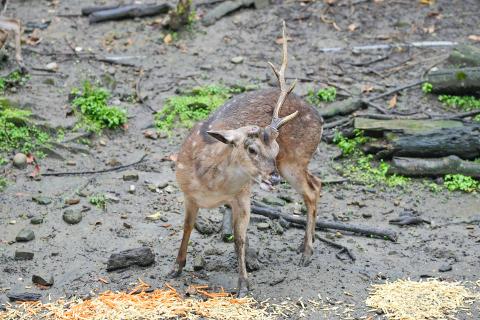
Photo courtesy of Taipei Zoo
照片:台北市立動物園提供
(Liberty Times, translated by Tu Yu-an)
現在是梅花鹿換角的季節,遊客來到台北市立動物園可能會看到少了一隻角的「獨角鹿」或完全沒有角的雄鹿,而去年出生的「斑比」則新長出鹿茸。動物園說,約一兩個月後缺角的雄鹿就會開始長出新的鹿角。
動物園說,每年這個時節鹿角會自然脫落,就像人類換牙,不需要特別護理,不過鹿角基座或許會有些微流血,傷口既癢又微痛,所以有時會看到雄鹿用腳小心翼翼地想搔癢。
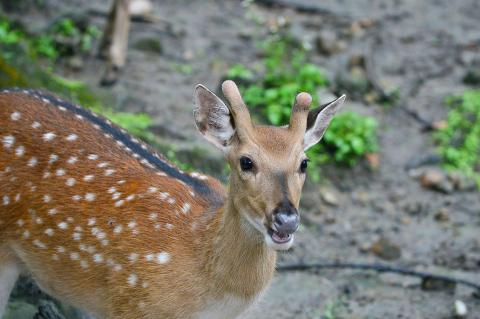
Photo courtesy of Taipei Zoo
照片:台北市立動物園提供
雄鹿在兩歲時開始長角,此時長出來的鹿角,包覆著毛茸茸而充滿微血管的皮膚,稱為鹿茸;鹿角每年會脫落,通常第三年鹿角會開始分叉,之後每年增加一支分叉,而梅花鹿最多可分到四叉,之後長出的新鹿角永遠都是四叉。(自由時報記者謝佳君)

A: The Danjiang Bridge in New Taipei City is to open on May 12, and the MRT Sanying Line (Light Blue Line) will also open in June. Isn’t that great? B: Is that the bridge connecting the city’s Tamsui and Bali Districts? What’s so special about this new landmark spanning the Tamsui River? A: The Danjiang Bridge will become the world’s longest-span single-mast asymmetric cable-stayed bridge — with a total river-crossing section of 920 meters and main span of 450 meters. B: The news says there are sidewalks and bike lanes on both sides. Watching the sunset from the
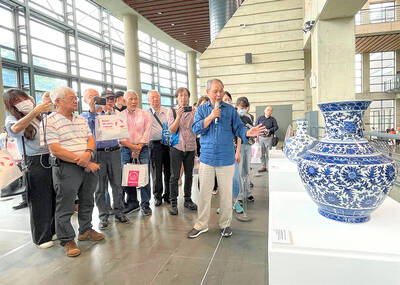
A: Apart from the Danjiang Bridge in New Taipei City, the MRT Sanying Line (Light Blue Line) will open in June. B: Is that the new line leading to Yingge District, the ceramic town? A: Yup, the line will connect the Yingge Ceramics Museum and the Old Streets in Sanxia and Yingge Districts. B: The eastward extension of the Tamsui-Xinyi Line (Red Line) that goes through Taipei’s Xinyi District will also open in June. A: Plus, Taoyuan’s Aerotropolis Line (Green Line) will partially open by the end of the year. In the future, it will connect the

In the dense forests of Tanzania, a young researcher sat quietly among the trees, her gaze fixed on a troop of chimpanzees. It was 1960, and Jane Goodall, armed with nothing but a notebook and endless curiosity, was about to change science forever. Inspired by childhood stories like the Dr. Dolittle series, she had dreamed of Africa — and now, thanks to the encouragement of anthropologist Louis Leakey, she was there, face-to-face with the wild. What Jane discovered shocked the world. Chimpanzees weren’t mere creatures of instinct; they were individuals with emotions, families, and even the capacity for tool
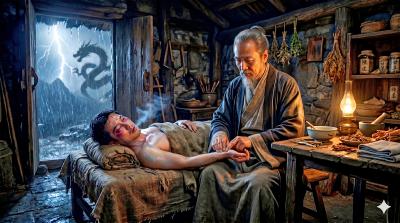
★ Bilingual Story is a fictionalized account. 雙語故事部分內容純屬虛構。 Rain hammered the roof in hard, uneven bursts. “Hold him still!” Baosheng pressed one hand against the stranger’s brow as the man twisted on the wooden bed. His left eye was swollen shut. The right one burned red like a coal. “It feels like fire,” the man gasped. “Like something is clawing inside.” Thunder rolled across the mountain. Baosheng leaned closer. The man’s skin was cold, but heat rose from his face. A strange smell hung in the air. He began the four methods of diagnosis: looking, listening/smelling,


 RSS
RSS