


Earthquakes are a frequent occurrence in Taiwan. Lin Hui-ming, a resident of Lucao Township in Chiayi County, has observed that more households are using natural gas, which uses longer and more numerous pipes than is the case for bottled gas, but safety control devices are installed on the gas company side, making it hard for customers to inspect them. When an earthquake happens, it can easily cause pipes to crack or become loose or detached and leak. If people are not careful, this can lead to gas explosions that may cause death or injury. Lin researched the problem and developed a “compound gas safety valve” that can be installed on the customer side. His inventions garnered gold medal awards at the Taipei International Invention Show last year and the year before, and Lin has obtained patents for them in 13 different countries. Lin merits the title of “gas safety expert.”
Lin, who is 49 years old, has been in the gas business for more than 30 years. In the course of delivering and installing gas equipment, he has seen many households whose gas equipment is not safe enough, and he has also seen cases of gas explosions, so 12 years ago he started doing research on mechanical shut-off devices that could be installed on gas cylinders. He won a gold medal for this kind of device in the National Invention and Creation Awards.
Lin says that, for both bottled gas and natural gas pipes, leaks can easily occur following an earthquake, so he designed a gas safety valve with an electronic smart control device that automatically shuts off when there is a magnitude five earthquake. The device can shut off the gas automatically after a fixed time or if it detects that nobody is in the kitchen, thus reducing the danger. Lin is currently manufacturing and installing the devices in cooperation with construction companies and home security system businesses. For the sake of home safety, Lin recommends that people should inspect their gas pipes after earthquakes happen, or else install shut-off devices, safety valves or similar equipment, so as to reduce the possibility of gas explosions occurring.
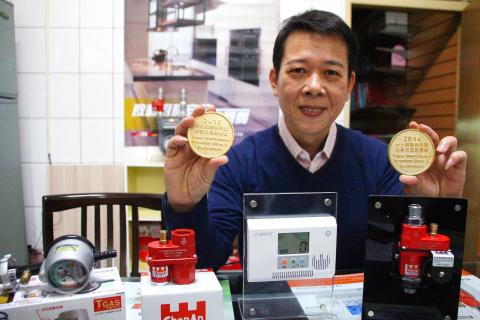
Photo: Lin I-chang, Liberty Times
照片:自由時報記者林宜樟
(Liberty Times, translated by Julian Clegg)
台灣時常發生地震,嘉義縣鹿草鄉民林揮明觀察發現,天然瓦斯用戶增加,其管線較桶裝瓦斯長又多,安全控制裝置卻在公司端,用戶難以檢查,地震時易造成管線斷裂、鬆脫而漏氣,若有不慎會引發氣爆死傷。林揮明研發可安裝在用戶端的「複合式瓦斯安全閥」,前、去年都獲得台北國際發明展金牌獎,取得十三國專利,堪稱「瓦斯安全達人」。
林揮明今年四十九歲,從事瓦斯行業三十多年,運送安裝過程中,看見許多家庭的瓦斯設備安全性不足,又常看到氣爆案件,十二年前開始研究可裝在桶裝瓦斯上的機械式切斷裝置,曾摘下國家發明創作獎金牌。
林揮明說,不論是桶裝瓦斯或天然氣管線,地震後都容易有漏氣問題,他設計將瓦斯安全閥再加上電子智慧管理裝置,遇到五級地震就會自動關閉,可定時或自動偵測人是否在廚房,來關閉瓦斯,降低危險性,目前已和建商、住宅安全系統廠商合作生產安裝。為了居住安全,建議民眾在地震後檢查瓦斯管線,或安裝斷路器、安全閥等設備,減少發生氣爆的機會。
(自由時報記者林宜樟)
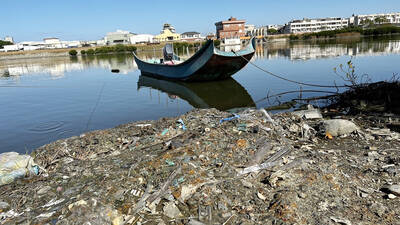
Many consumers are guilty of filling drawers or closets with old laptops, cellphones, fitness trackers and other electronic devices once they are no longer needed. It’s hard to know where to recycle such items, or it seems costly and inconvenient to do so. The world generates millions of tons of electronic waste — also called e-waste — each year. According to the UN’s most recent estimate, people worldwide produced 62 million metric tons of e-waste in 2022, and only about 22 percent of it was properly recycled. The US’ Environmental Protection Agency estimates that less than a quarter of e-waste is
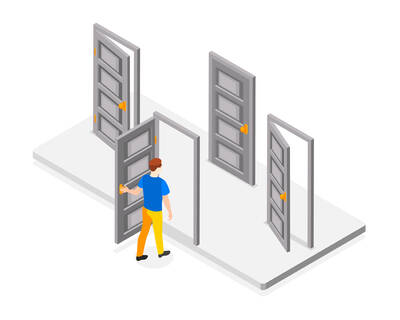
You’re sitting in class when a classmate asks to borrow a pencil. It seems like a small favor, so you agree without hesitation. The following week, the same classmate asks to share your notes. Later, they request help with a group project. You agree each time — after all, you helped out the first time — but before you know it, it has become automatic. This scenario demonstrates the “foot-in-the-door technique,” a psychological concept that shows how agreeing to small, acceptable demands makes it easier to accept larger ones later on. The name for this strategy comes from door-to-door

A: The four-day Tomb Sweeping Day long weekend begins Friday and will run until Monday. Are you going to sweep your ancestors’ tombs? B: I did in advance last weekend, so I can go to Kaohsiung to see the musical “The Phantom of the Opera.” A: Wow, is “Phantom” touring Taiwan again? It debuted in 1986, so this year marks the 40th anniversary of the show. B: And it’s not just touring Kaohsiung starting March 31, but also Taipei starting April 21 and Taichung starting May 26. A: “Phantom” is one of the world’s Four Major Musicals. I’ve seen all of them, except “Les

Dos & Don’ts — 想想看,這句話英語該怎麼說? 1. 我們很早到達電影院。 ˇ We arrived at the theater very early. χ We arrived the theater very early. 註︰arrive 為不及物動詞,後面如果有受詞要用 at 或 in。例如:They arrived in Taipei yesterday.。一般大地方,如國家、省、大城市等前面用 in,凡小地方城鎮、學校等則用 at。 2. 開車半小時以後,我們到達了海灘。 ˇ After half an hour’s drive, we got to the beach. χ After half an hour’s drive, we got the beach. 註︰come, go, get(來、去、到達)某地時,在表示地點的名詞前面應該用 to,如 go to school, go to Taipei, come to Shanghai 等。如果這些動詞後面所跟的是 here, there, home 等副詞,則不用 to。 3. 明天我會回辦公室。 ˇ I will be back in the office tomorrow. χ I will be back to office tomorrow. 註︰to be back 一語裡的 back 是副詞,不是介詞,所以後面要用 at (the market) 或 in (the office)。 假如假期結束,要回學校上課了則可說: ? Kids will be back


 RSS
RSS