


Nov. 20 was International Children’s Rights Day. In view of frequent reports about cases of child abuse, World Vision Taiwan has helped students transform into children’s rights advocacy ambassadors. They rode bikes from Yuanchang Township to Gukeng Township in Yunlin County and along the way advocated for four main children’s rights, including the right to life, development, participation and protection.
Taiwan World Vision supports about 2,000 students in Yunlin County. Because the parents are too busy working to take care of their own kids, after the children come home from school, they either roam the streets or stay at home and indulge themselves in television, computers and video games. Noticing this, Lin Kuan-liang, a social worker at the organization’s Yunbin branch and a cycling enthusiast, has used his time outside of work to take children cycling, nurturing the habit of exercising, training in teamwork and cooperation and challenging themselves.
Lin says the bike team consists of six people at the moment. The bicycles are those the children ride to school every day. The only equipment is a safety helmet, and one team member’s bike is a second-hand one given away by someone. The gears are broken and the handlebars and frame are rusty, but the kid still rides it happily.
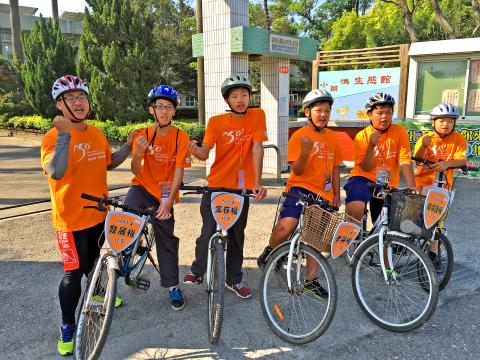
Photo: Huang Shu-li, Liberty Times
照片:自由時報記者黃淑莉
Early one the morning when the sun was shining, the team members set out from Yuanchang Shannei Elementary School and passed through Tuku Township and Dounan Township before reaching Gukeng. The round trip was over 60 kilometers. Although sweating and with aching bottoms and feet, not one child complained of tiredness and along the way many people cheered them on.
(Liberty Times, translated by Clare Lear)
上週五是「世界兒童人權日」,有鑑虐童案件頻傳,台灣世界展望會扶助學生變身倡導孩童人權大使。他們從雲林元長騎單車到古坑,沿途宣導兒童四大權利,包括生存權、發展權、參與權及受保護權。
台灣世展會扶助雲林學生約兩千人,有鑑孩子因父母忙於工作無暇照顧,放學後返家在街頭閒逛或宅在家沈迷電視、電腦和電動玩具,愛騎單車的雲濱中心社工林冠良利用工作之餘帶著孩子騎單車,培養運動習慣、訓練團隊合作及挑戰自我。
林表示,單車隊現有成員六個人,腳踏車是孩子平日上學騎的車子,安全帽是唯一的裝備,其中一位成員的腳踏車是別人淘汰的二手車,變速器壞掉,手把及車身都生鏽,但孩子還是騎得很開心。
一早艷陽高照。車隊成員從元長山內國小出發,經過土庫、斗南到古坑,來回約六十多公里,雖然汗流浹背、屁股及腳酸痛,但沒人喊累,沿途也有許多民眾為他們加油打氣。
(自由時報記者黃淑莉)
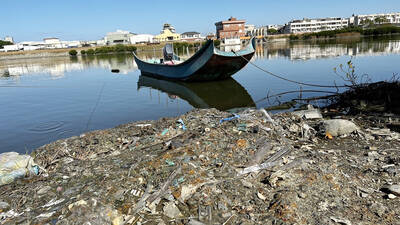
Many consumers are guilty of filling drawers or closets with old laptops, cellphones, fitness trackers and other electronic devices once they are no longer needed. It’s hard to know where to recycle such items, or it seems costly and inconvenient to do so. The world generates millions of tons of electronic waste — also called e-waste — each year. According to the UN’s most recent estimate, people worldwide produced 62 million metric tons of e-waste in 2022, and only about 22 percent of it was properly recycled. The US’ Environmental Protection Agency estimates that less than a quarter of e-waste is
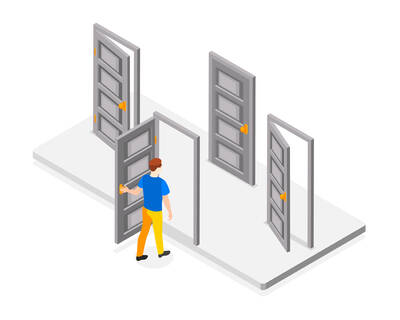
You’re sitting in class when a classmate asks to borrow a pencil. It seems like a small favor, so you agree without hesitation. The following week, the same classmate asks to share your notes. Later, they request help with a group project. You agree each time — after all, you helped out the first time — but before you know it, it has become automatic. This scenario demonstrates the “foot-in-the-door technique,” a psychological concept that shows how agreeing to small, acceptable demands makes it easier to accept larger ones later on. The name for this strategy comes from door-to-door

A: The four-day Tomb Sweeping Day long weekend begins Friday and will run until Monday. Are you going to sweep your ancestors’ tombs? B: I did in advance last weekend, so I can go to Kaohsiung to see the musical “The Phantom of the Opera.” A: Wow, is “Phantom” touring Taiwan again? It debuted in 1986, so this year marks the 40th anniversary of the show. B: And it’s not just touring Kaohsiung starting March 31, but also Taipei starting April 21 and Taichung starting May 26. A: “Phantom” is one of the world’s Four Major Musicals. I’ve seen all of them, except “Les

Dos & Don’ts — 想想看,這句話英語該怎麼說? 1. 我們很早到達電影院。 ˇ We arrived at the theater very early. χ We arrived the theater very early. 註︰arrive 為不及物動詞,後面如果有受詞要用 at 或 in。例如:They arrived in Taipei yesterday.。一般大地方,如國家、省、大城市等前面用 in,凡小地方城鎮、學校等則用 at。 2. 開車半小時以後,我們到達了海灘。 ˇ After half an hour’s drive, we got to the beach. χ After half an hour’s drive, we got the beach. 註︰come, go, get(來、去、到達)某地時,在表示地點的名詞前面應該用 to,如 go to school, go to Taipei, come to Shanghai 等。如果這些動詞後面所跟的是 here, there, home 等副詞,則不用 to。 3. 明天我會回辦公室。 ˇ I will be back in the office tomorrow. χ I will be back to office tomorrow. 註︰to be back 一語裡的 back 是副詞,不是介詞,所以後面要用 at (the market) 或 in (the office)。 假如假期結束,要回學校上課了則可說: ? Kids will be back


 RSS
RSS