


The rare migratory hoopoe bird (Upupa epops) has been seen for the first time in Taroko National Park, close to the park’s visitors’ center. A conservation officer at the center says that the hoopoe is a common resident bird on Kinmen Island, and that it has been selected as the mascot on the island’s tourists buses. The fact that it has been seen and recorded in Taroko National Park is a significant event that has caused a sensation.
The conservation office at the Taroko National Park Headquarters says that a hoopoe has been seen for several consecutive days nearby the park’s visitors’ center, and that this is the first time that it has been seen in the park. Conservationists are pleasantly surprised, and apart from the bird attracting a lot of attention, they have also contacted the Kinmen National Park headquarters in the hope that it might benefit academic research.
The hoopoe belongs to the Upupidae family, which, in terms of animal taxonomy, belongs in the Coraciiformes order. There are only two birds in the genus, the hoopoe and the Saint Helena hoopoe (Upupa antaios), also known as the Saint Helena giant hoopoe or giant hoopoe. Their main habitats are in Europe, Asia and northern Africa. The bird also has a wide presence in China, but in Taiwan it is a rare migratory bird that nests in coastal wetlands.
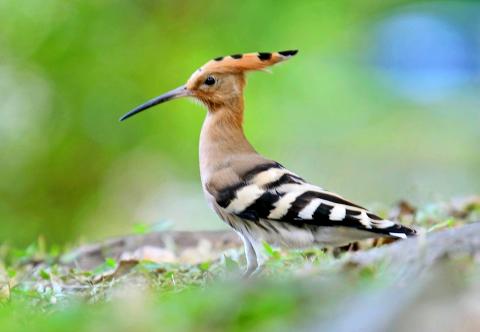
Photo: Yu Tai-lang, Liberty Times
照片:自由時報記者游太郎
The conservation office said that people in Kinmen call the hoopoe the “grave bird” because they often nest close to graves and are often seen in graveyards. Kinmen residents believe that the bird brings bad fortune, but as conservation awareness has increased in recent years, the hoopoe has come to be seen as a local symbol, and since it is a beautiful bird, it has been selected as the mascot for Kinmen’s tourist buses.
(Liberty Times, Translated by Perry Svensson)
在台灣屬於稀有過境鳥的「戴勝」,首次在太魯閣國家公園區內遊客中心附近出現,太管處保育人員表示,「戴勝」是金門地區常見的留鳥,獲選為金門觀光公車的吉祥物,在太魯閣園區內被觀察和記錄到,不但引起重視也造成轟動。
太管處保育課指出,連日來在遊客中心附近出現一隻「戴勝」,這是首次在太魯閣國家公園區內的觀察和記錄,讓保育人員相當驚喜,除引起重視外,也和金管處連繫,希望有助於學術研究。
「戴勝」為戴勝科,在動物分類學上是鳥綱佛法僧目中的一個科,只有一屬兩種,即「戴勝」與「大戴勝」,主要分布在歐洲、亞洲和北非地區,在中國廣泛分布,在台灣屬於稀有的過境鳥,棲息於海岸溼地區。
保育課說,金門人稱「戴勝」為墓坑鳥,因牠們常棲息或營巢於破墓穴(閩南語墓穴音為幕坑)為名,也因牠們常在墳地出入,金門人認為是一種不吉祥的鳥類,但近年來保育意識抬頭,「戴勝」在金門被視為代表性的鄉土鳥種之一,且因為外型美麗,因此獲選為金門觀光公車的吉祥物。
(自由時報記者游太郎)
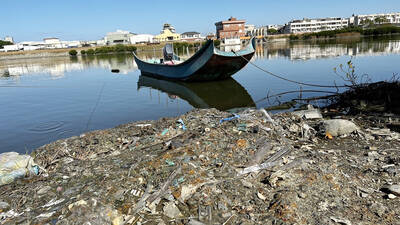
Many consumers are guilty of filling drawers or closets with old laptops, cellphones, fitness trackers and other electronic devices once they are no longer needed. It’s hard to know where to recycle such items, or it seems costly and inconvenient to do so. The world generates millions of tons of electronic waste — also called e-waste — each year. According to the UN’s most recent estimate, people worldwide produced 62 million metric tons of e-waste in 2022, and only about 22 percent of it was properly recycled. The US’ Environmental Protection Agency estimates that less than a quarter of e-waste is
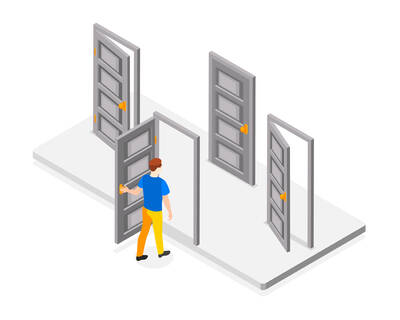
You’re sitting in class when a classmate asks to borrow a pencil. It seems like a small favor, so you agree without hesitation. The following week, the same classmate asks to share your notes. Later, they request help with a group project. You agree each time — after all, you helped out the first time — but before you know it, it has become automatic. This scenario demonstrates the “foot-in-the-door technique,” a psychological concept that shows how agreeing to small, acceptable demands makes it easier to accept larger ones later on. The name for this strategy comes from door-to-door

A: The four-day Tomb Sweeping Day long weekend begins Friday and will run until Monday. Are you going to sweep your ancestors’ tombs? B: I did in advance last weekend, so I can go to Kaohsiung to see the musical “The Phantom of the Opera.” A: Wow, is “Phantom” touring Taiwan again? It debuted in 1986, so this year marks the 40th anniversary of the show. B: And it’s not just touring Kaohsiung starting March 31, but also Taipei starting April 21 and Taichung starting May 26. A: “Phantom” is one of the world’s Four Major Musicals. I’ve seen all of them, except “Les

Dos & Don’ts — 想想看,這句話英語該怎麼說? 1. 我們很早到達電影院。 ˇ We arrived at the theater very early. χ We arrived the theater very early. 註︰arrive 為不及物動詞,後面如果有受詞要用 at 或 in。例如:They arrived in Taipei yesterday.。一般大地方,如國家、省、大城市等前面用 in,凡小地方城鎮、學校等則用 at。 2. 開車半小時以後,我們到達了海灘。 ˇ After half an hour’s drive, we got to the beach. χ After half an hour’s drive, we got the beach. 註︰come, go, get(來、去、到達)某地時,在表示地點的名詞前面應該用 to,如 go to school, go to Taipei, come to Shanghai 等。如果這些動詞後面所跟的是 here, there, home 等副詞,則不用 to。 3. 明天我會回辦公室。 ˇ I will be back in the office tomorrow. χ I will be back to office tomorrow. 註︰to be back 一語裡的 back 是副詞,不是介詞,所以後面要用 at (the market) 或 in (the office)。 假如假期結束,要回學校上課了則可說: ? Kids will be back


 RSS
RSS