


In a country known for its high-tech “smart loos,” a Japanese exhibition dedicated to what gets flushed down them and featuring a giant toilet slide is making a splash in Tokyo.
Children wearing poo-shaped hats slid excitedly down a chute into a lavatory standing 5m high, following the “Journey of Poo” at the National Museum of Emerging Science and Innovation.
The aim of the exhibition, which also includes a chorus of singing toilet bowls, is to educate visitors about sewerage, health and waste.
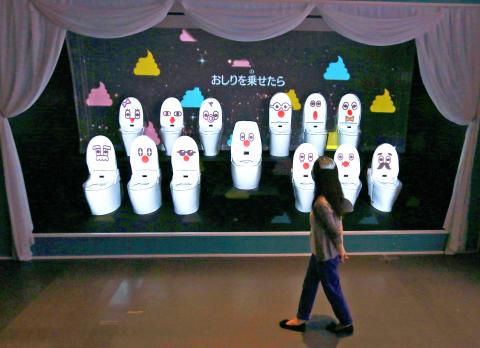
Photo: Reuters
照片:路透
An angry lavatory asked out loud what would happen if the world’s loos refused to do their jobs, encouraging toddlers to say “thank you” after flushing.
Children also lined up to make their own poop from plasticene, while giggling couples enjoying an unusual date also took the opportunity to sport the popular brown hats and slide down the toilet.
(AFP)
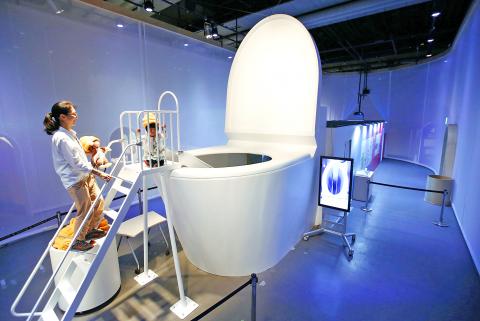
Photo: Reuter
照片:路透
以高科技「智慧型馬桶」聞名的日本,在東京推出以那些被沖下馬桶的東西為主題並且設置有巨大馬桶造型溜滑梯的展覽,引起轟動。
頭戴大便帽的孩童們在日本科學未來館,興奮地從五公尺高的馬桶造型溜滑梯溜下,順著「大便行經的旅程」走一遭。
該展覽旨在教育參訪民眾關於汙水排放、健康與廢物的知識。展覽還包括一個會唱歌的「馬桶合唱團」。
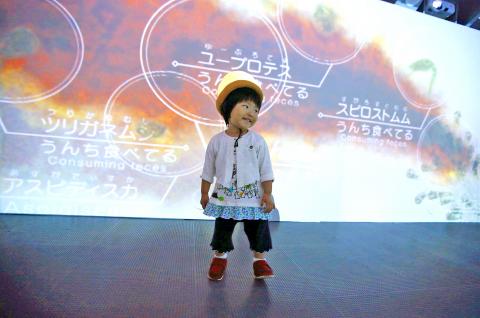
Photo: Reuter
照片:路透
一座馬桶氣沖沖地大聲問道,若全世界馬桶拒絕履行其職務,後果將會如何?這樣的問題激發牙牙學語的孩子在沖馬桶時,會對馬桶說聲「謝謝」。
孩童們也排隊用塑膠黏土捏出自己的大便,而嘻笑享受另類約會的情侶們,則利用機會戴著超夯的咖啡色帽子並從馬桶溜滑梯上溜下。
(法新社/翻譯:林亞蒂)

Many consumers are guilty of filling drawers or closets with old laptops, cellphones, fitness trackers and other electronic devices once they are no longer needed. It’s hard to know where to recycle such items, or it seems costly and inconvenient to do so. The world generates millions of tons of electronic waste — also called e-waste — each year. According to the UN’s most recent estimate, people worldwide produced 62 million metric tons of e-waste in 2022, and only about 22 percent of it was properly recycled. The US’ Environmental Protection Agency estimates that less than a quarter of e-waste is
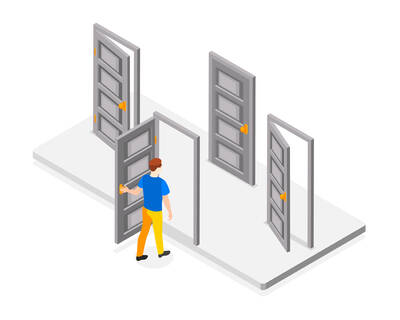
You’re sitting in class when a classmate asks to borrow a pencil. It seems like a small favor, so you agree without hesitation. The following week, the same classmate asks to share your notes. Later, they request help with a group project. You agree each time — after all, you helped out the first time — but before you know it, it has become automatic. This scenario demonstrates the “foot-in-the-door technique,” a psychological concept that shows how agreeing to small, acceptable demands makes it easier to accept larger ones later on. The name for this strategy comes from door-to-door

A: The four-day Tomb Sweeping Day long weekend begins Friday and will run until Monday. Are you going to sweep your ancestors’ tombs? B: I did in advance last weekend, so I can go to Kaohsiung to see the musical “The Phantom of the Opera.” A: Wow, is “Phantom” touring Taiwan again? It debuted in 1986, so this year marks the 40th anniversary of the show. B: And it’s not just touring Kaohsiung starting March 31, but also Taipei starting April 21 and Taichung starting May 26. A: “Phantom” is one of the world’s Four Major Musicals. I’ve seen all of them, except “Les

Dos & Don’ts — 想想看,這句話英語該怎麼說? 1. 我們很早到達電影院。 ˇ We arrived at the theater very early. χ We arrived the theater very early. 註︰arrive 為不及物動詞,後面如果有受詞要用 at 或 in。例如:They arrived in Taipei yesterday.。一般大地方,如國家、省、大城市等前面用 in,凡小地方城鎮、學校等則用 at。 2. 開車半小時以後,我們到達了海灘。 ˇ After half an hour’s drive, we got to the beach. χ After half an hour’s drive, we got the beach. 註︰come, go, get(來、去、到達)某地時,在表示地點的名詞前面應該用 to,如 go to school, go to Taipei, come to Shanghai 等。如果這些動詞後面所跟的是 here, there, home 等副詞,則不用 to。 3. 明天我會回辦公室。 ˇ I will be back in the office tomorrow. χ I will be back to office tomorrow. 註︰to be back 一語裡的 back 是副詞,不是介詞,所以後面要用 at (the market) 或 in (the office)。 假如假期結束,要回學校上課了則可說: ? Kids will be back


 RSS
RSS