


Instead of striking a trademark dramatic pose, the new Lenin statue in Nowa Huta is bright green and depicts the revolutionary relieving himself.
A statue of Vladimir Lenin has returned to a Polish town which was constructed by the communists in the hope of it becoming a proletarian bastion.
Instead of striking a dramatic pose designed to inspire revolution, however, the new Lenin statue in Nowa Huta comes bright green in color, and depicts the revolutionary leader relieving himself, with a water feature providing the necessary effects.
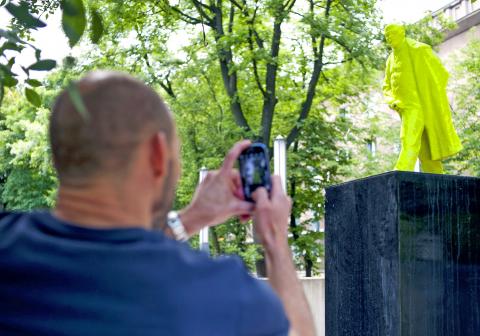
Photo: AFP / Bartosz Siedlik
照片:法新社 / Bartosz Siedlik
Poland’s post-war communist government built the industrial town of Nowa Huta, and it once boasted a huge statue of the Russian leader striding down a main boulevard.
Nowa Huta’s workers resisted attempts to make them die-hard socialists, with some even trying to blow up the original Lenin statue in 1979.
The attackers failed to use enough explosives and only succeeded in damaging the Russian’s feet.
(Liberty Times)
取代擺出架勢十足的姿勢,新胡塔的新列寧雕像是螢光綠色且描繪呈現這位革命家正在解放自己。
列寧雕像又出現在一個曾經由共產黨建立、期盼打造成無產階級堡壘的波蘭城鎮。
取代擺出揭示革命、架勢十足的姿勢,新胡塔的新列寧雕像呈現螢光綠色,並摹寫這位革命領袖正在解放自己,由水柱提供了必要的效果。
波蘭戰後共黨政府建立了工業城新胡塔,沿著主要的林蔭大道曾出現一尊這位俄國領袖的巨大雕像。
新胡塔的工人堅持拒絕成為社會主義的死硬派,曾有人在一九七九年試圖炸掉原有的列寧雕像。
攻擊者沒有足夠火藥以致失敗,僅成功地傷到列寧雕像的腳。
(自由時報/翻譯:詹立群)
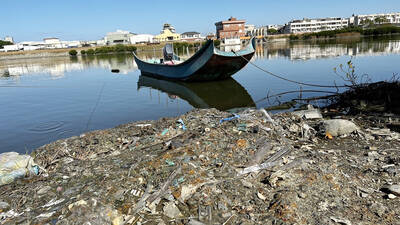
Many consumers are guilty of filling drawers or closets with old laptops, cellphones, fitness trackers and other electronic devices once they are no longer needed. It’s hard to know where to recycle such items, or it seems costly and inconvenient to do so. The world generates millions of tons of electronic waste — also called e-waste — each year. According to the UN’s most recent estimate, people worldwide produced 62 million metric tons of e-waste in 2022, and only about 22 percent of it was properly recycled. The US’ Environmental Protection Agency estimates that less than a quarter of e-waste is
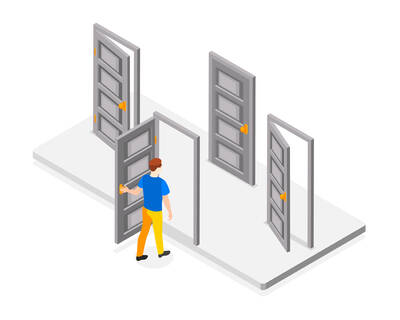
You’re sitting in class when a classmate asks to borrow a pencil. It seems like a small favor, so you agree without hesitation. The following week, the same classmate asks to share your notes. Later, they request help with a group project. You agree each time — after all, you helped out the first time — but before you know it, it has become automatic. This scenario demonstrates the “foot-in-the-door technique,” a psychological concept that shows how agreeing to small, acceptable demands makes it easier to accept larger ones later on. The name for this strategy comes from door-to-door

A: The four-day Tomb Sweeping Day long weekend begins Friday and will run until Monday. Are you going to sweep your ancestors’ tombs? B: I did in advance last weekend, so I can go to Kaohsiung to see the musical “The Phantom of the Opera.” A: Wow, is “Phantom” touring Taiwan again? It debuted in 1986, so this year marks the 40th anniversary of the show. B: And it’s not just touring Kaohsiung starting March 31, but also Taipei starting April 21 and Taichung starting May 26. A: “Phantom” is one of the world’s Four Major Musicals. I’ve seen all of them, except “Les

Dos & Don’ts — 想想看,這句話英語該怎麼說? 1. 我們很早到達電影院。 ˇ We arrived at the theater very early. χ We arrived the theater very early. 註︰arrive 為不及物動詞,後面如果有受詞要用 at 或 in。例如:They arrived in Taipei yesterday.。一般大地方,如國家、省、大城市等前面用 in,凡小地方城鎮、學校等則用 at。 2. 開車半小時以後,我們到達了海灘。 ˇ After half an hour’s drive, we got to the beach. χ After half an hour’s drive, we got the beach. 註︰come, go, get(來、去、到達)某地時,在表示地點的名詞前面應該用 to,如 go to school, go to Taipei, come to Shanghai 等。如果這些動詞後面所跟的是 here, there, home 等副詞,則不用 to。 3. 明天我會回辦公室。 ˇ I will be back in the office tomorrow. χ I will be back to office tomorrow. 註︰to be back 一語裡的 back 是副詞,不是介詞,所以後面要用 at (the market) 或 in (the office)。 假如假期結束,要回學校上課了則可說: ? Kids will be back


 RSS
RSS