


Former vice president Annette Lu recently traveled to Taichung to visit the exhibit “Art Vision of Abstraction.” During her visit, she held talks with artists in central Taiwan. Lu says that she hopes to collaborate with artists in central Taiwan and that they will join her Formosa Art League when it holds an exhibition at Fo Guang Shan Monastery in Greater Kaohsiung next summer.
Lu went to Taichung on Oct. 21 specifically to visit the Taiwan Culture Foundation’s Formosa Art Plaza and see the exhibit “Art Vision of Abstraction.” The foundation says that the exhibit includes works by seasoned artists such as Kuo Bor-jou, Yang Chih-fu, Tao Wen-yueh, Yang Jen-ming, Chien Chang-ta and Lin Jun-hui.
Apart from visiting the exhibit, Lu also mingled with local artists and told them that she believes art has the ability to improve the humanities in Taiwan and enhance the quality of life for Taiwanese people. She also invited the artists who were present during her visit to join the exhibit that she will be organizing at Fo Guang Shan Monastery next year. Lu says that her preliminary idea at this juncture is to have “Taiwan in the 21st century” be the theme for the exhibit. She anticipates that it will be able to express the values of Taiwanese people in the 21st century, and hopes that more artists will be able to work together on this promising project.
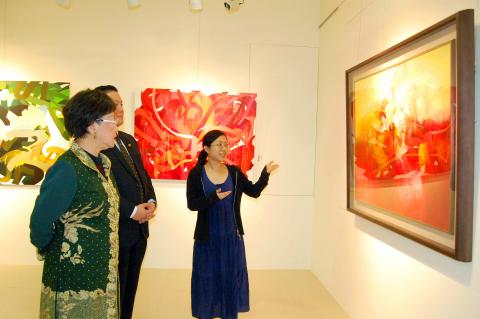
Photos: Su Meng-chuan, Liberty Times
照片:自由時報記者蘇孟娟
(Liberty Times, Translated by Kyle Jeffcoat)
前副總統呂秀蓮前往台中市參觀「抽象的視界」畫展,並與中部藝術家座談,呂秀蓮表示,希望集結中部藝術家與「玉山畫盟」合作,明年暑假前進高雄佛光山舉辦畫展。
呂秀蓮十月二十一日特地到台中市台灣文化會館基金會設的美麗台灣藝術空間,參觀正在舉辦的「抽象的視界」特展,基金會指出,這項特展展出中生代藝術家包括郭博州、楊智富、陶文岳、楊仁明、簡昌達、林俊慧等人的作品。
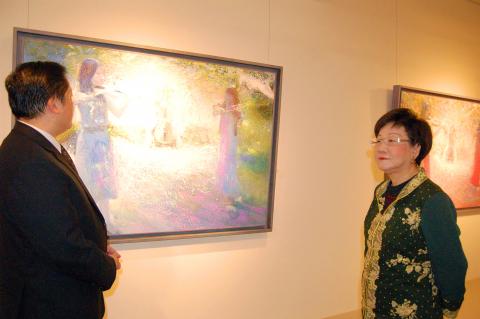
Photos: Su Meng-chuan, Liberty Times
照片:自由時報記者蘇孟娟
呂秀蓮除參觀畫展外,也跟台中地區的藝術家進行互動,她說,藝術能協助提昇台灣的人文素養,她也向出席藝術家邀約,希望能集合中部藝術家群,明年前往南部佛光山舉辦畫展。呂秀蓮指出,目前初步構想以「台灣廿一」的展名規劃,希望畫展中能傳達廿一世紀的台灣價值,讓更多藝術家共襄盛舉。
(自由時報記者蘇孟娟)
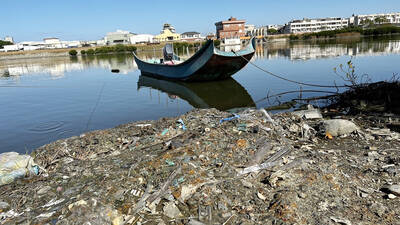
Many consumers are guilty of filling drawers or closets with old laptops, cellphones, fitness trackers and other electronic devices once they are no longer needed. It’s hard to know where to recycle such items, or it seems costly and inconvenient to do so. The world generates millions of tons of electronic waste — also called e-waste — each year. According to the UN’s most recent estimate, people worldwide produced 62 million metric tons of e-waste in 2022, and only about 22 percent of it was properly recycled. The US’ Environmental Protection Agency estimates that less than a quarter of e-waste is
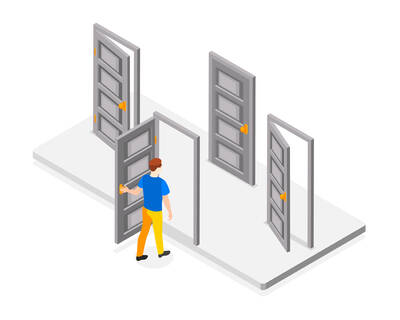
You’re sitting in class when a classmate asks to borrow a pencil. It seems like a small favor, so you agree without hesitation. The following week, the same classmate asks to share your notes. Later, they request help with a group project. You agree each time — after all, you helped out the first time — but before you know it, it has become automatic. This scenario demonstrates the “foot-in-the-door technique,” a psychological concept that shows how agreeing to small, acceptable demands makes it easier to accept larger ones later on. The name for this strategy comes from door-to-door
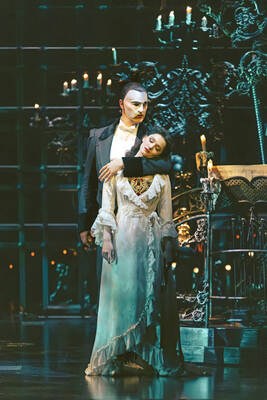
A: The four-day Tomb Sweeping Day long weekend begins Friday and will run until Monday. Are you going to sweep your ancestors’ tombs? B: I did in advance last weekend, so I can go to Kaohsiung to see the musical “The Phantom of the Opera.” A: Wow, is “Phantom” touring Taiwan again? It debuted in 1986, so this year marks the 40th anniversary of the show. B: And it’s not just touring Kaohsiung starting March 31, but also Taipei starting April 21 and Taichung starting May 26. A: “Phantom” is one of the world’s Four Major Musicals. I’ve seen all of them, except “Les

Dos & Don’ts — 想想看,這句話英語該怎麼說? 1. 我們很早到達電影院。 ˇ We arrived at the theater very early. χ We arrived the theater very early. 註︰arrive 為不及物動詞,後面如果有受詞要用 at 或 in。例如:They arrived in Taipei yesterday.。一般大地方,如國家、省、大城市等前面用 in,凡小地方城鎮、學校等則用 at。 2. 開車半小時以後,我們到達了海灘。 ˇ After half an hour’s drive, we got to the beach. χ After half an hour’s drive, we got the beach. 註︰come, go, get(來、去、到達)某地時,在表示地點的名詞前面應該用 to,如 go to school, go to Taipei, come to Shanghai 等。如果這些動詞後面所跟的是 here, there, home 等副詞,則不用 to。 3. 明天我會回辦公室。 ˇ I will be back in the office tomorrow. χ I will be back to office tomorrow. 註︰to be back 一語裡的 back 是副詞,不是介詞,所以後面要用 at (the market) 或 in (the office)。 假如假期結束,要回學校上課了則可說: ? Kids will be back


 RSS
RSS