


Kuang Tien General Hospital celebrated its centenary and Nurses Day with a nurse uniform fashion show on May 8, during which nurses wore historical nurses uniforms. The first nurse to ever work at the hospital, Chen Chuang Mei-ying, also gave a speech at the event.
Kuang Tien was established in 1913. Originally called Ren Sheng Hospital, it changed its name to Yang Chen Hospital in 1921, but because of Japanese rule the name had to be changed once again in 1941 to its current name. In its early days, there were only three beds and the hospital’s founder and first president, Wang Tung-chung, had to ride a horse around to visit patients in far away areas. His son, Wang Yu-lin, eventually took over the hospital and expanded its scope when he founded central Taiwan’s first girls’ college for nursing, which was formerly known as Hungkuang Junior College of Nursing and eventually became what is now Hungkuang University (HKU).
The 72-year-old Chen Chuang started working at the hospital after graduating from elementary school, and served as the hospital’s first nurse. She said that in the early days there was no system of certification, and that it was very grueling work because a single nurse was in charge of taking care of patients, registering them, taking money, and packaging medicine.
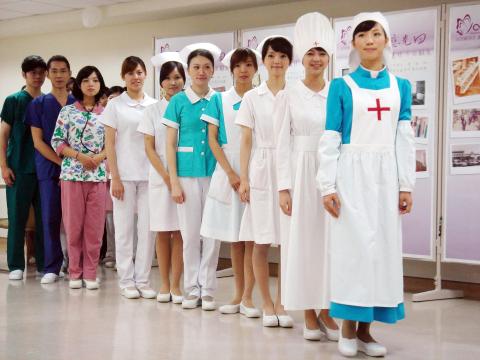
Photo: Ou Su-mei, Liberty Times
照片:自由時報記者歐素美
At the fashion show, employees wore old Florence Nightingale-style nurse uniforms, nurse uniforms with puffy sleeves, as well as the current uniform of round-collar shirts with pants. One of the nurses, Yang Ya-li, said today’s nurse uniforms consist of pants, which makes things much more convenient, adding that different hospital departments have various styles and colors of nurse uniforms.
HKU’s Department of Nursing held a crowning ceremony on May 8, during which teachers placed nurse caps on students’ heads to symbolize passing on the tradition of protecting lives. The department head, Chen Shu-ling, said that in Taiwan’s hospitals nurses have to take care of up to 20 patients at a time, which is two to three times the number of patients a nurse is in charge of in the US, Australia and Japan. She also said that a nurse in Taiwan will usually only work as a nurse for six to seven years, which is the lowest in all of Asia, and that the government should pay more attention to these issues.
(Liberty Times, Translated by Kyle Jeffcoat)
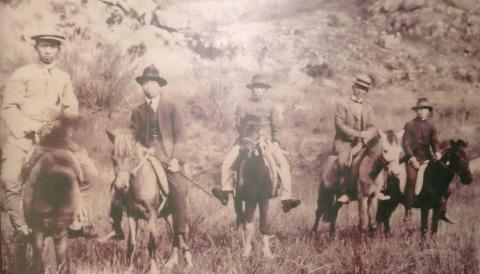
Photo: Ou Su-mei, Liberty Times
照片:自由時報記者歐素美
光田醫院慶祝成立百週年及護師節,五月八日舉辦「百年護士服fashion秀」等活動,見證醫療的歷史演進,光田醫院首位護士陳莊美英並現身說法。
光田醫院於一九一三年成立,最早為「仁聲醫院」,一九二一年改稱「養真醫院」,一九四一年因日本統治而被迫改名「光田醫院」,最早僅三張病床,創院院長王銅鐘須騎馬到偏遠地區看診,後由兒子王毓麟接手發揚光大,並創立中部第一所女子護理專科學校,即弘光科大。
七十二歲的陳莊美英,國小畢業就到光田醫院服務,是該院首位護士,她表示,早期沒有證照制度,照護、掛號批價、包藥,護士一手包,很辛苦。
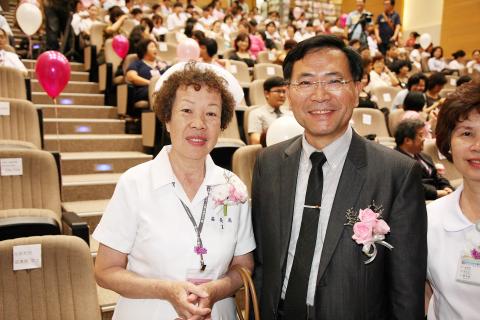
Photo: Ou Su-mei, Liberty Times
照片:自由時報記者歐素美
員工在「百年護士服fashion秀」展示了最初的南丁格爾式洋裝、蓬蓬袖護士服到現在的圓領褲裝等護士服;護士楊雅麗說,現在護士以褲裝為主,方便許多,不同科別的護士服樣式、色彩也不同,很多元。
弘光科大護理系五月八日則舉行「加冠典禮」,老師親手為護理系學生戴上護士帽,象徵守護生命傳承,系主任陳淑齡表示,台灣的醫院護士最多要照顧廿名病患,是美澳、日本等國的二至三倍,導致護理人員職涯平均僅六到七年,為亞洲最低,值得政府注意。
(自由時報記者歐素美)
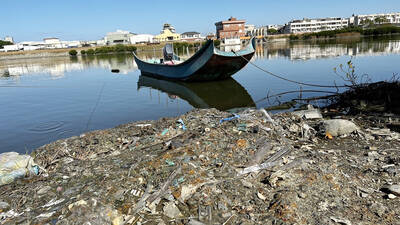
Many consumers are guilty of filling drawers or closets with old laptops, cellphones, fitness trackers and other electronic devices once they are no longer needed. It’s hard to know where to recycle such items, or it seems costly and inconvenient to do so. The world generates millions of tons of electronic waste — also called e-waste — each year. According to the UN’s most recent estimate, people worldwide produced 62 million metric tons of e-waste in 2022, and only about 22 percent of it was properly recycled. The US’ Environmental Protection Agency estimates that less than a quarter of e-waste is
You’re sitting in class when a classmate asks to borrow a pencil. It seems like a small favor, so you agree without hesitation. The following week, the same classmate asks to share your notes. Later, they request help with a group project. You agree each time — after all, you helped out the first time — but before you know it, it has become automatic. This scenario demonstrates the “foot-in-the-door technique,” a psychological concept that shows how agreeing to small, acceptable demands makes it easier to accept larger ones later on. The name for this strategy comes from door-to-door

A: The four-day Tomb Sweeping Day long weekend begins Friday and will run until Monday. Are you going to sweep your ancestors’ tombs? B: I did in advance last weekend, so I can go to Kaohsiung to see the musical “The Phantom of the Opera.” A: Wow, is “Phantom” touring Taiwan again? It debuted in 1986, so this year marks the 40th anniversary of the show. B: And it’s not just touring Kaohsiung starting March 31, but also Taipei starting April 21 and Taichung starting May 26. A: “Phantom” is one of the world’s Four Major Musicals. I’ve seen all of them, except “Les

Dos & Don’ts — 想想看,這句話英語該怎麼說? 1. 我們很早到達電影院。 ˇ We arrived at the theater very early. χ We arrived the theater very early. 註︰arrive 為不及物動詞,後面如果有受詞要用 at 或 in。例如:They arrived in Taipei yesterday.。一般大地方,如國家、省、大城市等前面用 in,凡小地方城鎮、學校等則用 at。 2. 開車半小時以後,我們到達了海灘。 ˇ After half an hour’s drive, we got to the beach. χ After half an hour’s drive, we got the beach. 註︰come, go, get(來、去、到達)某地時,在表示地點的名詞前面應該用 to,如 go to school, go to Taipei, come to Shanghai 等。如果這些動詞後面所跟的是 here, there, home 等副詞,則不用 to。 3. 明天我會回辦公室。 ˇ I will be back in the office tomorrow. χ I will be back to office tomorrow. 註︰to be back 一語裡的 back 是副詞,不是介詞,所以後面要用 at (the market) 或 in (the office)。 假如假期結束,要回學校上課了則可說: ? Kids will be back


 RSS
RSS