


Selected as one of 12 major Hakka festivals by the Hakka Affairs Council, Jhudong Township “Sky Mending Day” Taiwan Hakka Mountain Song Contest has now entered its 48th year. This year the event will take place at the Hakka Theater Park in Jhudong Township in Hsinchu County for four days starting the day after tomorrow. Hakka villages in northern Taiwan celebrate the folk festival “Sky Mending Day,” or tian chuan ri, on the 20th day of the first lunar month, which is five days after Lantern Festival. It is the most important day for Hakkas living in and around Jhudong. Hakkas generally lived in mountainous regions; therefore, they have developed their own specialized genre of mountain music. Mountain song competitions are held by many township offices in Hakka-populated areas, but the one held in Jhudong is considered to be the oldest and the biggest.
Legend has it that “Sky Mending Day” is celebrated as a memorial to the goddess Nuwa, who in Chinese mythology mended the sky by repairing a collapsed pillar holding it up, filling the cracks with five different colored rocks. On the day, some Hakkas in the north must stop what they are doing and take part in all sorts of activities to pay homage to Nuwa. Over time singing Hakka mountain songs on “Sky Mending Day” has become a custom in Hakka culture. According to the Hakka Affairs Council, Hakka mountain songs are the essence of Hakka culture. They are popular among Hakka populations in Guandong, Fujian, and Jiangxi in China, as well as in Taiwan. The songs are composed by singing and improvising and are representative of Hakka music.
Chang Yu-chen, a staffer in charge of the event at the Jhudong Township Office, told the Taipei Times that unlike mountain song contests held elsewhere, the one in Jhudong has kept strictly to classical Hakka tunes, without blending other music genres, in hopes of preserving the genuine tradition of Hakka tunes and passing them down from generation to generation. Last year the Hakka Affairs Council announced that “Sky Mending Day” would be National Hakka Day, but this move has upset most southern Hakkas who rarely celebrate “Sky Mending Day.” Nevertheless, the tradition of singing Hakka mountain songs on this day is undoubtedly part of Taiwan’s intangible cultural legacy.
(LIN YA-TI, TAIPEI TIMES)
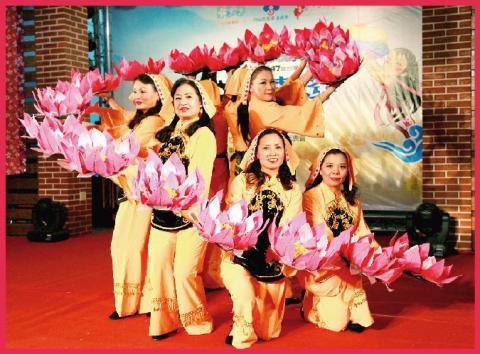
Photo courtesy of Jhudong Township Office
照片由竹東鎮公所提供
被行政院客家委員會列為客庄十二大節慶之一的竹東「天穿日」台灣客家山歌比賽,今年已邁入第四十八屆,該活動將從後天起一連四天,於新竹縣竹東鎮客家戲曲公園開唱。「天穿日」是台灣北部客家庄的民俗節日,在元宵節後五天的農曆正月二十日。此日對竹東鎮一帶的客家人來說,可是個大日子。客家人普遍居住山區,傳唱的山歌也別具特色。許多客家鄉鎮每逢此時,會舉辦山歌比賽,尤以竹東鎮的比賽被視為歷史最悠久且最盛大。
據傳「天穿日」是為了紀念中國神話的女神「女媧」,曾煉五色石以補天而來。部分北部地區客家人這天必須放下手邊工作,取而代之的是參加各式活動感念女媧,因此衍生出享受唱山歌自娛娛人的習俗。根據行政院客家委員會的資料,客家山歌是客家文化的精髓,流行於廣東、福建、江西、台灣等地的客家人中,主要靠口創作,即興而出,是客家音樂的代表。
竹東鎮公所台灣客家山歌比賽承辦人員張玉珍告訴《台北時報》表示,有別於其他客家鄉鎮的山歌比賽,竹東堅守傳統曲調,不跨界混入其他音樂曲式,讓客家山歌原汁原味,得以保留並世代傳唱。客委會去年將「天穿日」訂為「全國客家日」,雖招致部份南部客家人不滿,畢竟鮮少南部客家人慶祝「天穿日」。即便如此,「天穿日」唱台灣客家山歌的傳統,可謂台灣無形的文化資產。
(台北時報記者林亞蒂)
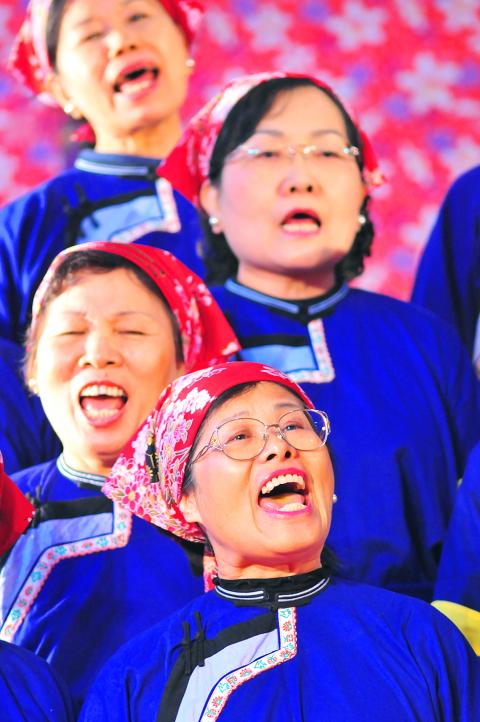
Photo courtesy of Jhudong Township Office
照片由竹東鎮公所提供
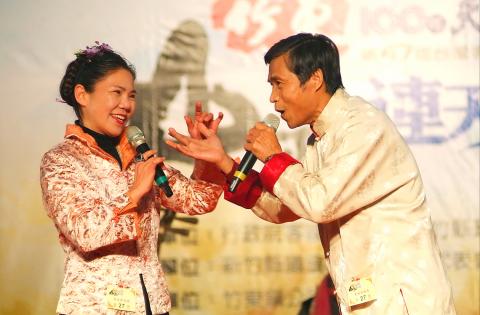
Photo courtesy of Jhudong Township Office
照片由竹東鎮公所提供

★ Bilingual Story is a fictionalized account. 雙語故事部分內容純屬虛構。 The mango looked perfect. It sat on the fruit stand like a small sunset, red on one side and gold on the other. “I’ll take this one,” said Daniel. The fruit seller shook her head. “Not that one.” Daniel was surprised. “Why not? It looks beautiful.” “Yes,” she said, “but beautiful is not always ready.” She picked up another mango and held it near his nose. “First, smell here.” Daniel smelled the top of the mango. It was sweet and warm. “Good mangoes have a smell,” she said. “Next, feel the weight.”

In 2023, an 80-year-old woman in Taipei suffocated her paralyzed son after over five decades of caring for him. Turning herself in immediately, she confessed that worsening health and anxiety about who would care for him after her death had driven her to act. The court, acknowledging her difficult situation, sentenced her to two-and-a-half years in prison while recommending a presidential pardon. This rare judicial recommendation drew a complicated social response. Supporters argue that the mother’s half-century of caregiving renders her deserving of compassion instead of incarceration, believing that allowing her to live her final years in dignity and

Put the Cart Before the Horse 本末倒置 Iris: I think I’m in love. Carl: What? Iris: We just have so much in common. We like all of the same things. Carl: Yes, but you’ve only chatted with him online. Iris: It doesn’t matter. I know we’ll end up getting married. Carl: I’m afraid you’re putting the cart before the horse. You should at least meet him first. Iris: OK, OK. I’ll do that. 艾瑞絲: 我想我戀愛了。 卡 爾: 什麼? 艾瑞絲: 我們就是有那麼多的共通點。我們喜歡的東西都一樣。 卡 爾: 是沒錯,不過妳和他只在網路上聊過天而已。 艾瑞絲: 那不重要。我知道我們最後一定會步入禮堂。 卡 爾: 妳恐怕是本末倒置了吧。妳至少應該先跟他見個面。 艾瑞絲: 好啦,好啦。我會的啦。 A tough cookie 強悍的人∕堅強的人 Tracy: I heard you went out with Iris last night. Justin: Yeah. We

1. 他非常討厭偽君子。 ˇ He has a deep hatred for hypocrites. χ He has a deep hatred to hypocrites. 註︰表示「對某人懷著愛、恨」等, 常用 have a love for/of, have a hatred for/of。 例如: We have a love for/of science. The working people have a hatred for/of all forms of exploitation. 2. 問題的答案其實不難找。 ˇ The answer to this question is not difficult to find. χ The answer of this question is not difficult to find. 註︰中文中的「的」在英語中不一定都用 of 來表示,有時須用 to。其他的例子如下: 我把房間的鑰匙弄丟了。 I lost the key to the room. 中間矗立著烈士紀念碑。 In the center stands the monument to the martyrs. 這部電影的續集你看過沒有? Have you seen the sequel to the movie? 3. 比起那家餐廳,他更喜歡這家。 ˇ He prefers this restaurant to that one. ˇ He likes


 RSS
RSS