


Surrounded by ocean, Taiwan is rich in ecological resources, including a resplendently unique organism that at first looks like a miniature Christmas tree. The common English name for the spirobranchus giganteus is Christmas tree worm. What is most surprising is that the Christmas tree worm is an annelid and a distant relative of the soil-covered earthworm.
The Christmas tree worm embeds itself inside the top part of choral reefs, and secretes a calcium-rich tube around its body, which serves as the worm’s home and protection. Dwelling inside the top of the coral reef, it subsists by filter feeding. The most beautiful part of the worm are its two Christmas-tree shaped “crowns,” which are actually highly modified palps located at the front of the mouth that allow any prey trapped inside of them to be transported to the worm’s mouth, but they are also used for respiration.
(LIBERTY TIMES, TRANSLATED BY KYLE JEFFCOAT)
環海的台灣,沿海有豐富的生態資源,包括一種豔麗非凡、乍看之下宛如迷你聖誕樹的生物,它就是英文俗名稱為「聖誕樹蟲」的旋鰓蟲。令人驚訝的是,屬於環節動物的聖誕樹蟲,遠房親戚竟是「灰頭土臉」的蚯蚓。
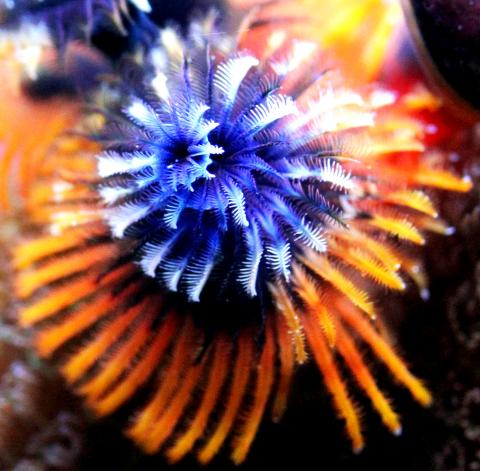
Photo Courtesty of Lee Chih-ying
照片:由李志穎提供
聖誕樹蟲會嵌入大型珊瑚的上方,身體分泌出一條鈣質的管腔,固定於珊瑚上面,做為住所並具有保護自己的作用,「定棲」在珊瑚上面的聖誕樹蟲,濾食水中的微生物來維生,這種生物顏色最豔麗的部分,是兩個組成狀似聖誕樹的「冠」,這種冠是高度進化的「口前葉觸鬚」,用來困住與運送微生物到口部,同時具有呼吸功能。
(自由時報記者張瑞楨)
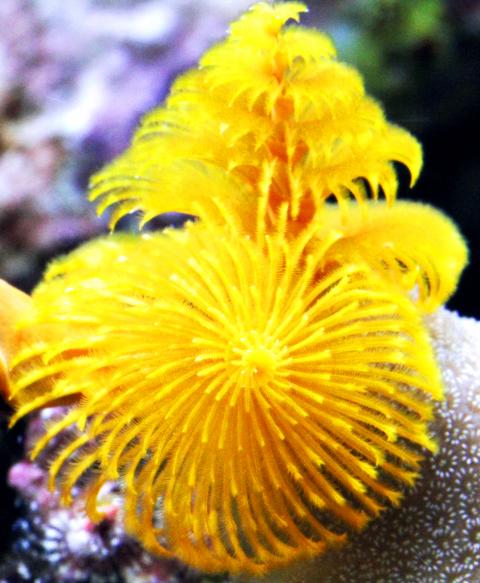
Photo Courtesty of Lee Chih-ying
照片:由李志穎提供
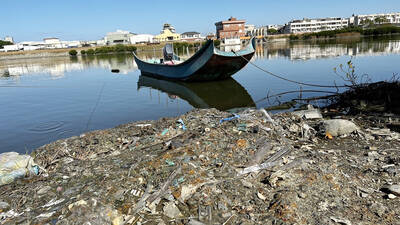
Many consumers are guilty of filling drawers or closets with old laptops, cellphones, fitness trackers and other electronic devices once they are no longer needed. It’s hard to know where to recycle such items, or it seems costly and inconvenient to do so. The world generates millions of tons of electronic waste — also called e-waste — each year. According to the UN’s most recent estimate, people worldwide produced 62 million metric tons of e-waste in 2022, and only about 22 percent of it was properly recycled. The US’ Environmental Protection Agency estimates that less than a quarter of e-waste is
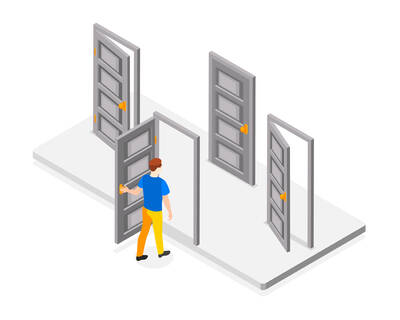
You’re sitting in class when a classmate asks to borrow a pencil. It seems like a small favor, so you agree without hesitation. The following week, the same classmate asks to share your notes. Later, they request help with a group project. You agree each time — after all, you helped out the first time — but before you know it, it has become automatic. This scenario demonstrates the “foot-in-the-door technique,” a psychological concept that shows how agreeing to small, acceptable demands makes it easier to accept larger ones later on. The name for this strategy comes from door-to-door

A: The four-day Tomb Sweeping Day long weekend begins Friday and will run until Monday. Are you going to sweep your ancestors’ tombs? B: I did in advance last weekend, so I can go to Kaohsiung to see the musical “The Phantom of the Opera.” A: Wow, is “Phantom” touring Taiwan again? It debuted in 1986, so this year marks the 40th anniversary of the show. B: And it’s not just touring Kaohsiung starting March 31, but also Taipei starting April 21 and Taichung starting May 26. A: “Phantom” is one of the world’s Four Major Musicals. I’ve seen all of them, except “Les

Dos & Don’ts — 想想看,這句話英語該怎麼說? 1. 我們很早到達電影院。 ˇ We arrived at the theater very early. χ We arrived the theater very early. 註︰arrive 為不及物動詞,後面如果有受詞要用 at 或 in。例如:They arrived in Taipei yesterday.。一般大地方,如國家、省、大城市等前面用 in,凡小地方城鎮、學校等則用 at。 2. 開車半小時以後,我們到達了海灘。 ˇ After half an hour’s drive, we got to the beach. χ After half an hour’s drive, we got the beach. 註︰come, go, get(來、去、到達)某地時,在表示地點的名詞前面應該用 to,如 go to school, go to Taipei, come to Shanghai 等。如果這些動詞後面所跟的是 here, there, home 等副詞,則不用 to。 3. 明天我會回辦公室。 ˇ I will be back in the office tomorrow. χ I will be back to office tomorrow. 註︰to be back 一語裡的 back 是副詞,不是介詞,所以後面要用 at (the market) 或 in (the office)。 假如假期結束,要回學校上課了則可說: ? Kids will be back


 RSS
RSS