


Over the past decade, Nikolai Baskov has emerged as one of the biggest selling recording artists in Russia.
He is a favorite of Russian Prime Minister Vladimir Putin, and his performances — with dramatic lighting and dazzling showmanship — are becoming legendary there and in Europe.
Now, the rest of the world may be in Baskov’s grasp. The classically trained vocalist has his eyes — or more appropriately, voice — set on seizing the rest of the world with his powerful range.
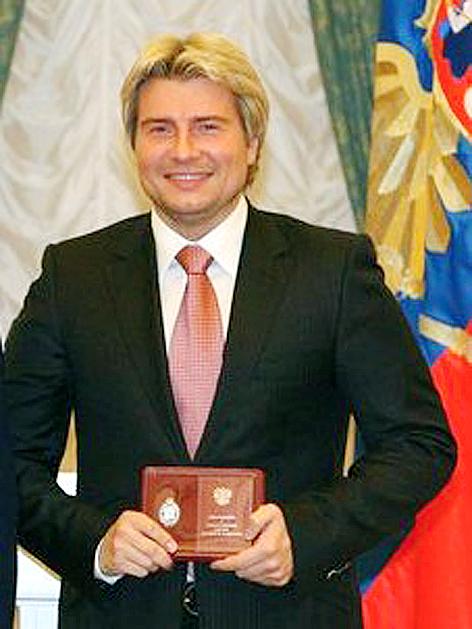
photo: Russian Presidential Press and Information Office
照片:俄羅斯總統新聞處與資訊辦公室
“For me, really this is the beginning. Because I’ve accomplished so much in my country, I’m used to being received at a certain level, but I also appreciate a certain level of anonymity here when I’m in New York,” he said in an intimate performance earlier last month. “The public perception of me has been really phenomenal. In America, if they love you, they love you unconditionally, which separates the US audiences...from any other audiences in the world.” Classically trained in Russia, Baskov turned down an offer to study in the US at Juilliard. That opportunity came during tough times in Moscow; Baskov opted to study at home. He also admitted he couldn’t be away from his mother for that long.
Now that he is an adult, he still stays very close to his parents.
The tenor’s stratospheric rise to the top of the Russian charts began with a music video of the song “Caruso.” It was picked up by every television outlet in Russia, and was played for months. Based on the popularity of that song and video, he began to perform, and quickly learned how to charm audiences with his charisma and stage persona.
Besides Lady Gaga and Barbara Streisand, Baskov cites Italian crooner Mario Lanza as his main influence.
“I admire everything about him, from the way he carries himself on stage to the way he sings.” In June, the US Public Broadcasting System ran Baskov’s Moscow concert from the famed Luzhniki Arena. Early last month, that performance was released on CD and DVD as “Romantic Journey.” Baskov will tour North America early next year with dates in Los Angeles, California; Pittsburgh, Pennsylvania; Hartford, Connecticut; and other cities.
He will also perform in New York, which is a favorite.
(AP)
過去十年,尼可拉‧巴斯可夫已脫穎而出成為在俄羅斯唱片銷售量最大的藝術家。
他是俄羅斯總理弗拉吉米爾‧普廷的最愛,他的演出─含有戲劇性的燈光與他令人驚嘆的舞台魅力─每齣都在當地以及歐洲成為傳奇。
現在,世界其他地方可能都是巴斯可夫想要佔有一席之地的舞台。這個在音樂學院接受紮實古典音樂訓練的聲樂家,放眼─或說放聲可能更為貼切─要以他無懈可擊的廣泛音域,席捲全世界。
他在上月初的一場小型演出表示:「對我來說,其實這才是開始而已。因為我在我的國家已經有這麼多的成就,我已習慣受到一定程度的愛戴,但是我在紐約也享受某種程度身為非公眾人物的自由。」他說:「大眾對我的觀感一向讚不絕口。在美國,若人們愛你,他們就會無條件地愛著你,這也是美國觀眾與世界其他觀眾相異之處。」在俄羅斯接受古典音樂訓練的巴斯可夫,當年婉拒了美國茱莉亞音樂學院的入學機會。當時正逢莫斯科的艱困時期,巴斯可夫選擇在國內深造。他也透露無法與母親分開那麼久。
如今他已成年,但仍然與父母感情甚篤。
這位男高音在俄羅斯排行榜告示牌的崛起始於一首歌曲「卡羅素」的音樂影片。所有俄羅斯電視台皆有播放該片,且一播就是數個月。以這個廣受喜愛的歌曲與影片為跳板,巴斯可夫開始他的演藝人生,並且很快地學會如何以他的魅力與臺風,擄獲觀眾的心。
除了女神卡卡與芭芭拉‧史翠珊以外,巴斯可夫特別讚頌義大利吟唱歌王馬利歐‧蘭沙為主要影響他的歌手。
他表示:「從他登台時的舉手投足,以至於他唱歌的方式,我欣賞他的一切。」美國公共廣播系統電視台於六月,轉播巴斯可夫在路日尼基球場舉辦的莫斯科演唱會。上個月稍早,該場演唱會也發行以「浪漫旅程」為標題的CD與DVD。巴斯可夫明年初將巡迴北美,包括加州洛杉磯、賓州匹茲堡、康乃狄克州哈特福特,以及其他城市。
他也會在他最愛的紐約開唱。
(美聯社/翻譯:林亞蒂)

Many consumers are guilty of filling drawers or closets with old laptops, cellphones, fitness trackers and other electronic devices once they are no longer needed. It’s hard to know where to recycle such items, or it seems costly and inconvenient to do so. The world generates millions of tons of electronic waste — also called e-waste — each year. According to the UN’s most recent estimate, people worldwide produced 62 million metric tons of e-waste in 2022, and only about 22 percent of it was properly recycled. The US’ Environmental Protection Agency estimates that less than a quarter of e-waste is
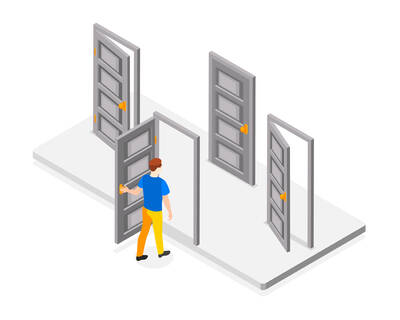
You’re sitting in class when a classmate asks to borrow a pencil. It seems like a small favor, so you agree without hesitation. The following week, the same classmate asks to share your notes. Later, they request help with a group project. You agree each time — after all, you helped out the first time — but before you know it, it has become automatic. This scenario demonstrates the “foot-in-the-door technique,” a psychological concept that shows how agreeing to small, acceptable demands makes it easier to accept larger ones later on. The name for this strategy comes from door-to-door

A: The four-day Tomb Sweeping Day long weekend begins Friday and will run until Monday. Are you going to sweep your ancestors’ tombs? B: I did in advance last weekend, so I can go to Kaohsiung to see the musical “The Phantom of the Opera.” A: Wow, is “Phantom” touring Taiwan again? It debuted in 1986, so this year marks the 40th anniversary of the show. B: And it’s not just touring Kaohsiung starting March 31, but also Taipei starting April 21 and Taichung starting May 26. A: “Phantom” is one of the world’s Four Major Musicals. I’ve seen all of them, except “Les

Dos & Don’ts — 想想看,這句話英語該怎麼說? 1. 我們很早到達電影院。 ˇ We arrived at the theater very early. χ We arrived the theater very early. 註︰arrive 為不及物動詞,後面如果有受詞要用 at 或 in。例如:They arrived in Taipei yesterday.。一般大地方,如國家、省、大城市等前面用 in,凡小地方城鎮、學校等則用 at。 2. 開車半小時以後,我們到達了海灘。 ˇ After half an hour’s drive, we got to the beach. χ After half an hour’s drive, we got the beach. 註︰come, go, get(來、去、到達)某地時,在表示地點的名詞前面應該用 to,如 go to school, go to Taipei, come to Shanghai 等。如果這些動詞後面所跟的是 here, there, home 等副詞,則不用 to。 3. 明天我會回辦公室。 ˇ I will be back in the office tomorrow. χ I will be back to office tomorrow. 註︰to be back 一語裡的 back 是副詞,不是介詞,所以後面要用 at (the market) 或 in (the office)。 假如假期結束,要回學校上課了則可說: ? Kids will be back


 RSS
RSS