


When Penghu County’s Environmental Protection Bureau began monitoring and classifying garbage found in their waters and on their beaches last year, they found that more and more garbage is drifting there from the Chinese coast. The wide variety of garbage includes life jackets from Qingdao, buoys from Fujian fishing boats and PET bottles.
Since August last year, the Environmental Protection Bureau has divided the garbage found in their waters into different categories. A total of 314 people have been mobilized, finding 8,060 pieces of garbage. Of the 1,860 pieces of all this garbage that were found in Houliao after Dec. 11, a shocking 80 percent came from China. This garbage is likely to have drifted on ocean currents to Penghu.
The Environmental Protection Bureau’s analysis of the origin of the garbage showed that not only did it come from the coastal areas of Guangdong, Jiangsu, and Zhejiang provinces and the city of Shanghai, it also came from Chinese inland provinces such as Jiangxi and Hubei. Only a small part came from Taiwan and Japan. The most common kind of garbage were daily necessities, such as plastic bags, bottles, cans, clothes and so on. That was followed by fishing nets and fish bait, and the third most common category was cigarette butts.
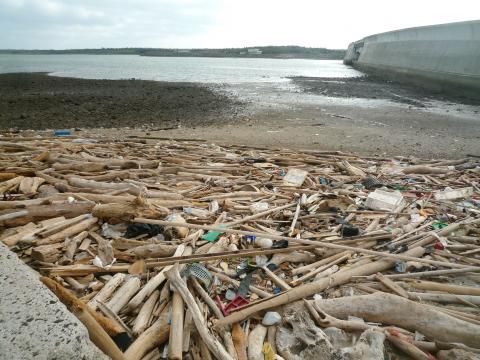
Photo: Liu Yu-ching, Liberty Times
照片:自由時報記者劉禹慶
Lienchiang County at the estuary of China’s Min River, where the aquaculture industry is rapidly developing, is plagued by large amounts of Styrofoam and buoys.
Negotiations were held with China’s environmental protection authorities in 2005, resulting in the establishment of a maritime environmental protection squad, cutting the annual 800 metric tonnes of garbage to 402 metric tonnes in 2008.
But Penghu sits in the middle of the Taiwan Strait, and the Chinese coastal area with drifting garbage is too big, which means that any negotiations must involve several Chinese provinces, and this is complicating matters. The Penghu County Government wants the issue to be included on the agenda of both Taiwan’s Straits Exchange Foundation and China’s Association for Relations Across the Taiwan Strait so that it can be discussed and resolved once and for all.
(LIBERTY TIMES, TRANSLATED BY TAIJING WU)
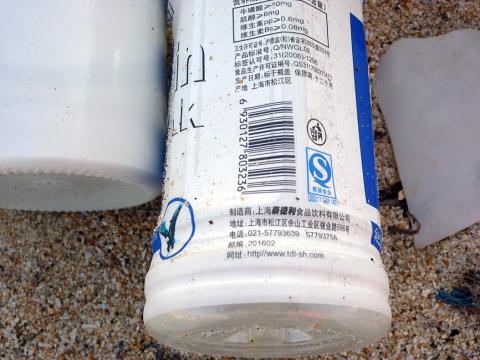
Photo: Liu Yu-ching, Liberty Times
照片:自由時報記者劉禹慶
澎湖縣環保局去年起針對海域淨灘垃圾進行分類監控,發現中國沿岸海漂來的垃圾逐漸增多,垃圾內容琳瑯滿目,有來自中國青島的救生衣、福建漁船浮球、寶特瓶等。
去年八月起環保局發動海域垃圾分類活動,動員多達三百一十四人次,清理出八千零六十件垃圾,其中十二月十一日後寮清出的一千八百六十件垃圾,竟有八十%以上都是中國垃圾,令人怵目驚心,研判是隨著洋流漂流抵澎。
環保局針對後寮垃圾來源分析,發現不僅來自中國沿岸廣東、上海、江蘇、浙江等地,竟然還有來自中國內陸江西、湖北的垃圾,只有少數為台灣本島及日本漂流而來,最大量垃圾是民生必需品,如塑膠袋、瓶罐、衣服等物品,其次則是漁網、魚餌等,排名第三則是香菸殘渣等。
由於鄰近中國閩江口的連江縣,養殖業蓬勃發展,大量保麗龍、浮球垃圾也成為連江縣之痛。
早在二零零五年就與中國環保當局協調,成立「海上環衛隊」,每年垃圾量八百噸逐年下降,九十七年已下降至四百零二噸。
但澎湖位在海峽中間,中國沿岸海漂的垃圾範圍過於廣大,協調必須跨越中國數省,困難度相對增高,澎湖縣政府希望列入海基、海協兩會對談議題,真正解決問題。
(自由時報記者劉禹慶)
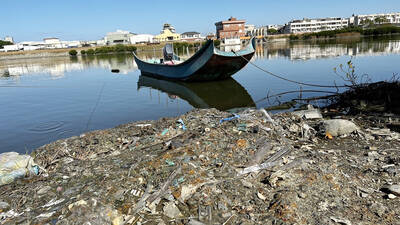
Many consumers are guilty of filling drawers or closets with old laptops, cellphones, fitness trackers and other electronic devices once they are no longer needed. It’s hard to know where to recycle such items, or it seems costly and inconvenient to do so. The world generates millions of tons of electronic waste — also called e-waste — each year. According to the UN’s most recent estimate, people worldwide produced 62 million metric tons of e-waste in 2022, and only about 22 percent of it was properly recycled. The US’ Environmental Protection Agency estimates that less than a quarter of e-waste is
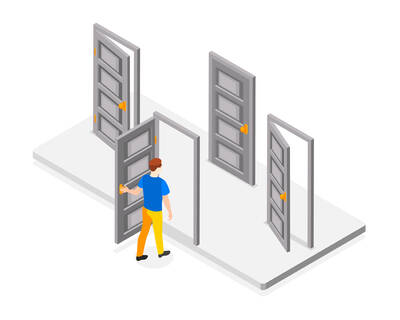
You’re sitting in class when a classmate asks to borrow a pencil. It seems like a small favor, so you agree without hesitation. The following week, the same classmate asks to share your notes. Later, they request help with a group project. You agree each time — after all, you helped out the first time — but before you know it, it has become automatic. This scenario demonstrates the “foot-in-the-door technique,” a psychological concept that shows how agreeing to small, acceptable demands makes it easier to accept larger ones later on. The name for this strategy comes from door-to-door

A: The four-day Tomb Sweeping Day long weekend begins Friday and will run until Monday. Are you going to sweep your ancestors’ tombs? B: I did in advance last weekend, so I can go to Kaohsiung to see the musical “The Phantom of the Opera.” A: Wow, is “Phantom” touring Taiwan again? It debuted in 1986, so this year marks the 40th anniversary of the show. B: And it’s not just touring Kaohsiung starting March 31, but also Taipei starting April 21 and Taichung starting May 26. A: “Phantom” is one of the world’s Four Major Musicals. I’ve seen all of them, except “Les

Dos & Don’ts — 想想看,這句話英語該怎麼說? 1. 我們很早到達電影院。 ˇ We arrived at the theater very early. χ We arrived the theater very early. 註︰arrive 為不及物動詞,後面如果有受詞要用 at 或 in。例如:They arrived in Taipei yesterday.。一般大地方,如國家、省、大城市等前面用 in,凡小地方城鎮、學校等則用 at。 2. 開車半小時以後,我們到達了海灘。 ˇ After half an hour’s drive, we got to the beach. χ After half an hour’s drive, we got the beach. 註︰come, go, get(來、去、到達)某地時,在表示地點的名詞前面應該用 to,如 go to school, go to Taipei, come to Shanghai 等。如果這些動詞後面所跟的是 here, there, home 等副詞,則不用 to。 3. 明天我會回辦公室。 ˇ I will be back in the office tomorrow. χ I will be back to office tomorrow. 註︰to be back 一語裡的 back 是副詞,不是介詞,所以後面要用 at (the market) 或 in (the office)。 假如假期結束,要回學校上課了則可說: ? Kids will be back


 RSS
RSS