


A man from Jhuci Township, Chiayi County has donated two rare crocodiles to Taipei Zoo. It took 20 zoo staff and plenty of rope to subdue the ferocious creatures.
The Malayan gharials, which were reared by Juan Chin-bang and his son Juan Mao-sheng, are protected by the Convention on International Trade in Endangered Species of Wild Fauna and Flora. The zoo staff decided not to anesthetize the beasts, reasoning that their slow metabolism would mean a lot of time would be wasted waiting for the anesthetic to take effect. The staff started work at 8am, and by 10.30am both crocodiles had been safely packed in crates and hoisted onto the back of a truck.
The Juan family started breeding crocodiles 30 years ago in line with the government’s agricultural policy, and now have over 100 of them. However, with animal protection being a popular topic right now, and with the rumble of passing traffic affecting the hatching of the eggs, the family took the advice of a friend and decided to donate two crocodiles to a zoo.
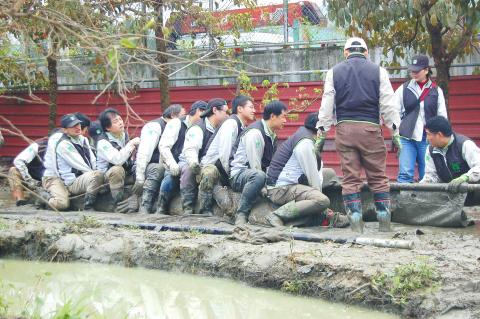
PHOTO: LIBERTY TIMES, HSIEH YIN-CHUNG 照片:自由時報記者謝銀仲
Zoo staff traveled down to Chiayi in August and selected two crocodiles, which were then isolated and put under observation for four months. Last week, 20 staff, assisted by two cranes and the Juan family, accomplished their mission of packing up the crocodiles for transportation.
Zoo staff said that because crocodiles are cold-blooded animals with slow metabolism, it would take a day for the anesthetic injection to take effect, which is why they decided not to bother with it. But since crocodiles are aggressive animals that can launch devastating and rapid attacks, the staff had to remain on guard at all times.
The zoo staff decided to first remove the 3.7m-long female. A sack was thrown over her eyes, her mouth was tethered shut and then 10 men rushed at her and sat astride her back. Following the taking of a blood sample, measuring her length and some other procedures, she was put in a wooden crate and hoisted onto a truck.
The male is 4.7m-long and weighs around 700kg, while the female weighs 400kg. The two newcomers are already on display at the zoo.
(LIBERTY TIMES, TRANSLATED BY TAIJING WU)
住在嘉義縣竹崎鄉的一位民眾,近日捐贈一對稀有長吻鱷給台北市立動物園。大約二十位工作人員以優勢人力,配合繩索的輔助,以最原始的方式抑制這條猛獸,過程驚險。
阮金榜、阮茂盛父子飼養的鱷魚是華盛頓公約列入瀕臨絕種的保育類馬來長吻鱷。工作人原因認為鱷魚新陳代謝緩慢,等麻藥發作要花很長的時間,所以省略這個步驟。他們於八點動工,兩隻鱷魚於十點半就已經裝箱以吊車放在卡車上。
阮氏父子三十餘年前配合政府農業政策飼養鱷魚,目前農場飼養將近一百隻鱷魚。但近日動物保育意識抬頭,加上附近道路車輛經過的噪音,使鱷魚下蛋卻孵不出小鱷魚,所以接受他人建議捐贈兩隻給動物園。
園方今年八月南下嘉義,選了二十九歲的兩隻鱷魚,並將之隔離。經近四個月觀察,上週由動物園二十餘人及二部吊車,在飼主協助下才成功裝箱運送。
動物園表示,鱷魚是冷血動物,新陳代謝緩慢,注射麻藥必須等將近一整天才發作,所以才用這種方式捕捉。惟鱷魚攻擊性強,捕捉過程須防其翻滾肌肉瞬間激烈運動造成傷害。
工作人員先選定三點七公尺的母鱷,用麻布袋遮眼睛,繩索套嘴,拉出池畔,十餘人再一湧而上,跨坐在鱷魚背上制伏,採集血液檢體、量體長等程序後,裝入木箱內,吊到車上。
這對馬來長吻鱷,公鱷長四點七公尺、重約七百公斤;母鱷約四百公斤,動物園遊客已經可看到這對嬌客。
(自由時報記者謝銀仲)
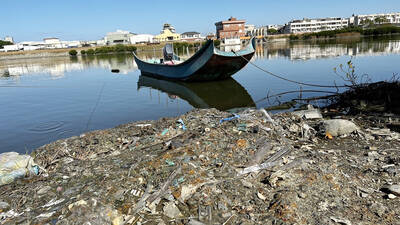
Many consumers are guilty of filling drawers or closets with old laptops, cellphones, fitness trackers and other electronic devices once they are no longer needed. It’s hard to know where to recycle such items, or it seems costly and inconvenient to do so. The world generates millions of tons of electronic waste — also called e-waste — each year. According to the UN’s most recent estimate, people worldwide produced 62 million metric tons of e-waste in 2022, and only about 22 percent of it was properly recycled. The US’ Environmental Protection Agency estimates that less than a quarter of e-waste is
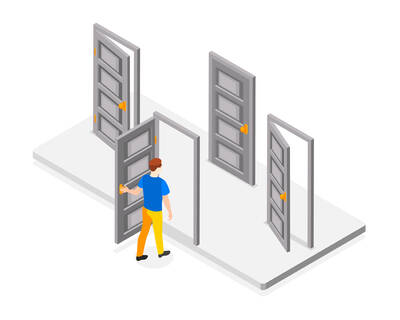
You’re sitting in class when a classmate asks to borrow a pencil. It seems like a small favor, so you agree without hesitation. The following week, the same classmate asks to share your notes. Later, they request help with a group project. You agree each time — after all, you helped out the first time — but before you know it, it has become automatic. This scenario demonstrates the “foot-in-the-door technique,” a psychological concept that shows how agreeing to small, acceptable demands makes it easier to accept larger ones later on. The name for this strategy comes from door-to-door

A: The four-day Tomb Sweeping Day long weekend begins Friday and will run until Monday. Are you going to sweep your ancestors’ tombs? B: I did in advance last weekend, so I can go to Kaohsiung to see the musical “The Phantom of the Opera.” A: Wow, is “Phantom” touring Taiwan again? It debuted in 1986, so this year marks the 40th anniversary of the show. B: And it’s not just touring Kaohsiung starting March 31, but also Taipei starting April 21 and Taichung starting May 26. A: “Phantom” is one of the world’s Four Major Musicals. I’ve seen all of them, except “Les

Dos & Don’ts — 想想看,這句話英語該怎麼說? 1. 我們很早到達電影院。 ˇ We arrived at the theater very early. χ We arrived the theater very early. 註︰arrive 為不及物動詞,後面如果有受詞要用 at 或 in。例如:They arrived in Taipei yesterday.。一般大地方,如國家、省、大城市等前面用 in,凡小地方城鎮、學校等則用 at。 2. 開車半小時以後,我們到達了海灘。 ˇ After half an hour’s drive, we got to the beach. χ After half an hour’s drive, we got the beach. 註︰come, go, get(來、去、到達)某地時,在表示地點的名詞前面應該用 to,如 go to school, go to Taipei, come to Shanghai 等。如果這些動詞後面所跟的是 here, there, home 等副詞,則不用 to。 3. 明天我會回辦公室。 ˇ I will be back in the office tomorrow. χ I will be back to office tomorrow. 註︰to be back 一語裡的 back 是副詞,不是介詞,所以後面要用 at (the market) 或 in (the office)。 假如假期結束,要回學校上課了則可說: ? Kids will be back


 RSS
RSS