


Japanese Prime Minister Taro Aso complained he cannot find enough time to devote himself to his lifelong hobby — reading comics.
Aso, who takes comics on trips abroad, said he finished reading two weekly magazines last week but has yet to find time to read two others.
“It’s hard to read comic books as my time is now restricted,” a smiling Aso told an audience of hundreds in his first street speech since taking office on Sept. 24.
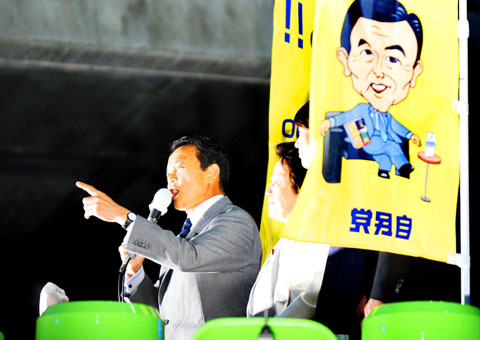
PHOTO: AP
The conservative, often gruff lawmaker has eagerly sought to soften his image in recent years by casting himself as one of Japan’s “otaku” — nerds whose hobbies border on obsession.
Aso used the speech in Tokyo’s Akihabara district to hail Japan’s subculture, notably comic books, as a key export from the country.
“Japan’s subculture of animation has been overwhelmingly accepted in the world,” Aso said.
“Japan’s culture is not only kabuki,” he said, referring to Japanese traditional drama. “Comic books, our subculture power, have been widely read in not only Asia but Europe, the United States and Latin America.”
Akihabara, long known for major electronics shops, has become the top gathering point for the otaku, with stores selling the latest comic books and animation DVDs. Waitresses dress up as characters from hit video games.
“I can cheer up when I come to Akihabara. I always feel at home here,” Aso said as supporters, mostly in their 20s and 30s, yelled in chorus: “Aso, Aso, Aso.”
(AFP)
日本首相麻生太郎抱怨自己沒有足夠的時間專心從事畢生嗜好:看漫畫。
出國旅行都會帶著漫畫的麻生說,他上週看完了兩本週刊,但湊不出時間看另外兩本。
九月二十四日執政以來,第一次在街頭發表演說的麻生笑著對數百名群眾說:「現在我時間有限,不太能看漫畫了。」
這幾年來,麻生一直積極軟化他保守、不茍言笑的律師形象,還將自己比作日本的「御宅族」──熱衷嗜好近乎癡狂的呆子。
麻生在東京秋葉原區的演說中大讚日本次文化,尤其是漫畫,是日本重要的輸出。
麻生說:「日本的動畫次文化已經席捲全球。」
他說:「日本文化不是只有歌舞伎而已。我們次文化漫畫的勢力,不只影響亞洲,在歐洲、美國和拉丁美洲也擁有廣大讀者群。」歌舞伎是日本傳統戲劇。
長久以來一直是日本電器店主要集散地的秋葉原,由於店家們販售最新出版的漫畫和動畫光碟,已成為御宅族聚集的頭號聖地。餐廳女侍也會裝扮成熱門電玩遊戲裡面的人物。
麻生說:「來到秋葉原我覺得很開心,這裡總令我感到自在。」這段話引起現場大多是二、三十歲的支持者齊聲高呼:「麻生、麻生、麻生。」(法新社�翻譯:袁星塵)
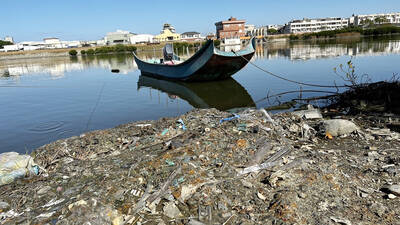
Many consumers are guilty of filling drawers or closets with old laptops, cellphones, fitness trackers and other electronic devices once they are no longer needed. It’s hard to know where to recycle such items, or it seems costly and inconvenient to do so. The world generates millions of tons of electronic waste — also called e-waste — each year. According to the UN’s most recent estimate, people worldwide produced 62 million metric tons of e-waste in 2022, and only about 22 percent of it was properly recycled. The US’ Environmental Protection Agency estimates that less than a quarter of e-waste is
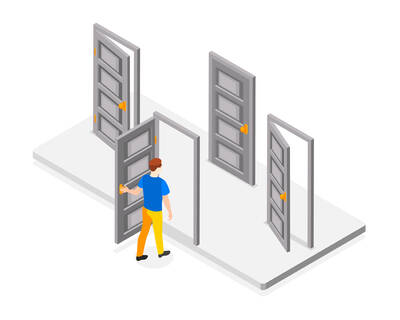
You’re sitting in class when a classmate asks to borrow a pencil. It seems like a small favor, so you agree without hesitation. The following week, the same classmate asks to share your notes. Later, they request help with a group project. You agree each time — after all, you helped out the first time — but before you know it, it has become automatic. This scenario demonstrates the “foot-in-the-door technique,” a psychological concept that shows how agreeing to small, acceptable demands makes it easier to accept larger ones later on. The name for this strategy comes from door-to-door

A: The four-day Tomb Sweeping Day long weekend begins Friday and will run until Monday. Are you going to sweep your ancestors’ tombs? B: I did in advance last weekend, so I can go to Kaohsiung to see the musical “The Phantom of the Opera.” A: Wow, is “Phantom” touring Taiwan again? It debuted in 1986, so this year marks the 40th anniversary of the show. B: And it’s not just touring Kaohsiung starting March 31, but also Taipei starting April 21 and Taichung starting May 26. A: “Phantom” is one of the world’s Four Major Musicals. I’ve seen all of them, except “Les

Dos & Don’ts — 想想看,這句話英語該怎麼說? 1. 我們很早到達電影院。 ˇ We arrived at the theater very early. χ We arrived the theater very early. 註︰arrive 為不及物動詞,後面如果有受詞要用 at 或 in。例如:They arrived in Taipei yesterday.。一般大地方,如國家、省、大城市等前面用 in,凡小地方城鎮、學校等則用 at。 2. 開車半小時以後,我們到達了海灘。 ˇ After half an hour’s drive, we got to the beach. χ After half an hour’s drive, we got the beach. 註︰come, go, get(來、去、到達)某地時,在表示地點的名詞前面應該用 to,如 go to school, go to Taipei, come to Shanghai 等。如果這些動詞後面所跟的是 here, there, home 等副詞,則不用 to。 3. 明天我會回辦公室。 ˇ I will be back in the office tomorrow. χ I will be back to office tomorrow. 註︰to be back 一語裡的 back 是副詞,不是介詞,所以後面要用 at (the market) 或 in (the office)。 假如假期結束,要回學校上課了則可說: ? Kids will be back


 RSS
RSS