


A black jumbo watermelon auctioned in northern Japan fetched a record ¥650,000 (NT$188,000) earlier this month. That makes it the most expensive watermelon ever sold in the country — and possibly the world.
The eight-kilogram premium Densuke watermelon, one of only 65 from the first harvest of the season, was purchased by a marine products dealer. The fruit is grown only on the northern island of Hokkaido.
In Japan melons are a luxury item commonly given as gifts. This watermelon’s hefty price tag follows another jaw-dropping auction last month, where a pair of Yubari cantaloupe melons sold for a record ¥2.5 million (NT$722,500).
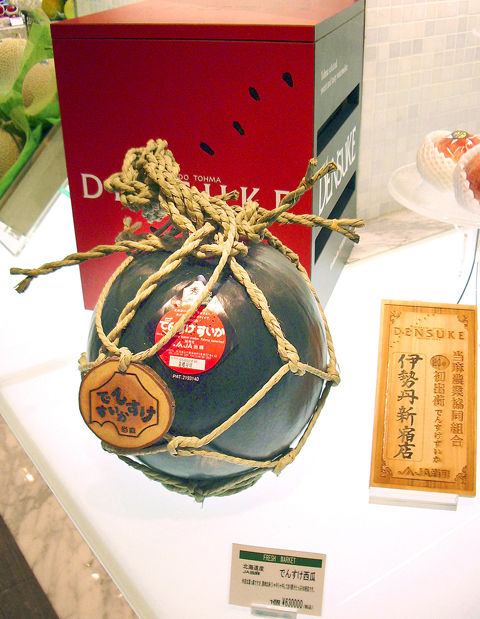
PHOTO: AP
“This is the highest price on record for a Densuke watermelon, and that probably means it’s the highest of any watermelon in Japanese history,” said Kazuyoshi Ohira, a spokesman for the Tohma Agricultural Cooperative in Hokkaido.
Growers expect to produce about 9,000 Densuke watermelons this year, Ohira said.
For seasonal, high-end fruits like the Densuke watermelon and the Yubari cantaloupes, Japanese buyers are often willing to pay top prices at auction for the prestige of owning the very first ones of the year.
Unseasonably warm weather in April and May have helped boost sugar content and overall quality, and consequently prices, of the 2008 watermelons, Ohira said.
Most Densuke watermelons will retail at department stores and supermarkets for a more modest ¥20,000 to ¥30,000 (NT$5,800 to NT$8,700), Ohira said.
And what makes a watermelon worth so much?
Its unusual black skin, Ohira said. Inside, the watermelon is crisp and hard. And, he says, it has unparalleled taste.
“It’s a watermelon, but it’s not the same,” he said. “It has a different level of sweetness.”
Jun Otsuki, a spokesman for Guinness World Records’ Tokyo office, said his organization does not keep records of any sort on watermelons.
(AP)
這個月初在日本北部,有一顆巨無霸黑皮西瓜以創紀錄的六十五萬日圓(新台幣十八萬八千元)拍賣成交,成為日本—甚至可能是全世界最貴的一顆西瓜。
買下這顆八公斤重高級「Densuke」西瓜的是一位漁產商人,這顆西瓜是當季第一批僅收成六十五顆的黑皮西瓜之一;這個品種只有在北海道才能生長。
瓜類在日本屬於奢侈的水果,多作為饋贈之用。上個月,有兩顆夕張產的哈密瓜才以破紀錄的兩百五十萬日圓(新台幣七十二萬兩千五百元)拍賣出去;接著,這顆黑皮西瓜也創下令人咋舌的拍賣天價。
北海道當麻町農業合作社的發言人大平和義(譯音)說:「這次拍賣創下『Densuke』西瓜的最高價,它還可能是日本有史以來最高價的西瓜。」
大平表示,瓜農預計今年會生產約九千顆「Densuke」西瓜。
日本買家常會為了得到首位年度奪標者的頭銜,而在拍賣會上高價競標「Densuke」西瓜和夕張哈密瓜這類季節性高檔水果。
大平說,今年四、五月反常的溫暖氣候,讓西瓜的甜度和整體品質都提升了,因此今年的價格也較高。
大平說,大部分的「Densuke」西瓜將以較合理的價格在百貨公司及超市零售,售價在兩萬到三萬日圓(新台幣五千八百元到八千七百元)間。
是什麼讓一顆西瓜如此昂貴?
大平說,因為它是罕見的黑皮西瓜,裡面的瓜瓤清脆密實;此外,它的滋味更是無與倫比。
他說:「這是一顆不一樣的西瓜,它的甜度不同於一般。」
金氏世界紀錄東京辦事處的發言人大月淳(譯音)表示,金氏世界紀錄中並沒有任何和西瓜相關的紀錄。
(美聯社�翻譯:袁星塵)
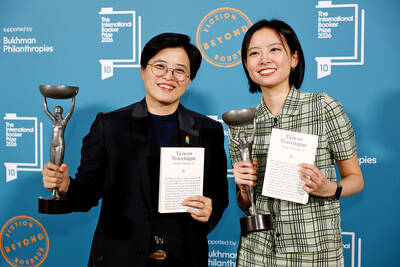
Taiwan Travelogue, the novel by Taiwanese author Yang Shuang-zi and translated into English by Lin King, won the prestigious International Booker Prize in London on May 19. It marks the first time a Taiwanese literary work has received the International Booker Prize, setting a historic milestone both for Taiwanese literature and for the award itself. Prior to this achievement, Taiwan had only once appeared on the Booker radar, when Taiwanese author Wu Ming-yi was longlisted for the Booker Prize in 2018 with The Stolen Bicycle. The International Booker Prize honors works of fiction translated into English and published in the UK or Ireland.
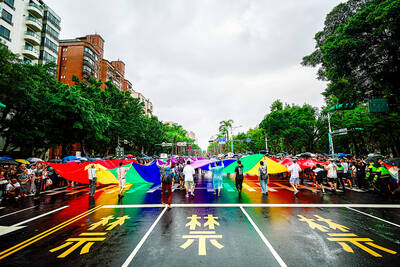
A: While Taiwan is celebrating the 7th anniversary of legalizing same-sex marriage, a poll shows that the support rate for same-sex marriage rose sharply from 37.4 percent seven years ago to 69.9 percent last year. B: Actually, I’m a bit curious about the size of Taiwan’s LGBT population. A: I’m not sure. But if we take a Gallup poll in the US as an example, 9.3 percent of American adults identified as LGBT in 2024. B: Wow, is it because the Americans are relatively open? In many other countries, the figures hover around 5 percent. A: Based on this,
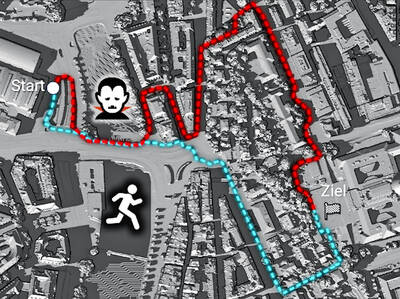
As climate change and urbanization push city temperatures higher, walking outdoors is becoming increasingly uncomfortable in many parts of the world, especially when prolonged time spent in sunlight is involved. As a result, outdoor lovers are now seeking cooler, shaded walking routes. However, most mainstream map apps still do not __1__ shaded footpaths. Enter routing.osm.ch — a Swiss web-based route planner that introduces a novel solution to this problem. Its “Vampire mode,” named after the legendary creatures’ fear of being __2__ natural light, was developed by a Swiss research team led by Professor Stefan Keller. The platform combines open data from
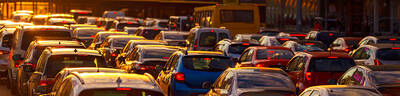
Cities around the world are testing “robotaxis,” hoping that autonomous vehicles will ease traffic and reduce emissions. However, recent analyses suggest these expectations may be overly optimistic. According to consulting firm Kearney, robotaxis could actually make congestion worse rather than better. Because self-driving rides are expected to be cheaper and more convenient than traditional taxis, more people may choose them over walking, biking, or using public transportation. This shift would put more cars on already crowded roads. Another concern is “deadheading,” which refers to robotaxis traveling without passengers between rides. Since autonomous fleets need to reposition themselves throughout the day, these


 RSS
RSS