


Customs agents in the US seized more than two dozen giant beetles from a package. The beetles were found when postal workers heard the insects making scratching noises.
The large bugs arrived earlier this month from Taiwan at a post office in Mohnton, Pennsylvania. The box was labeled as toys, gifts and jellies.
“The specimens were some of the largest of their kind, averaging five to six inches in diameter,” said John Plummer, an agriculture specialist. “They are highly destructive insect pests.”
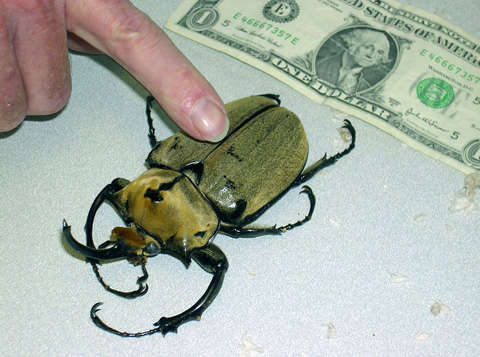
PHOTO: AP
In all, authorities found 26 Hercules, rhinoceros and Goliath beetles. It is illegal to ship live beetles into the US without a permit from the Department of Agriculture.
Seven of the beetles were in containers labeled by gender. That means they could have been intended for breeding, said customs agency spokesman Steve Sapp.
The sender and recipient have been identified, Sapp said. No decision has been made whether to file charges, he said.
(STAFF WRITER, WITH AP)
美國海關人員查扣了一個裝超過兩打大型甲蟲的包裹。
郵局人員聽到包裹裡有昆蟲搔抓的聲音,然後才發現裡面裝的是甲蟲。
這個從台灣寄出的包裹本月初被送抵賓州莫恩頓的一間郵局,外盒包裝上標明內容物為玩具、禮品和果凍。
「這些甲蟲算是同種類中體積最大的,每隻平均身長有五到六英吋,」農業專員約翰.普拉馬說:「他們是破壞性極大的有害昆蟲。」
當局發現,其中有長戟大兜蟲、犀角鍬形蟲,及葛利亞獨角仙等種類,總共二十六隻。未經農業部許可而進口活甲蟲已經觸犯美國法律。
海關發言人史帝夫.塞普說,其中七隻甲蟲被依照性別分裝在不同的容器中,代表牠們有可能準備被飼養繁殖。
塞普說,他們已確認寄送者和收件人的身分,但目前他們還沒有決定是否要對這兩人提起告訴。
(美聯社�翻譯:袁星塵)

Many consumers are guilty of filling drawers or closets with old laptops, cellphones, fitness trackers and other electronic devices once they are no longer needed. It’s hard to know where to recycle such items, or it seems costly and inconvenient to do so. The world generates millions of tons of electronic waste — also called e-waste — each year. According to the UN’s most recent estimate, people worldwide produced 62 million metric tons of e-waste in 2022, and only about 22 percent of it was properly recycled. The US’ Environmental Protection Agency estimates that less than a quarter of e-waste is

You’re sitting in class when a classmate asks to borrow a pencil. It seems like a small favor, so you agree without hesitation. The following week, the same classmate asks to share your notes. Later, they request help with a group project. You agree each time — after all, you helped out the first time — but before you know it, it has become automatic. This scenario demonstrates the “foot-in-the-door technique,” a psychological concept that shows how agreeing to small, acceptable demands makes it easier to accept larger ones later on. The name for this strategy comes from door-to-door

A: The four-day Tomb Sweeping Day long weekend begins Friday and will run until Monday. Are you going to sweep your ancestors’ tombs? B: I did in advance last weekend, so I can go to Kaohsiung to see the musical “The Phantom of the Opera.” A: Wow, is “Phantom” touring Taiwan again? It debuted in 1986, so this year marks the 40th anniversary of the show. B: And it’s not just touring Kaohsiung starting March 31, but also Taipei starting April 21 and Taichung starting May 26. A: “Phantom” is one of the world’s Four Major Musicals. I’ve seen all of them, except “Les

Continued from yesterday(延續自昨日) https://www.taipeitimes.com/News/lang Gig Tripping “Gig tripping” combines concerts with travel. People fly to see their favorite artists perform — usually abroad—and spend a few days sightseeing before or after the show. While die-hard fans have done this since the 1960s, the post-pandemic travel boom changed the game. Even people who aren’t superfans are now booking international concert trips because they want to make the most of travel opportunities. This trend exploded in the US, as the math makes sense. Domestic concert tickets are so costly that flying abroad for the show plus tourism expenses often matches or even beats the price


 RSS
RSS