


Japan is a step closer to having an ideal worker who won't complain in torrential rain or on slippery floors as a company unveiled a next-generation humanoid on May 20.
Kawada Industries' HRP-3 Promet Mk-II, a 160-centimetre-tall humanoid, walked on a slippery floor scattered with sand and held out its arms under a shower before media cameras.
"We have made a leap towards creating a humanoid that works in a real environment," the firm said in a joint statement with Kawasaki Heavy Industries and the National Institute of Advanced Industrial Science and Technology.
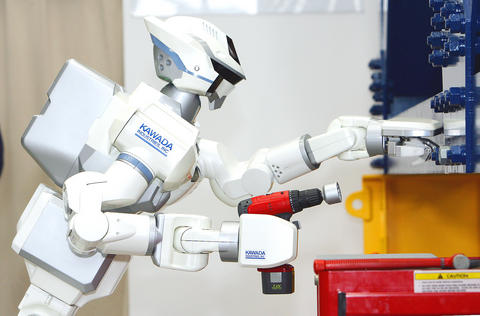
Photo: AFP
The visor-wearing white robot, also used a screwdriver with its right hand while leaning on its left arm, balancing itself like a human would.
The robot weighs 68 kilograms including the battery.
"Our country is rapidly ageing and it is an urgent task to develop robots that can perform tasks only done by humans now," the statement said.
"If a humanoid can substitute human functions, the entire social cost would be reduced," it said.
Kawada Industries said the company hoped eventually to put the HRP-3 Promet Mk-II to commercial use.
Project manager Takakatsu Isozumi said the company wanted to target clients such as construction contractors by 2010, with each robot costing around 150 million yen (NT$40 million) each.
"We want to increase the actions that this robot can do at construction sites, such as driving construction vehicles," he said.
Japan leads the world's robotic industries in fields ranging from manufacturing to entertainment and security. Last week, Mitsubishi Heavy Industries said it would start renting out humanoids to staff front desks at offices and hospitals.
日本即將出現不會抱怨在傾盆大雨中或踩在滑地板工作的理想員工。一家企業在五月二十日推出了一款新一代的機器人。
川田工業株式會社的「HRP-3 Promet Mk-II」機器人高一百六十公分,可以行走在灑滿沙子的滑地板,並在淋浴時伸出手臂,媒體攝影機全都捕捉了下來。
川田工業與川崎重工和日本產業技術綜合研究所聯合發表的聲明中提到︰「要創造在真實環境下工作的機器人,我們已邁進了一大步。」
頭戴面甲的白色機器人也會用右手拿螺絲起子,左手同時前傾,就像人類一樣保持身體平衡。
聲明中說︰「日本急速高齡化,當務之急就是發展出能夠做現今僅人類能做的事之機器人。」
聲明中也提到︰「假如機器人可以取代人類功能,整體的社會成本就會減少。」
川田工業表示,他們希望最終能將「HRP-3 Promet Mk-II」運用於商業用途。
專案經理五十棲隆活說,川田工業希望能在二○一○年前鎖定建築包商等客戶,每個機器人售價約一億五千萬日圓(新台幣四千萬元)。
他說︰「我們想增加這個機器人在工地能從事的活動,如駕駛工程車。」
日本機器人工業獨步全球,在製造、娛樂與保安領域都是首屈一指。日本三菱重工業公司上週宣布,將開始出租機器人給辦公室及醫院擔任櫃檯工作。
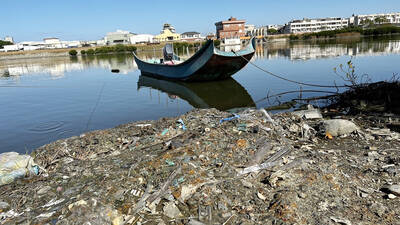
Many consumers are guilty of filling drawers or closets with old laptops, cellphones, fitness trackers and other electronic devices once they are no longer needed. It’s hard to know where to recycle such items, or it seems costly and inconvenient to do so. The world generates millions of tons of electronic waste — also called e-waste — each year. According to the UN’s most recent estimate, people worldwide produced 62 million metric tons of e-waste in 2022, and only about 22 percent of it was properly recycled. The US’ Environmental Protection Agency estimates that less than a quarter of e-waste is
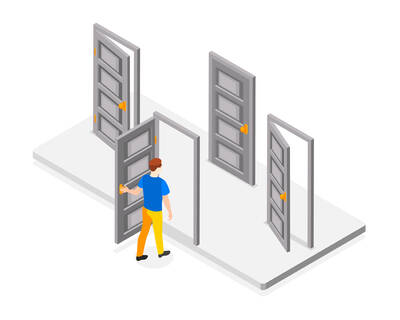
You’re sitting in class when a classmate asks to borrow a pencil. It seems like a small favor, so you agree without hesitation. The following week, the same classmate asks to share your notes. Later, they request help with a group project. You agree each time — after all, you helped out the first time — but before you know it, it has become automatic. This scenario demonstrates the “foot-in-the-door technique,” a psychological concept that shows how agreeing to small, acceptable demands makes it easier to accept larger ones later on. The name for this strategy comes from door-to-door

A: The four-day Tomb Sweeping Day long weekend begins Friday and will run until Monday. Are you going to sweep your ancestors’ tombs? B: I did in advance last weekend, so I can go to Kaohsiung to see the musical “The Phantom of the Opera.” A: Wow, is “Phantom” touring Taiwan again? It debuted in 1986, so this year marks the 40th anniversary of the show. B: And it’s not just touring Kaohsiung starting March 31, but also Taipei starting April 21 and Taichung starting May 26. A: “Phantom” is one of the world’s Four Major Musicals. I’ve seen all of them, except “Les

Dos & Don’ts — 想想看,這句話英語該怎麼說? 1. 我們很早到達電影院。 ˇ We arrived at the theater very early. χ We arrived the theater very early. 註︰arrive 為不及物動詞,後面如果有受詞要用 at 或 in。例如:They arrived in Taipei yesterday.。一般大地方,如國家、省、大城市等前面用 in,凡小地方城鎮、學校等則用 at。 2. 開車半小時以後,我們到達了海灘。 ˇ After half an hour’s drive, we got to the beach. χ After half an hour’s drive, we got the beach. 註︰come, go, get(來、去、到達)某地時,在表示地點的名詞前面應該用 to,如 go to school, go to Taipei, come to Shanghai 等。如果這些動詞後面所跟的是 here, there, home 等副詞,則不用 to。 3. 明天我會回辦公室。 ˇ I will be back in the office tomorrow. χ I will be back to office tomorrow. 註︰to be back 一語裡的 back 是副詞,不是介詞,所以後面要用 at (the market) 或 in (the office)。 假如假期結束,要回學校上課了則可說: ? Kids will be back


 RSS
RSS