


In a gloomy era of declining newspaper readership, The Philadelphia Inquirer went hog wild over an uptick in its circulation.
"PIGS FLY!" screamed the banner headline in a mock four-page newspaper (named the Impossible News) tucked inside the Inquirer and its sister paper, the Philadelphia Daily News, on May 4.
"They said this day would never come," the lead article started. "They were wrong."
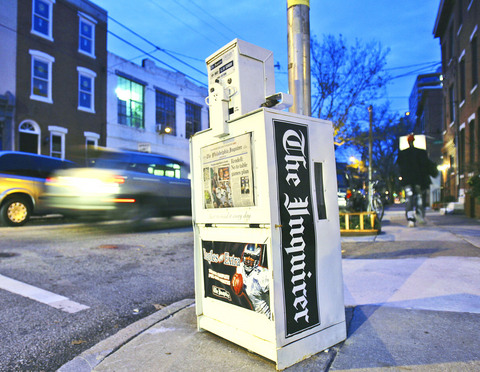
PHOTO: AP
A photo illustration on Page 1 of the mock paper showed winged pigs flying over the top of the building housing the Inquirer and Daily News. A giant flying pig was also projected overnight onto the building's facade — to the accompaniment of loud grunting sounds.
After three years of heavy circulation declines, the Inquirer reported this week that average weekday paid circulation rose 0.6 percent, or 2,136 copies, to 352,593 for the six-month period ending March, compared with the same period a year ago.
Overall, weekday circulation at US daily newspapers fell 2.1 percent during the same reporting period. The two papers with the highest circulation in the country, USA Today and the Wall Street Journal, saw circulation rise 0.2 and 0.6 percent respectively.
The Inquirer and Daily News were sold last year to a group of private investors led by Brian P. Tierney, a former advertising and public relations executive who is now the papers' publisher. He has been aggressively marketing the newspapers, and attributed the reversal of fortune to "doing all the commonsense things that hadn't been done before."
Other headlines in the special section: "Hell Freezes Over," "Half-empty Glass Rises to Half-full" and "They Said it Couldn't Be Done! Good News Unravels Wet Blankets." (AP)
在閱報率逐漸衰退的陰鬱年代,《費城詢問報》對其發行量上揚感到興奮不已。
五月四日當天,《費城詢問報》與其姊妹報《費城每日新聞》都夾著頭版橫幅標題為「飛天豬!」的四頁《寰宇蒐奇新聞》假報紙。
「人們說不會有這麼一天,」頭條新聞開頭為︰「他們錯了。」
這份假報紙的頭版照片是好幾隻長翅膀的豬,飛翔在《費城詢問報》與《費城每日新聞》的報社大樓上空。報社建築的正面在夜間還有一隻巨大的飛天豬投影圖—搭配著震耳的豬叫聲。
《費城詢問報》的發行量嚴重下滑了三年,本週傳出佳音,以迄三月為止的前六個月來看,其平日發行量較去年同期成長0.6%,增加兩千一百三十六份,衝到三十五萬兩千五百九十三份。
同一時期,美國所有日報的平日發行量平均下跌了2.1%。全美發行量最高的《今日美國報》與《華爾街日報》發行量則分別成長了0.2%與0.6%。
《費城詢問報》與《費城每日新聞》去年被前廣告公關老闆布萊恩.提爾尼所領導的私人投資集團買下,提爾尼為現任發行人。他積極行銷這兩份報紙,將否極泰來歸功於「做了以前沒做過的常識之道」。
特別號的其他文章標題還包括︰「地獄凍結」、「半瓶水變半滿」與「人們曾唱衰!佳音一掃衰氣」。
(美聯社/翻譯︰賴美君)
SAY WHAT? 說說看
go hog wild 興奮不已
If someone goes hog wild, then he or she is wildly excited. The phrase was probably coined in America around 1900 and is a metaphor for an excited pig. "After I showed the kids their new water guns, they went hog wild and started to have a water fight."
Other idioms with hog include hogwash, which means nonsense, and to go whole hog which means "to do something thoroughly." For example: "Dan decided to go whole hog for his barbecue, preparing 10 different kinds of meat."
假如有人「goes hog wild」,那個人就是興奮不已。這個片語可能起源於一九○○年代的美國,隱喻興奮的豬。例如︰「我給孩子們看他們的新水槍,他們開心極了,開始打水仗」。
其他與豬(hog)相關的俚語還有意指廢話的「hogwash」,與表示「徹底實行」的「go whole hog」。例如︰「丹決定貫徹烤肉的計畫,準備了十種肉類」。
OUT LOUD 對話練習
Linsey: I subscribed to the Taipei Times yesterday.
Hilary: Oh? Not so many young people subscribe to newspapers anymore.
Linsey: Well, besides reading the news, I like the comics, crossword puzzle and information on movie times.
Hilary: I hadn't thought of that. Newspapers really do have a lot of useful information.
Linsey: More information than you can shake a stick at!
琳西:我昨天訂了《英文台北時報》。
希拉蕊︰喔?現在年輕人都不太訂報紙了。
琳西:嗯,除了閱讀新聞之外,我也喜歡漫畫、填字遊戲與電影放映資訊。
希拉蕊︰我沒想過那些。報紙真的提供了許多有用資訊。
琳西:資訊多得數不清!
shake a stick at 多得數不清
If there is more of something than you can shake a stick at, then there is a lot of it. "Michael had more cats than you could shake a stick at. I couldn't even count them all!"
假如有很多東西是你可以「shake a stick at」的,就是數目眾多。例如︰「麥可養的貓多得數不清。我數都數不完!」
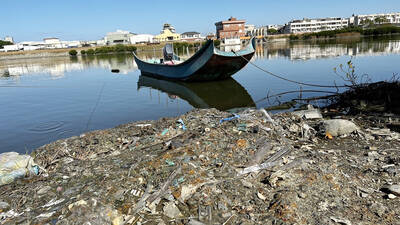
Many consumers are guilty of filling drawers or closets with old laptops, cellphones, fitness trackers and other electronic devices once they are no longer needed. It’s hard to know where to recycle such items, or it seems costly and inconvenient to do so. The world generates millions of tons of electronic waste — also called e-waste — each year. According to the UN’s most recent estimate, people worldwide produced 62 million metric tons of e-waste in 2022, and only about 22 percent of it was properly recycled. The US’ Environmental Protection Agency estimates that less than a quarter of e-waste is
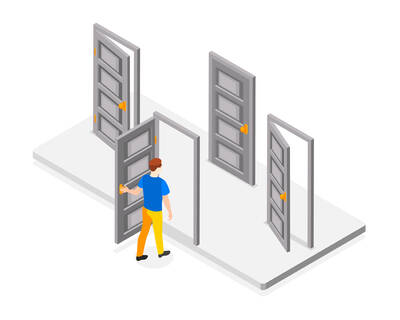
You’re sitting in class when a classmate asks to borrow a pencil. It seems like a small favor, so you agree without hesitation. The following week, the same classmate asks to share your notes. Later, they request help with a group project. You agree each time — after all, you helped out the first time — but before you know it, it has become automatic. This scenario demonstrates the “foot-in-the-door technique,” a psychological concept that shows how agreeing to small, acceptable demands makes it easier to accept larger ones later on. The name for this strategy comes from door-to-door

A: The four-day Tomb Sweeping Day long weekend begins Friday and will run until Monday. Are you going to sweep your ancestors’ tombs? B: I did in advance last weekend, so I can go to Kaohsiung to see the musical “The Phantom of the Opera.” A: Wow, is “Phantom” touring Taiwan again? It debuted in 1986, so this year marks the 40th anniversary of the show. B: And it’s not just touring Kaohsiung starting March 31, but also Taipei starting April 21 and Taichung starting May 26. A: “Phantom” is one of the world’s Four Major Musicals. I’ve seen all of them, except “Les

Dos & Don’ts — 想想看,這句話英語該怎麼說? 1. 我們很早到達電影院。 ˇ We arrived at the theater very early. χ We arrived the theater very early. 註︰arrive 為不及物動詞,後面如果有受詞要用 at 或 in。例如:They arrived in Taipei yesterday.。一般大地方,如國家、省、大城市等前面用 in,凡小地方城鎮、學校等則用 at。 2. 開車半小時以後,我們到達了海灘。 ˇ After half an hour’s drive, we got to the beach. χ After half an hour’s drive, we got the beach. 註︰come, go, get(來、去、到達)某地時,在表示地點的名詞前面應該用 to,如 go to school, go to Taipei, come to Shanghai 等。如果這些動詞後面所跟的是 here, there, home 等副詞,則不用 to。 3. 明天我會回辦公室。 ˇ I will be back in the office tomorrow. χ I will be back to office tomorrow. 註︰to be back 一語裡的 back 是副詞,不是介詞,所以後面要用 at (the market) 或 in (the office)。 假如假期結束,要回學校上課了則可說: ? Kids will be back


 RSS
RSS