


A woman who fell in love with a snake has married it at a wedding attended by 2,000 guests in India.
Priests chanted prayers to make the wedding official, but the snake wouldn't come out its home in an ant hill where it lives.
A replica of the snake made of brass stood in for the shy groom.
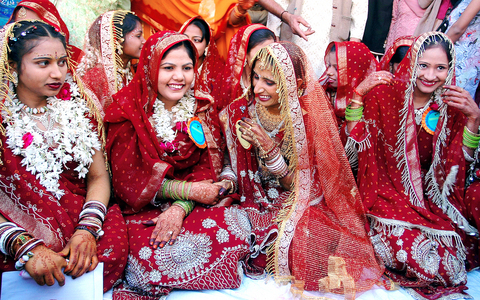
PHOTO : AP
"Though snakes cannot speak or understand, we communicate in a special way," said Das, who is 30 years old.
"Whenever I put milk near the ant hill where the cobra lives, it always comes out to drink.
"I always get to see it every time I go near the ant hill. It has never harmed me," she added.
Villagers welcomed the wedding in the belief it would bring good fortune and had a feast for the big day.
Snakes are loved in India as religious symbols.
Hindu priests gave Das permission to marry the cobra, the world's largest venomous snake, which can grow up to five meters.
"I am happy," said her mother Dyuti Bhoi, who still has two other daughters and two sons to marry off.
"(Das) was sick. We had no money to treat her. Then she started offering milk to the snake ... she was cured. That made her fall in love."
Das has moved into a hut built close to the ant hill since the wedding. (AFP)
印度一名愛上蛇的女子嫁給了蛇,當天有兩千位賓客參加婚宴。
祭師吟誦禱祝讓婚宴顯得正式,但那頭蛇就是不肯從蟻丘中的蛇窩出來。
那頭蛇的銅複製品取代了害羞的新郎倌。
「雖然蛇不能說話或理解他人,但我們採用特別的方式來溝通。」三十歲的妲絲說。
「每當我將牛奶放在這頭眼鏡蛇居住的蟻丘旁,牠總會出來飲用。」
「我每次來到蟻丘旁,總是會看到牠。牠從未傷害我。」她說。
村民都相當歡迎這場婚禮,相信這會帶來好兆頭,並為這個重要日子舉行盛宴。
蛇在印度相當受人喜愛,被視為是宗教象徵。
印度教的祭師准許妲絲嫁給眼鏡蛇。眼鏡蛇是世界上最大的毒蛇,可長達五公尺。
新娘的母親都蒂.波伊說:「我相當開心。」她還有兩兒兩女尚未成家。
「(妲絲)生病了。我們沒有錢讓她接受治療。她開始拿牛奶給蛇喝後...病就好了。這讓她墜入情網。」
妲絲婚後已搬進蓋在蟻丘旁的一間小屋。
(法新社/翻譯:賴美君
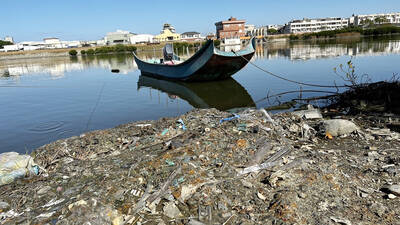
Many consumers are guilty of filling drawers or closets with old laptops, cellphones, fitness trackers and other electronic devices once they are no longer needed. It’s hard to know where to recycle such items, or it seems costly and inconvenient to do so. The world generates millions of tons of electronic waste — also called e-waste — each year. According to the UN’s most recent estimate, people worldwide produced 62 million metric tons of e-waste in 2022, and only about 22 percent of it was properly recycled. The US’ Environmental Protection Agency estimates that less than a quarter of e-waste is
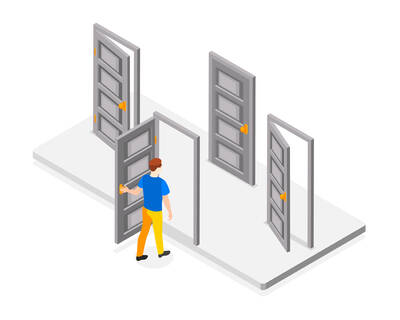
You’re sitting in class when a classmate asks to borrow a pencil. It seems like a small favor, so you agree without hesitation. The following week, the same classmate asks to share your notes. Later, they request help with a group project. You agree each time — after all, you helped out the first time — but before you know it, it has become automatic. This scenario demonstrates the “foot-in-the-door technique,” a psychological concept that shows how agreeing to small, acceptable demands makes it easier to accept larger ones later on. The name for this strategy comes from door-to-door

A: The four-day Tomb Sweeping Day long weekend begins Friday and will run until Monday. Are you going to sweep your ancestors’ tombs? B: I did in advance last weekend, so I can go to Kaohsiung to see the musical “The Phantom of the Opera.” A: Wow, is “Phantom” touring Taiwan again? It debuted in 1986, so this year marks the 40th anniversary of the show. B: And it’s not just touring Kaohsiung starting March 31, but also Taipei starting April 21 and Taichung starting May 26. A: “Phantom” is one of the world’s Four Major Musicals. I’ve seen all of them, except “Les

Dos & Don’ts — 想想看,這句話英語該怎麼說? 1. 我們很早到達電影院。 ˇ We arrived at the theater very early. χ We arrived the theater very early. 註︰arrive 為不及物動詞,後面如果有受詞要用 at 或 in。例如:They arrived in Taipei yesterday.。一般大地方,如國家、省、大城市等前面用 in,凡小地方城鎮、學校等則用 at。 2. 開車半小時以後,我們到達了海灘。 ˇ After half an hour’s drive, we got to the beach. χ After half an hour’s drive, we got the beach. 註︰come, go, get(來、去、到達)某地時,在表示地點的名詞前面應該用 to,如 go to school, go to Taipei, come to Shanghai 等。如果這些動詞後面所跟的是 here, there, home 等副詞,則不用 to。 3. 明天我會回辦公室。 ˇ I will be back in the office tomorrow. χ I will be back to office tomorrow. 註︰to be back 一語裡的 back 是副詞,不是介詞,所以後面要用 at (the market) 或 in (the office)。 假如假期結束,要回學校上課了則可說: ? Kids will be back


 RSS
RSS