


A Thai entrepreneur who started an Internet radio station for dogs said he hopes to reach out to the country's dogs and cheer them up.
Anupan Boonchuen, director of a dog grooming school in Bangkok, said he started Dog Radio Thailand because he noticed that dogs seem happier when he plays music as he grooms them.
``I have close contact with dogs every day. Dogs get in a better mood if they listen to music,'' Anupan said.
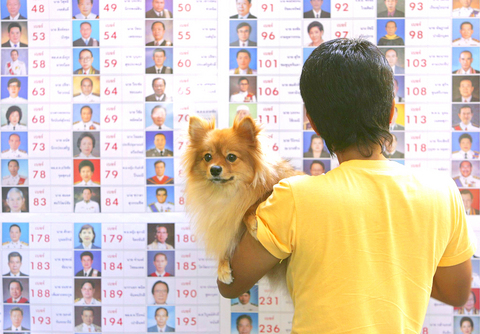
PHOTO: EPA
Often when Anupan's students practice grooming for the first time, they do not know how to handle the dogs. So during class, he plays music because it ``puts the dogs in a good mood and they're more willing to let the groomers handle them.''
The programming on www.dogradiothailand.com mainly consists of Thai pop music, but Anupan also plans to have programs in which the DJ will talk to the dogs in Thai.
Anupan said he had long dreamed of starting a radio station for dogs, but it always seemed too expensive. He was able to bring his project to fruition after hearing an international news story about a cheap Internet radio station for dogs in the United States.
He hopes that the DJ will be able to communicate through the radio and that the dogs will respond.
``If we play a slow song, we may have the DJ howl ... because dogs howl too when they hear sad sounds,'' Anupan said. (AP)
一名泰國企業家為狗狗開辦了一個網路電台,他表示希望能關注全國的狗,讓牠們笑顏常開。
安努潘*彭朱安是曼谷一家狗美容學院的執行長,他說會開辦「泰國狗電台」,是因為他在幫狗理容時注意到,他若放音樂,狗會比較開心。
安努潘說:「我每天與狗有親密的接觸,牠們在聽音樂時心情比較好。」
安努潘的學生在第一次為狗理容時,常不知道該如何對待牠們,所以他會在課堂上播放音樂,因為「音樂給狗好心情,讓牠們比較願意受理容師打理。」
這個網址 www.dogradiothailand.com 的網路電台,主要播放泰國流行音樂,但安努潘也計畫製作有 DJ 用泰語跟狗說話的節目。
安努潘說,他一直希望能為狗開辦電台,但因所費不貲而未能實現,從一則國際新聞中得知美國有廉價的狗狗電台後,這個夢想才開花結果。
他希望 DJ 能透過電台跟狗溝通,而狗狗也能回應。
他說:「我們如果放慢歌,可以請 DJ 長嚎,因為狗聽到悲傷的聲音也會哀嗥。」 (美聯社/翻譯:鄭湘儀)

Many consumers are guilty of filling drawers or closets with old laptops, cellphones, fitness trackers and other electronic devices once they are no longer needed. It’s hard to know where to recycle such items, or it seems costly and inconvenient to do so. The world generates millions of tons of electronic waste — also called e-waste — each year. According to the UN’s most recent estimate, people worldwide produced 62 million metric tons of e-waste in 2022, and only about 22 percent of it was properly recycled. The US’ Environmental Protection Agency estimates that less than a quarter of e-waste is
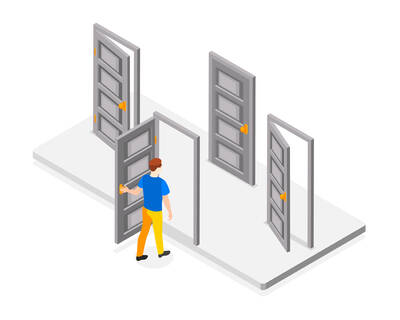
You’re sitting in class when a classmate asks to borrow a pencil. It seems like a small favor, so you agree without hesitation. The following week, the same classmate asks to share your notes. Later, they request help with a group project. You agree each time — after all, you helped out the first time — but before you know it, it has become automatic. This scenario demonstrates the “foot-in-the-door technique,” a psychological concept that shows how agreeing to small, acceptable demands makes it easier to accept larger ones later on. The name for this strategy comes from door-to-door

A: The four-day Tomb Sweeping Day long weekend begins Friday and will run until Monday. Are you going to sweep your ancestors’ tombs? B: I did in advance last weekend, so I can go to Kaohsiung to see the musical “The Phantom of the Opera.” A: Wow, is “Phantom” touring Taiwan again? It debuted in 1986, so this year marks the 40th anniversary of the show. B: And it’s not just touring Kaohsiung starting March 31, but also Taipei starting April 21 and Taichung starting May 26. A: “Phantom” is one of the world’s Four Major Musicals. I’ve seen all of them, except “Les

Dos & Don’ts — 想想看,這句話英語該怎麼說? 1. 我們很早到達電影院。 ˇ We arrived at the theater very early. χ We arrived the theater very early. 註︰arrive 為不及物動詞,後面如果有受詞要用 at 或 in。例如:They arrived in Taipei yesterday.。一般大地方,如國家、省、大城市等前面用 in,凡小地方城鎮、學校等則用 at。 2. 開車半小時以後,我們到達了海灘。 ˇ After half an hour’s drive, we got to the beach. χ After half an hour’s drive, we got the beach. 註︰come, go, get(來、去、到達)某地時,在表示地點的名詞前面應該用 to,如 go to school, go to Taipei, come to Shanghai 等。如果這些動詞後面所跟的是 here, there, home 等副詞,則不用 to。 3. 明天我會回辦公室。 ˇ I will be back in the office tomorrow. χ I will be back to office tomorrow. 註︰to be back 一語裡的 back 是副詞,不是介詞,所以後面要用 at (the market) 或 in (the office)。 假如假期結束,要回學校上課了則可說: ? Kids will be back


 RSS
RSS