


If the government approves a plan suggested by the enterprising chief of a Sri Lankan prison, prisoners will grow vegetables for Sri Lankan army troops stationed in remote northern areas where it is difficult to get fresh fruits and vegetables.
``It is a good plan and I am waiting for the approval of the government,'' said Rumy Marzook, whose other innovative ideas have included encouraging prisoners to make and sell coffins.
Sri Lanka has around 40,000 troops stationed in the northern part of the island. Most of the supplies for these troops have to be flown from Colombo, which is in the southwestern part of the island. Supplies cannot be sent over land because the roads are under the control of people who are fighting the government.
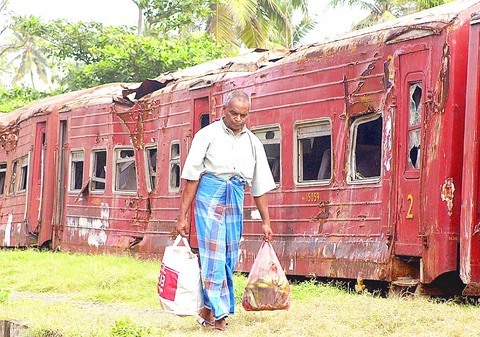
PHOTO: AFP
The army also faces problems getting fresh vegetables from the local farmers.
Marzook wants to send 70 prisoners from the main prison in Colombo to a heavily guarded air base in the north with lots of land for farming.
Marzook's ideas have a history of working. His earlier plan to have the prisoners make coffins was a success.
``That project is doing very well and has added to the overall profit of the prison,'' he said.
The price of one prisoner-made coffin was set at 7,000 rupees (NT$2,215) -- about 3,000 rupees (NT$950) less than the lowest-priced coffin available in Sri Lanka.
Most of the coffin makers volunteered for the job, according to the prison chief, and many of them had some knowledge of working with wood before the project began. The project is not just good for the prison, but also for the prisoners. They get part of the profits, Marzook said. (AP)
假如斯里蘭卡政府核准一所監獄的創新主管的提議,受刑人就會為駐紮在北部偏遠地帶的斯里蘭卡軍隊種蔬菜。這些地區取得蔬果相當不易。
魯米.馬爾蘇克說:「這是一個好計畫,我正等著政府點頭。」他其他創新點子還包括鼓勵受刑人製造並販售棺材。
大約有四萬個軍隊駐紮在斯里蘭卡島北部。這些軍隊的補給大多數是從斯里蘭卡西南部的可倫坡空運而來。由於道路受到反政府勢力的控制,補給物無法經由陸運而來。
軍隊取得當地農民種植的蔬菜,也有問題。
馬爾蘇克希望把可倫坡最大監獄的七十位受刑人送到戒備森嚴的北方空軍基地。當地有許多農田。
馬爾蘇克的點子在過去有不少成功例子。他先前計畫讓受刑人製造棺材,就是一大成功。
他說:「那項計畫進行的相當好,也讓監獄增加不少整體收入。」
一具受刑人製造的棺材定價為七千盧比(新台幣二千二百一十五元),大約比斯里蘭卡可買到的最低價棺材便宜三千盧比(新台幣九百五十元)。
這位監獄主管說,製造棺材的受刑人大多是自願參與這項工作,許多人在計畫展開前已有木工的相關經驗。這項計畫不只讓監獄受惠,也有益於受刑人。馬爾蘇克說,受刑人可以賺取部分所得。 (美聯社/翻譯:賴美君)
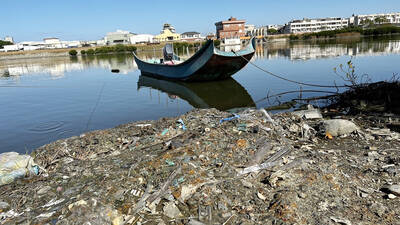
Many consumers are guilty of filling drawers or closets with old laptops, cellphones, fitness trackers and other electronic devices once they are no longer needed. It’s hard to know where to recycle such items, or it seems costly and inconvenient to do so. The world generates millions of tons of electronic waste — also called e-waste — each year. According to the UN’s most recent estimate, people worldwide produced 62 million metric tons of e-waste in 2022, and only about 22 percent of it was properly recycled. The US’ Environmental Protection Agency estimates that less than a quarter of e-waste is
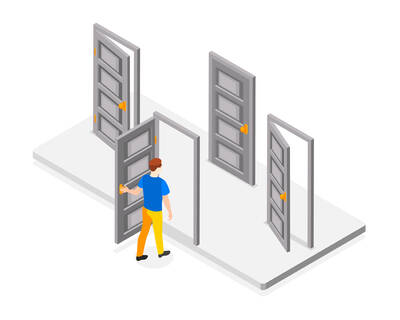
You’re sitting in class when a classmate asks to borrow a pencil. It seems like a small favor, so you agree without hesitation. The following week, the same classmate asks to share your notes. Later, they request help with a group project. You agree each time — after all, you helped out the first time — but before you know it, it has become automatic. This scenario demonstrates the “foot-in-the-door technique,” a psychological concept that shows how agreeing to small, acceptable demands makes it easier to accept larger ones later on. The name for this strategy comes from door-to-door

A: The four-day Tomb Sweeping Day long weekend begins Friday and will run until Monday. Are you going to sweep your ancestors’ tombs? B: I did in advance last weekend, so I can go to Kaohsiung to see the musical “The Phantom of the Opera.” A: Wow, is “Phantom” touring Taiwan again? It debuted in 1986, so this year marks the 40th anniversary of the show. B: And it’s not just touring Kaohsiung starting March 31, but also Taipei starting April 21 and Taichung starting May 26. A: “Phantom” is one of the world’s Four Major Musicals. I’ve seen all of them, except “Les

Dos & Don’ts — 想想看,這句話英語該怎麼說? 1. 我們很早到達電影院。 ˇ We arrived at the theater very early. χ We arrived the theater very early. 註︰arrive 為不及物動詞,後面如果有受詞要用 at 或 in。例如:They arrived in Taipei yesterday.。一般大地方,如國家、省、大城市等前面用 in,凡小地方城鎮、學校等則用 at。 2. 開車半小時以後,我們到達了海灘。 ˇ After half an hour’s drive, we got to the beach. χ After half an hour’s drive, we got the beach. 註︰come, go, get(來、去、到達)某地時,在表示地點的名詞前面應該用 to,如 go to school, go to Taipei, come to Shanghai 等。如果這些動詞後面所跟的是 here, there, home 等副詞,則不用 to。 3. 明天我會回辦公室。 ˇ I will be back in the office tomorrow. χ I will be back to office tomorrow. 註︰to be back 一語裡的 back 是副詞,不是介詞,所以後面要用 at (the market) 或 in (the office)。 假如假期結束,要回學校上課了則可說: ? Kids will be back


 RSS
RSS