

Taiwan and Japan might sign a wide-ranging trade agreement by the end of this year, which could help break a deadlock in Taiwan’s trade diplomacy if completed, Nikkei Asia reported yesterday.
Japan is negotiating with the administration of President William Lai (賴清德) to reach a comprehensive economic agreement modeled after the Enhanced Trade Partnership Arrangement finalized by the UK and Taiwan in 2023, it said, citing two sources familiar with the matter.
“The Enhanced Trade Partnership between the UK and Taiwan sets a precedent for Japan to follow,” one of the sources told the media outlet.
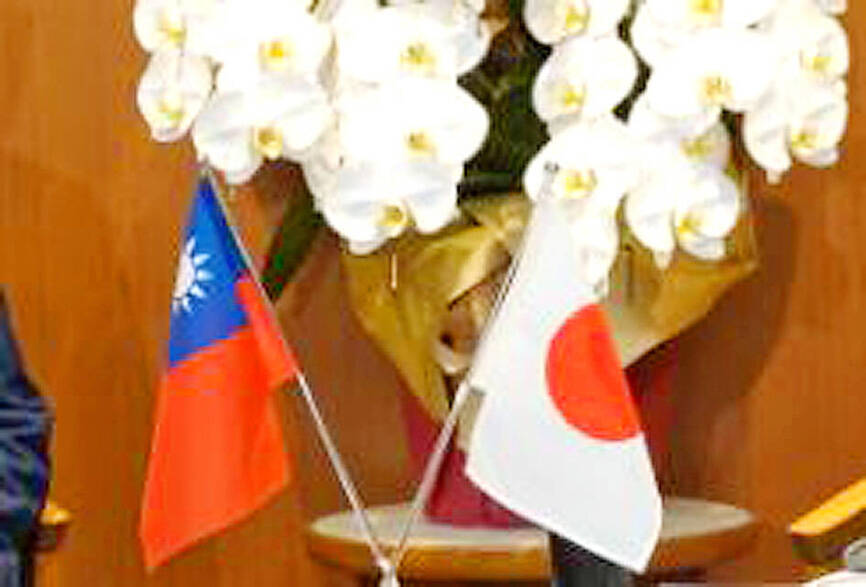
Photo: Lin Tsuei-yi, Taipei Times
The framework leaves room for future agreements tailored to specific regions or industries, while reducing political sensitivities and giving Tokyo a degree of protection against backlash from Beijing, the source said.
The current draft covers five areas of cooperation: economic resilience and innovation, industry cooperation on disaster risk reduction, digital trade, trade facilitation and sustainability, Nikkei Asia said.
Disaster risk reduction would encompass drone cooperation, mainly to respond to natural disasters, it said.
The agreement with Japan could encourage other countries, particularly Canada and the Philippines, to pursue their own agreements with Taiwan, one of the sources said.
Katsuya Yamamoto, director of the strategy and deterrence program at the Sasakawa Peace Foundation think tank, told Nikkei Asia that Japan has traditionally been reluctant to establish a broader economic framework with Taiwan, but the strategic and economic landscape had changed significantly.
“Economic security has become a major policy priority, and both Japan and Taiwan share an interest in strengthening the resilience of critical supply chains, particularly in advanced technologies and semiconductors,” Yamamoto said.
Asked about the report, Minister of Foreign Affairs Lin Chia-lung (林佳龍) said he would welcome such a development, adding that previous models with the US, Canada and the UK serve as valuable references.
Taiwan and Japan share exceptionally close economic, trade and investment ties, he told reporters.
Taiwan’s semiconductor industry has already invested in manufacturing facilities in Japan, and bilateral industrial cooperation is already helping to safeguard supply chains and economic security, he said.
While Taiwan and Japan have already signed nearly 100 cooperation agreements and memoranda of understanding, the Ministry of Foreign Affairs would be happy to see a more structured and comprehensive framework for bilateral economic and trade cooperation, he added.
Taiwan’s Office of Trade Negotiations yesterday declined to comment on the Nikkei Asia report, but said that Japan is one of the nation’s key trade partners, and that strengthening economic ties and expanding mutually beneficial cooperation with Japan have long been government priorities.
Over the past year, the two sides have held a series of meetings, including the Taiwan-Japan Economic and Trade Conference, discussions on cooperation in third-country markets and two meetings of the Taiwan-Japan Economic Partnership Committee, it said.
The meetings focused on issues of mutual concern and included exchanges on the global economic outlook, with the aim of further deepening bilateral economic and trade cooperation, it said.
Additional reporting by Chen Yu-fu and Huang Ching-hsuan
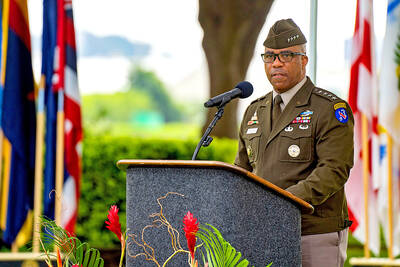
EYE ON 2027: The US military has placed equipment, materiel and personnel on the islands near China, a US officer said while warning about the threat from China The US Army Pacific (USARPAC) is deploying forces and equipment across the region based on the assumption that Beijing could possess the military capability and the intent to invade Taiwan by next year, a top US commander said on Tuesday. Speaking at the TechNet Indo-Pacific conference in Honolulu, US General Ronald Clark said that the threat posed by the so-called “Davidson window” is “still valid,” US military newspaper Stars and Stripes reported on Wednesday. The term stems from a 2021 warning by Admiral Philip Davidson, then-head of the US Indo-Pacific Command, that the threat of Chinese military action against Taiwan could materialize

‘ONE CHINA’ DECISION: A Cabinet spokesperson said that Pakistan had pandered to Beijing, and disregarded international rules and reality with the overflight ban The first Taiwanese commercial aircraft since restrictions were lifted flew over Pakistan yesterday morning following an abrupt U-turn by authorities to approve permits that were briefly revoked due to Islamabad’s “one China” policy. EVA Airways (長榮航空) Flight 65 from Taipei to Vienna entered Pakistani airspace at about 3:30am local time, Flightradar24 tracking data showed. All other Europe-bound EVA Air and China Airlines (華航) flights that departed late on Wednesday night into early yesterday morning opted to use Russian airspace, or go via India. The airlines had been forced to detour, including flying over Russia, since Sunday, after Pakistan shut its airspace to Taiwanese
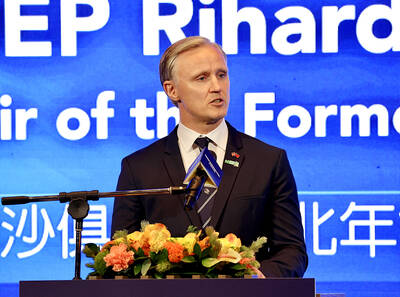
BUILDING LINKS: Taipei and Europe should cooperate ‘so that no single supplier and no single government can hold our shared future hostage,’ an official said Beijing has no say in Taiwan’s partnerships with European countries, Formosa Club acting chair Rihards Kols, a member of the European Parliament (MEP), told a forum in Taipei yesterday. The Formosa Club, an interparliamentary group of European lawmakers, and the Ministry of Foreign Affairs cohosted the Trusted Technology Forum for Democracies, focusing on artificial intelligence (AI) and drone technologies. In his opening speech, Kols said it is crucial that people meet and understand each other’s concerns, and work out how they can help. The club has brought European parliamentarians to the second annual forum to understand Taiwan better and seek
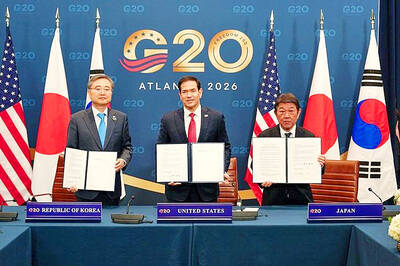
Taiwan yesterday welcomed and expressed appreciation for foreign ministers from the US, Japan and South Korea for emphasizing the importance of maintaining peace and stability across the Taiwan Strait at a trilateral meeting on the sidelines of the G20 in Atlanta, Georgia, on Friday. US Secretary of State Marco Rubio met with Japanese Minister of Foreign Affairs Motegi Toshimitsu and South Korean Minister of Foreign Affairs Cho Hyun to review the progress of a trilateral partnership that aims to advance security and prosperity in a free and open Indo-Pacific region, the US Department of State said in a statement. They emphasized


 RSS