


The government plans to set up 9,000 inspection points near schools nationwide to curb off-campus drug use, Minister Without Portfolio Chi Lien-cheng (季連成) said yesterday.
The operations are expected to cover areas surrounding more than 3,600 schools across Taiwan where students are known to gather and drug use is known to occur, Chi said in a radio interview.
Authorities would also enhance intelligence sharing between schools and police about drug-related activity, and assess the feasibility of deploying “fifth-level” security personnel on campus, he said.
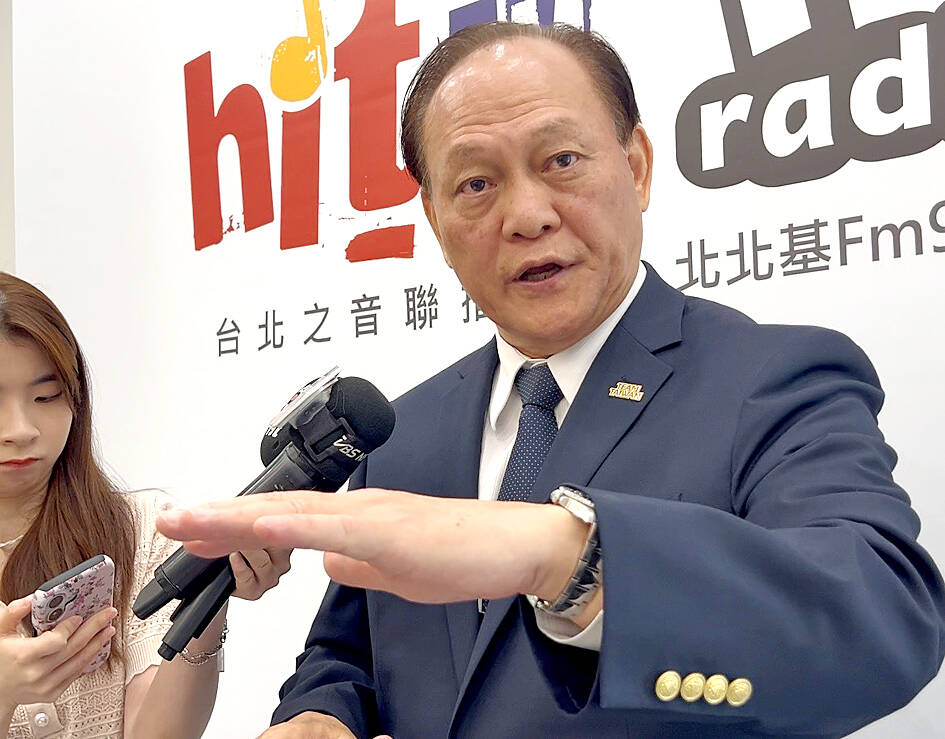
Photo: CNA
To bolster drug-prevention efforts, the Executive Yuan has proposed harsher penalties for drug-impaired driving and preventive suspension of driver’s licenses for drug users.
The Ministry of Justice’s Drug Review Committee last week approved upgrading etomidate-related substances, used in “zombie vapes,” to Category 1 narcotics, which Chi said would take effect soon.
The Executive Yuan is expected to approve amendments to the Tobacco Hazards Prevention Act (菸害防制法) tomorrow, he said.
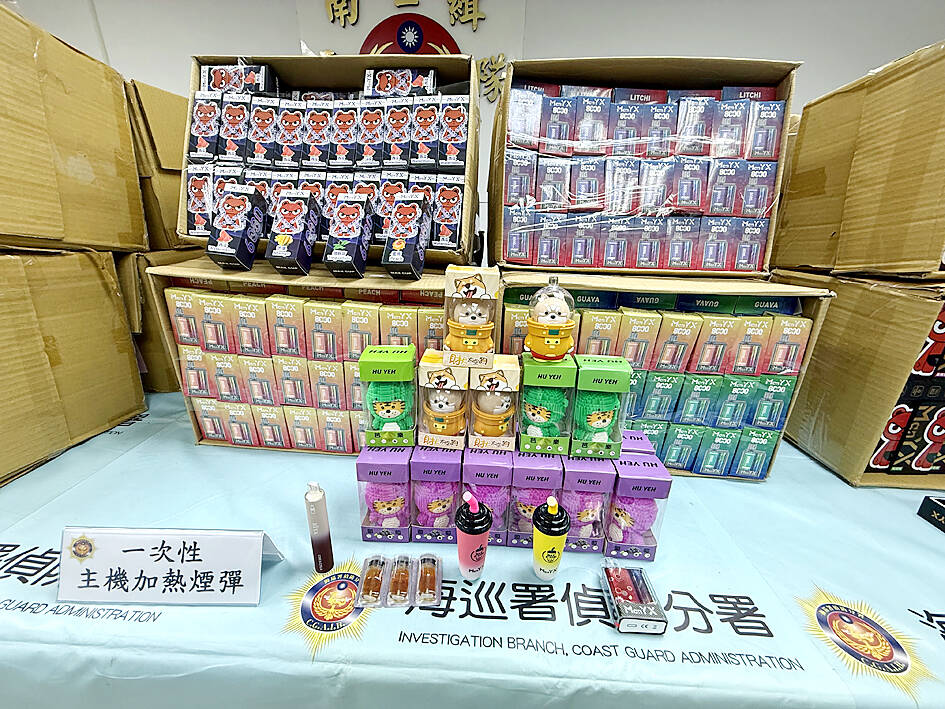
Photo: Wang Chun-chung, Taipei Times
Under the proposals, possession of e-cigarettes would be banned and violators would be fined, he said.
The use of “zombie vapes” has been increasing, Chi said.
Etomidate — an oil-based substance typically consumed through e-cigarettes — can trigger hallucinations, making driving under its influence dangerous, he said.
As e-cigarette use is widespread among young people, and some have been found using the devices to consume etomidate, enforcement would focus on areas outside school grounds, but authorities would not enter schools, Chi said.
Instead, they would target off-campus gathering spots where drug dealers are known to operate, to prevent drugs from entering school environments, he said.
The government would establish a coordinated anti-drug enforcement system, with the High Prosecutors’ Office setting up a command center and district prosecutors’ offices forming task forces to integrate intelligence, coordination and operational command, Chi said.
While enforcement would target the full supply chain, including drug manufacturing labs, traffickers and drug-impaired driving cases, interdiction efforts would also extend overseas, with authorities tracking vessels from foreign ports, he said, adding that inspections would be carried out within 24 nautical miles (44.4km) of Taiwan’s territorial waters.
Customs authorities would also step up inspections at international ports and border checkpoints, he said.
More drug-sniffing dogs would be trained and deployed at airports and seaports to detect etomidate, and would also be used to screen postal parcels, Chi said.
The government has pledged a tougher crackdown on organized crime and drug offenses, and “it will show no leniency,” he said.

The Tourism Administration yesterday announced that it would reward repeat international visitors with incentives of up to NT$8,000 to boost inbound tourism. The incentives are available to all international tourists, it said, adding that repeat visitors would be rewarded with NT$5,000 and would receive an additional NT$3,000 if they bring travel companions. The nation received 2,990,657 inbound visitors during the first quarter, marking a 3.8 percent increase from the same period last year, agency data showed. Japanese nationals are among groups visiting Taiwan the most. About 1.48 million Japanese tourists arrived last year, a year-on-year increase of more than 12
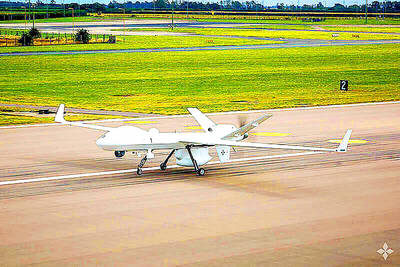
BOOST: By operating the same advanced systems as the US military, Taiwan would be better positioned to share and integrate intelligence with partners, an expert said The first batch of MQ-9B SkyGuardian drones has arrived in Taiwan, and is being assembled and tested by drone manufacturer General Atomics and the military ahead of flight trials as part of the air force’s acquisition to bolster its aerial surveillance capabilities, a source said yesterday. The air force allocated a budget of NT$21.7 billion (US$687 million) from 2022 to 2029 to procure four MQ-9B uncrewed aerial vehicles (UAVs) manufactured by General Atomics along with associated equipment such as ground control stations. The US has agreed to deliver the four MQ-9Bs to Taiwan in two batches this year and next
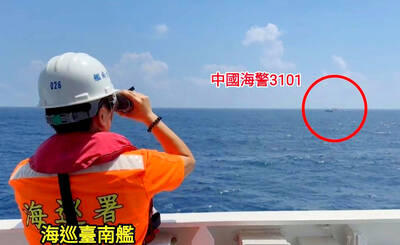
‘BRAZEN’: The holiday did not stop China from activities that infringe on Taiwan’s maritime jurisdiction, but the CGA is ready to defend the nation, Kuan Bi-ling said Beijing is intensifying maritime pressure on Taiwan, but the nation will never yield, Ocean Affairs Council Deputy Minister Sung Chen-en (宋承恩) said. The Coast Guard Administration (CGA) has adopted a “shadowing and monitoring” approach to avoid falling into a Chinese trap to escalate tensions and deepen the conflict, Sung said in an interview published yesterday in the Chinese-language Liberty Times (the Taipei Times’ sister newspaper). China Coast Guard formations patrolling waters east of Taiwan, as well as official Chinese vessels entering areas around Itu Aba Island (Taiping Island, 太平島) and Pratas Islands (Dongsha Islands, 東沙群島) show Beijing’s attempts to significantly step up
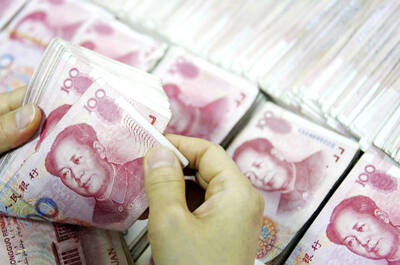
Taiwanese firms’ China investments have dwindled to less than 1 percent of their total foreign investments, putting China-based investments on track for a record low this year, Ministry of Economic Affairs data showed. Taiwan’s investments abroad in the first five months of this year reached US$35.92 billion, Department of Investment Review data showed. Investments outside China totaled US$35.61 billion, up 133.94 percent year-on-year, while investments in China totaled US$310.3 million, down 32.3 percent and about 0.86 percent of the total, data showed. Major overseas projects included Taiwan Semiconductor Manufacturing Co’s (TSMC, 台積電) US$30 billion capital injection into an overseas subsidiary,


 RSS
RSS