


The government has launched interministerial mechanisms focused on prevention, protection and response to combat Beijing-directed transnational repression, President William Lai (賴清德) said yesterday.
Lai made the remarks at a seminar on building a resilient democracy to counter transnational repression hosted by the Global Cooperation and Training Framework (GCTF) in Taipei. The US, Japan, Canada, Australia and the UK are among the 29 countries that sent delegates to the event.
Democracies face unprecedented dangers beyond conventional military action, as authoritarian powers leverage emerging technologies and illicit financial flows to disrupt, manipulate and sow division across national borders, the president said.
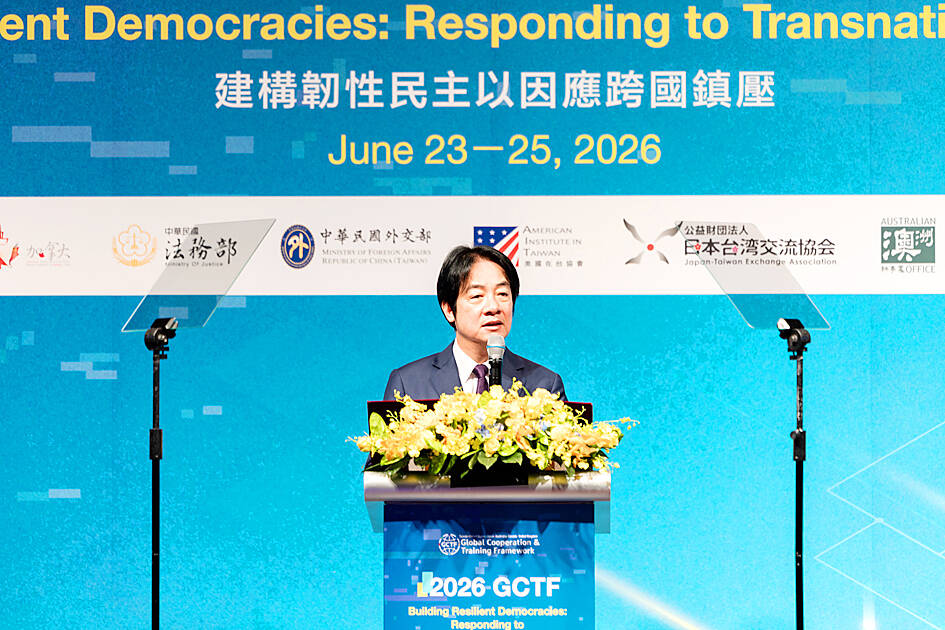
Photo: Screen grab from the Presidential Office’s Flickr page
Transnational repression includes overseas surveillance, cyberattacks and cognitive warfare operations designed to silence critics, undermine trust in democratic institutions and erode national sovereignty, Lai said.
Taiwan has a unique appreciation for freedom and human rights stemming from the White Terror era, and the nation is responding to the authoritarian challenge with a comprehensive plan to bolster resilience, he said.
The effort focuses on preventing foreign interference, protecting citizens from transnational repression by hostile powers and countering influence campaigns by holding the perpetrators accountable, he said.
Promoting digital democracy, government transparency, collaboration with civil society and legal reforms are key to the initiative, Lai said.
The government is overseeing multiagency cooperation and the use of technology to refute disinformation in near real time, and to promote media literacy and vigilance against cognitive warfare, he said.
Taiwanese overseas missions have mechanisms and resources to provide legal assistance to Taiwanese targeted by repression, harassment or coercion from Beijing, Lai said.
The government is bolstering security measures to protect Taiwanese from hostile actions directed by China and strengthening legal instruments to punish perpetrators, he said.
“No democratic nation can be absent in the fight against this hybridized [authoritarian] challenge,” Lai said.
“Democracies must respond with enhanced resilience and solidarity where authoritarian regimes export fear and division,” he added.
Taiwan is playing its part by enhancing global cooperative frameworks, and welcomes European Parliament members’ condemnation of transnational repression earlier this week, Lai said.
Taiwan will continue to work with the EU and other like-minded countries to create a safe, trustworthy information environment, a rapid-response system to protect people from transnational repression and mechanisms to hold perpetrators accountable, he said.
Canadian Trade Office in Taipei Executive Director Marie-Louise Hannan praised Taiwan’s democratic resilience and record of civic engagement in her opening remarks at the GCTF event.
She called on democratic partners to deepen cooperation and exchanges to address challenges posed by transnational repression and emerging technologies.
The seminar is focused on countering and mitigating national security risks posed by the hostile use of artificial intelligence, deepfakes and spyware, the Ministry of Foreign Affairs said.
The event aims to enhance democracies’ abilities to address transnational repression by sharing real cases and running scenarios in which participants practice responding to hostile actions, it said.
Since its establishment in 2015, the GCTF has held more than 100 international workshops, it said.
Taiwan will continue to deepen international cooperation through the forum and work with global partners to address challenges posed by transnational repression and emerging technologies, while jointly safeguarding democracy, freedom, and regional peace and stability, it said.
Additional reporting by Huang Ching-hsuan

The Tourism Administration yesterday announced that it would reward repeat international visitors with incentives of up to NT$8,000 to boost inbound tourism. The incentives are available to all international tourists, it said, adding that repeat visitors would be rewarded with NT$5,000 and would receive an additional NT$3,000 if they bring travel companions. The nation received 2,990,657 inbound visitors during the first quarter, marking a 3.8 percent increase from the same period last year, agency data showed. Japanese nationals are among groups visiting Taiwan the most. About 1.48 million Japanese tourists arrived last year, a year-on-year increase of more than 12
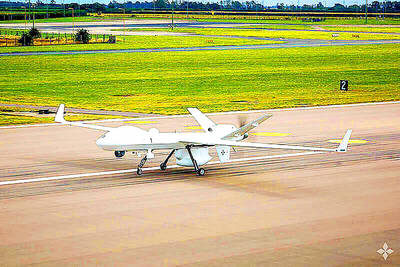
BOOST: By operating the same advanced systems as the US military, Taiwan would be better positioned to share and integrate intelligence with partners, an expert said The first batch of MQ-9B SkyGuardian drones has arrived in Taiwan, and is being assembled and tested by drone manufacturer General Atomics and the military ahead of flight trials as part of the air force’s acquisition to bolster its aerial surveillance capabilities, a source said yesterday. The air force allocated a budget of NT$21.7 billion (US$687 million) from 2022 to 2029 to procure four MQ-9B uncrewed aerial vehicles (UAVs) manufactured by General Atomics along with associated equipment such as ground control stations. The US has agreed to deliver the four MQ-9Bs to Taiwan in two batches this year and next
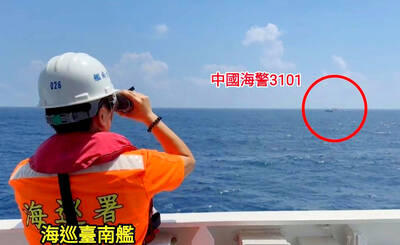
‘BRAZEN’: The holiday did not stop China from activities that infringe on Taiwan’s maritime jurisdiction, but the CGA is ready to defend the nation, Kuan Bi-ling said Beijing is intensifying maritime pressure on Taiwan, but the nation will never yield, Ocean Affairs Council Deputy Minister Sung Chen-en (宋承恩) said. The Coast Guard Administration (CGA) has adopted a “shadowing and monitoring” approach to avoid falling into a Chinese trap to escalate tensions and deepen the conflict, Sung said in an interview published yesterday in the Chinese-language Liberty Times (the Taipei Times’ sister newspaper). China Coast Guard formations patrolling waters east of Taiwan, as well as official Chinese vessels entering areas around Itu Aba Island (Taiping Island, 太平島) and Pratas Islands (Dongsha Islands, 東沙群島) show Beijing’s attempts to significantly step up
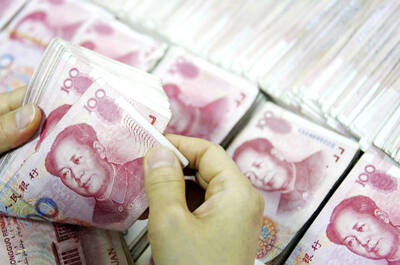
Taiwanese firms’ China investments have dwindled to less than 1 percent of their total foreign investments, putting China-based investments on track for a record low this year, Ministry of Economic Affairs data showed. Taiwan’s investments abroad in the first five months of this year reached US$35.92 billion, Department of Investment Review data showed. Investments outside China totaled US$35.61 billion, up 133.94 percent year-on-year, while investments in China totaled US$310.3 million, down 32.3 percent and about 0.86 percent of the total, data showed. Major overseas projects included Taiwan Semiconductor Manufacturing Co’s (TSMC, 台積電) US$30 billion capital injection into an overseas subsidiary,


 RSS
RSS