


Waiting for the US to issue a letter of acceptance (LOA) to greenlight the budget for arms procurements would leave little time for approval, as the letter is only valid for 45 days, Minister of National Defense Wellington Koo (顧立雄) said today, as the special defense budget enters its fourth round of cross-party negotiations this afternoon.
Taiwan-US arms procurement cases typically involve more than two years of negotiations, after which the US provides formal documents outlining what it is willing to supply, the transaction timeline and pricing details, Koo told reporters prior to a meeting of the Legislative Yuan’s Foreign Affairs and National Defense Committee.
The Ministry of National Defense already gives full confidential briefings on these matters to the legislature, Koo said.
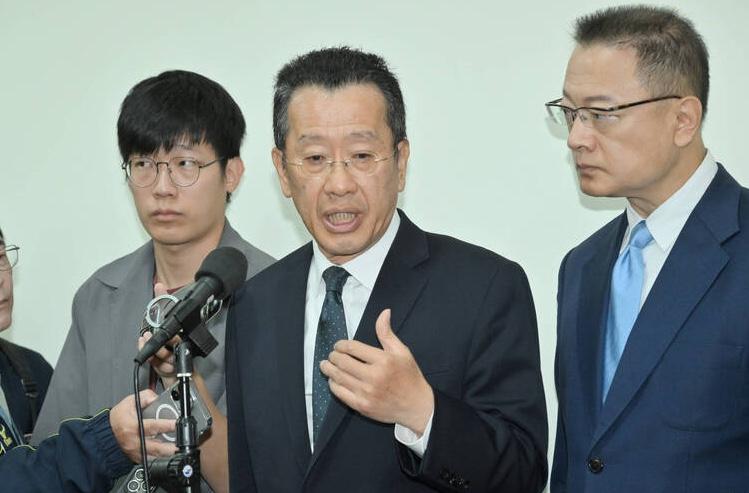
Photo: Tien Yu-hua, Taipei Times
The ministry includes budgetary items for legislative review only after ensuring the US is willing to supply them, he said.
If Washington has not yet notified the US Congress, the budget item remains classified and would only be made public after Congress is notified, he added.
Requiring LOAs from the US before reviewing the budget would create major practical issues, as these documents are typically valid for only 45 days, leaving little time to pass the appropriate budget without prior groundwork, Koo said.
For example, in a previous High Mobility Artillery Rocket Systems (HIMARS) procurement case, the LOA could not be signed, as the necessary budget authorization had not yet been completed by the Legislative Yuan, he said.
If budgets and procurement items are not properly reviewed in advance, but are instead rushed through only after an LOA arrives, it would effectively amount to a “blank check,” the minister said, utilizing the same terminology the opposition has been using in its opposition to approving all of the Cabinet’s proposed NT$1.25 trillion (US$39.71 billion) special defense budget.
Asked about Ukraine’s experience fighting Russia, Koo said that Ukraine has proven that building up indigenous drone capabilities is key to maintaining combat capability and resilience, which is why a significant number of drones have been included in the special budget.
During the committee hearing, Department of Strategic Planning Director Lieutenant General Huang Wen-chi (黃文啓) said that Washington has clearly stated it would cancel the HIMARS sale if Taiwan fails to make the initial payment by May 31.
On March 13, the Legislative Yuan passed a resolution authorizing the ministry to sign LOAs for four US arms procurement projects, including the HIMARS, before the relevant special budget is passed.
If the deal is canceled, the military would have to restart the entire procurement process from scratch, Huang said, adding that it would take at least a year.
While LOAs have been signed for three other arms purchases, the US has not yet set a schedule for contract negotiations, Huang said.
Meanwhile, ahead of cross-party negotiations on the defense budget this afternoon, Legislative Speaker Han Kuo-yu (韓國瑜) reportedly met with Chinese Nationalist Party (KMT) Chairwoman Cheng Li-wun (鄭麗文) this morning to achieve a consensus on the party’s proposal.
The KMT caucus remains internally divided over whether to propose a budget cap of NT$380 billion “+N” or a flat NT$800 billion, with the “+N” providing for negotiating procurements as announced.
Additional reporting by Liu Wan-lin

‘NO SECURITY RISK’: The Railway Bureau reassured the public that the technicians’ activities were limited to technical guidance and did not involve sensitive systems The Railway Bureau yesterday said it had invited eight Chinese technicians to assist with an airport MRT construction project. The bureau issued the confirmation after an Internet user said Chinese nationals had entered the construction zone of Taiwan Taoyuan International Airport’s Terminal 3 project. They asked why “individuals from an enemy state” were allowed access to such a major national infrastructure project, which raised serious concerns over Taiwan’s industrial safety, sensitive systems and information security. The bureau’s Northern Region Engineering Branch Office said subcontractor Taiwan Handle Industrial Co (台灣手把工業) of the Taoyuan airport MRT’s “Contract No. CU05 Project A14 Station Civil, MEP &

A US uncrewed surface vessel (USV) encountered multiple Chinese warships during an autonomous transit of the Taiwan Strait, US defense company Seasats said in a statement on Wednesday. Seasats announced that a Lightfish USV had completed the first autonomous transit of the Taiwan Strait. Over five days, the USV traversed the entire length of the Strait while constantly monitoring surface vessel traffic, the company said. The Lightfish encountered multiple Chinese warships, one of which was a Chinese People’s Liberation Army Navy (PLAN) Type 056 corvette, it said. The Chinese vessels were operating “well within Taiwan’s exclusive economic zone without transmitting their identity via the
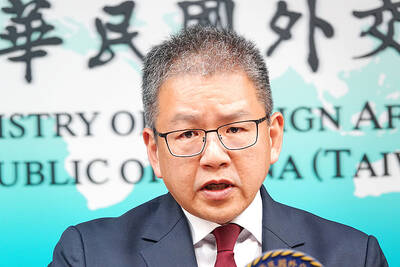
Taiwan is still in the process of assessing the possibility of recruiting workers from Eswatini, the Ministry of Foreign Affairs said yesterday, adding that its goal is to help Eswatini upgrade its vocational training centers. If there are plans to recruit workers from Eswatini, safeguarding national security, protecting public health and ensuring the employment rights of Taiwanese would be prerequisites, Department of West Asian and African Affairs Director-General Yen Chia-liang (顏嘉良) told a news conference. Key considerations would also include filling labor shortages in specific industries, and fostering bilateral professional and technical exchanges, he said. Yen was asked about the progress of labor
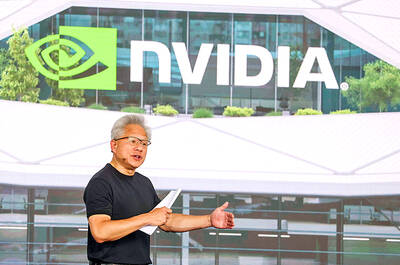
‘BOOMING’: ’ The number of partners we have here is incredible. You can see from their stock prices. They’re doing so well, they’re so happy,’ Jensen Huang said Nvidia Corp’s spending in Taiwan has ballooned to about US$150 billion a year, 10 times the US$10 billion to US$15 billion the company spent five years ago, Nvidia chief executive officer Jensen Huang (黃仁勳) said yesterday, suggesting Taiwan’s strategic importance in the global artificial intelligence (AI) supply chain. “Taiwan is the epicenter of the AI revolution. This is where the chips come, packaging comes. This is where the systems are made. This is where AI supercomputers were created,” Huang said at a meeting for the company’s employees in Beitou-Shilin Technology Park (北投士林科技園區) in Taipei, the planned site of Nvidia’s Taipei headquarters. “Taiwan


 RSS
RSS