


Several national universities in Taiwan continue to have sister-school partnerships with Chinese institutions that are affiliated with the United Front Work Department (UFWD) or closely linked with China’s military industry, despite warnings from the Ministry of Education (MOE).
The Mainland Affairs Council in 2024 raised its travel warning for China to “orange,” advising Taiwanese against making nonessential trips to the country.
Minister of Education Cheng Ying-yao (鄭英耀) also previously discouraged schools from conducting academic exchanges with China.
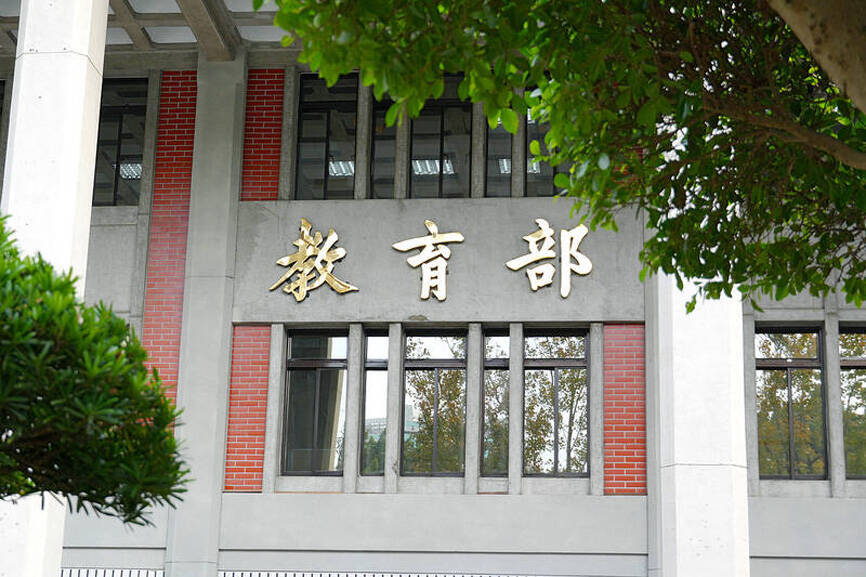
Photo: Rachel Lin, Taipei Times
The education ministry last year blacklisted three Chinese schools affiliated with the UFWD — Jinan University in Guangzhou, Huaqiao University in Xiamen and Quanzhou, and Beijing Chinese Language and Culture College — banning schools from having exchanges or recognizing their academic credentials.
It also discouraged any exchanges with the “Seven Sons of National Defense,” or the seven Chinese universities that are heavily involved in defense research and closely affiliated with the Chinese People’s Liberation Army: Beihang University, Beijing Institute of Technology, Harbin Engineering University, Harbin Institute of Technology, Nanjing University of Aeronautics and Astronautics, Nanjing University of Science and Technology, and Northwestern Polytechnical University.
Kaohsiung’s National Sun Yat-sen University, where Cheng had been a faculty member, originally had sister-school partnerships with 27 Chinese schools.
It also had partnerships with three of the “Seven Sons,” but it has since removed them from its Web site.
Meanwhile, Nantou’s National Chinan University last year ended its sister-school partnership with Jinan University.
However, some national universities, such as National Taiwan University (NTU), National Tsing Hua University (NTHU), National Chung Hsing University (NCHU), and National Dong Hwa University (NDHU) still list some of the 10 Chinese schools as their sister school on their Web sites.
The schools’ Web sites show that NTU remains sister schools with Beihang University, Beijing Institute of Technology and Harbin Engineering University; National Taiwan Normal University (NTNU) with Northwestern Polytechnical University; NTHU with Harbin Engineering University; NDHU with Nanjing University of Science and Technology; and NCHU with Beihang University, Northwestern Polytechnical University and Jinan University.
NTU said it conducts cross-strait academic exchanges according to government regulations, adding that it has no substantive exchange or cooperation with universities clearly banned by the ministry.
Schools remain listed as sister schools until partnership agreements expire, it said.
NTNU said some academic collaboration or sister-school agreements with certain Chinese universities were signed about one decade ago, in accordance with the general higher education exchange environment and policy context of that time.
The university has complied with adjustments to cross-strait policies and regulations over the past few years, and has no substantive exchange or cooperation projects, faculty or student visits, academic collaborations, or other exchange activities with the schools the ministry cautioned against, it said.
NTHU said it did not sign a substantial sister-school agreement with Harbin Engineering University, but there had been mutual visits by the faculties of both schools.
NCHU said it signed sister-school agreements with the three Chinese schools a long time ago, including with two in 2011 and with Jinan University after the COVID-19 pandemic, but added that the university has not engaged in substantial exchanges with those schools over the past couple of years.
It said it would remove the schools from its Web site to avoid misunderstandings.
Department of International and Cross-strait Education Director-General Lee Yu-jiuan (李毓娟) said cross-strait educational exchanges must be conducted under the principles of “reciprocity and dignity” so they are “healthy and orderly.”
All educational exchange activities must comply with the Act Governing Relations Between the People of the Taiwan Area and the Mainland Area (臺灣地區與大陸地區人民關係條例) and related regulations, and should not involve political agendas, she said.
When faculty members participate in educational activities in China, they must pay close attention to the event’s purpose, the organizers, the itinerary and promotional materials, Lee said, adding that they must ensure that the activities they join do not have political objectives or content, nor undermine Taiwan’s dignity and status.
To ensure national security and prevent leaks of critical technology, the ministry explicitly prohibits Taiwanese schools from engaging in exchanges with high-risk entities in China, including the “Seven Sons” and schools affiliated with the UFWD, she said.
No funding or subsidies are provided for exchanges with these schools, Lee said, adding that for exchanges with other schools, Taiwanese schools must operate under a prudent management mechanism, ensuring that all activities comply with the law and prioritize national security.
The ministry said it has asked all universities to comprehensively review existing partnerships to make sure they are in accordance with regulations, adding that schools are prohibited from establishing new collaborations with unverified or high-risk entities.
The ministry would continue to supervise schools to ensure they are conducting exchange activities in compliance with laws and policies, while enhancing risk reminders and information disclosure mechanisms to protect students’ rights and safety, it said.
If a school contravenes the law or the principle of “reciprocity and dignity,” or harms national dignity, the ministry would issue a correction, which could affect the amount of subsidies the school receives or its student recruitment quotas, it added.

‘NO SECURITY RISK’: The Railway Bureau reassured the public that the technicians’ activities were limited to technical guidance and did not involve sensitive systems The Railway Bureau yesterday said it had invited eight Chinese technicians to assist with an airport MRT construction project. The bureau issued the confirmation after an Internet user said Chinese nationals had entered the construction zone of Taiwan Taoyuan International Airport’s Terminal 3 project. They asked why “individuals from an enemy state” were allowed access to such a major national infrastructure project, which raised serious concerns over Taiwan’s industrial safety, sensitive systems and information security. The bureau’s Northern Region Engineering Branch Office said subcontractor Taiwan Handle Industrial Co (台灣手把工業) of the Taoyuan airport MRT’s “Contract No. CU05 Project A14 Station Civil, MEP &

A signaling system malfunction disrupted high-speed rail (HSR) services beginning at 8am today, with trains temporarily reduced to three northbound and three southbound trains per hour as authorities conduct inspections. The malfunction occurred on a section of track in Miaoli County during pre-operation checks early this morning, forcing northbound and southbound trains to use a single track, the HSR operator said. The regular schedule has been replaced with three hourly trains offering only nonreserved seating in each direction, stopping at every station, it said, adding that business class cars would still have reserved seating. Departures from terminal stations are scheduled at the top

Taiwan is still in the process of assessing the possibility of recruiting workers from Eswatini, the Ministry of Foreign Affairs said yesterday, adding that its goal is to help Eswatini upgrade its vocational training centers. If there are plans to recruit workers from Eswatini, safeguarding national security, protecting public health and ensuring the employment rights of Taiwanese would be prerequisites, Department of West Asian and African Affairs Director-General Yen Chia-liang (顏嘉良) told a news conference. Key considerations would also include filling labor shortages in specific industries, and fostering bilateral professional and technical exchanges, he said. Yen was asked about the progress of labor

A US uncrewed surface vessel (USV) encountered multiple Chinese warships during an autonomous transit of the Taiwan Strait, US defense company Seasats said in a statement on Wednesday. Seasats announced that a Lightfish USV had completed the first autonomous transit of the Taiwan Strait. Over five days, the USV traversed the entire length of the Strait while constantly monitoring surface vessel traffic, the company said. The Lightfish encountered multiple Chinese warships, one of which was a Chinese People’s Liberation Army Navy (PLAN) Type 056 corvette, it said. The Chinese vessels were operating “well within Taiwan’s exclusive economic zone without transmitting their identity via the


 RSS
RSS