


Tensions between the US and Japan over the Iran war remained evident as US President Donald Trump on Thursday hosted Japanese Prime Minister Sanae Takaichi, even as he said Tokyo was answering his call for support in the effort.
“They are really stepping up to the plate,” unlike NATO allies, Trump said at the White House alongside Takaichi. “We’ve had tremendous support and relationship with Japan on everything.”
Still, the uncomfortable circumstances were on full display when a reporter asked Trump why the US had not informed Japan and European allies in advance of his strike on Iran.
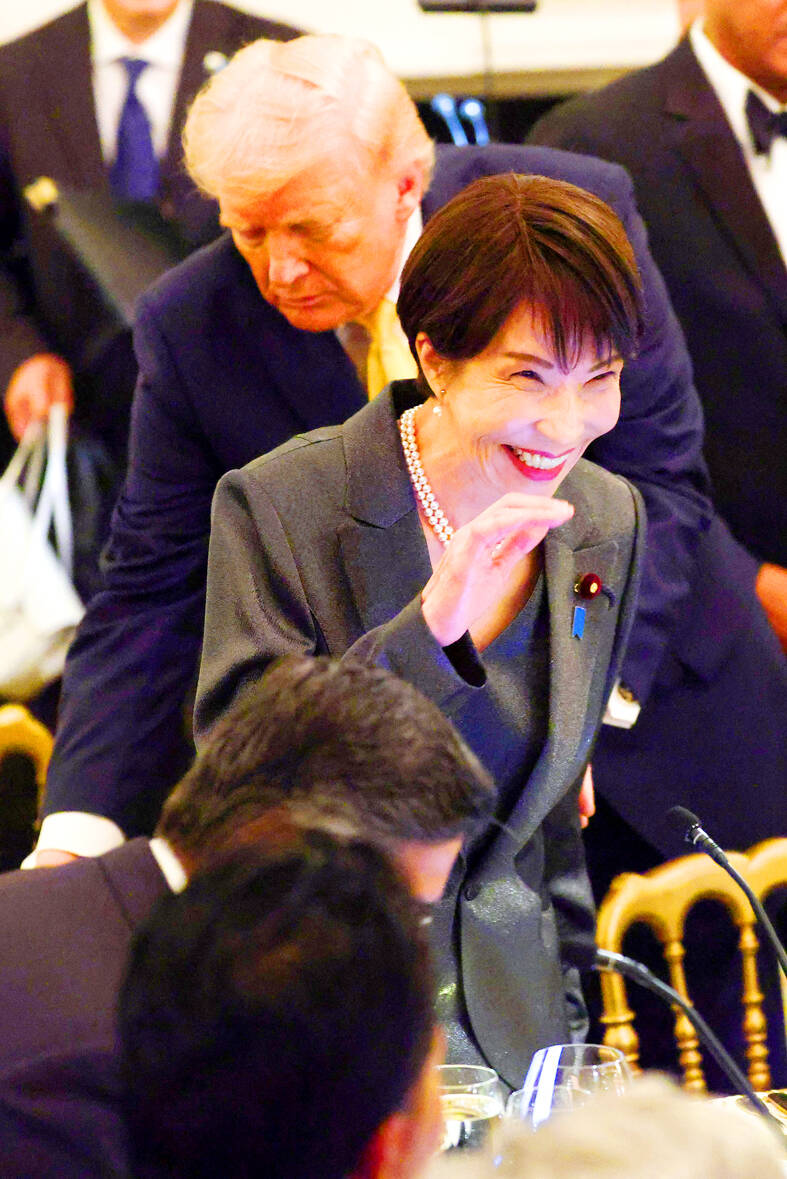
Photo: Reuters
“Who knows better about surprise than Japan?” he said, turning to Takaichi with a chuckle. “Why didn’t you tell me about Pearl Harbor?”
Takaichi did not treat that as a laugh line, instead pursing her lips and casting glances to her advisers seated to the side in the Oval Office.
The line was remarkable both because it raised the World War II-era Japanese attack on the US and because it underscored Trump’s cavalier attitude toward informing allies of major military operations.
After Trump’s reference to the Pearl Harbor attack, a Japanese Ministry of Foreign Affairs official said the subject did not come up in closed-door talks between the leaders.
He added that while Japan had anticipated some surprises from Trump, that one was not expected.
The incident was also the latest instance of a foreign leader being put on the back foot in a White House meeting with Trump, who has looked to leverage those opportunities to extract concessions or criticize their policies as counter to US interests.
“We don’t need anything from Japan or anyone else, but I think it’s appropriate that they step up,” Trump said.
“I expect Japan to step up because we have that kind of relationship,” he said, adding that about 45,000 US soldiers are based there. “We spend a lot of money on Japan.”
At a news conference after meeting with Trump, Takaichi told reporters she had explained to the US president the legal limits to Japan’s involvement in securing the Strait of Hormuz.
At the same time, she highlighted areas of agreement, including a pledge to import more oil from the US and to cooperate on missile development.
Takaichi said she had brought to the US concrete proposals to help calm energy markets even as she forecast more pain for the global economy. She condemned Iranian strikes in neighboring countries and Tehran’s effective closure of the Strait of Hormuz.
She added that Iran can never be allowed to have nuclear weapons — acknowledging the key rationale Trump has used for starting the war on Feb. 28.
Takaichi, who has enjoyed a warm relationship with Trump, is a vocal supporter of the alliance between the two countries. However, she also has to balance public opposition to the war at home and stringent domestic legal restrictions on deploying the nation’s military.

‘NO SECURITY RISK’: The Railway Bureau reassured the public that the technicians’ activities were limited to technical guidance and did not involve sensitive systems The Railway Bureau yesterday said it had invited eight Chinese technicians to assist with an airport MRT construction project. The bureau issued the confirmation after an Internet user said Chinese nationals had entered the construction zone of Taiwan Taoyuan International Airport’s Terminal 3 project. They asked why “individuals from an enemy state” were allowed access to such a major national infrastructure project, which raised serious concerns over Taiwan’s industrial safety, sensitive systems and information security. The bureau’s Northern Region Engineering Branch Office said subcontractor Taiwan Handle Industrial Co (台灣手把工業) of the Taoyuan airport MRT’s “Contract No. CU05 Project A14 Station Civil, MEP &

A US uncrewed surface vessel (USV) encountered multiple Chinese warships during an autonomous transit of the Taiwan Strait, US defense company Seasats said in a statement on Wednesday. Seasats announced that a Lightfish USV had completed the first autonomous transit of the Taiwan Strait. Over five days, the USV traversed the entire length of the Strait while constantly monitoring surface vessel traffic, the company said. The Lightfish encountered multiple Chinese warships, one of which was a Chinese People’s Liberation Army Navy (PLAN) Type 056 corvette, it said. The Chinese vessels were operating “well within Taiwan’s exclusive economic zone without transmitting their identity via the

Taiwan is still in the process of assessing the possibility of recruiting workers from Eswatini, the Ministry of Foreign Affairs said yesterday, adding that its goal is to help Eswatini upgrade its vocational training centers. If there are plans to recruit workers from Eswatini, safeguarding national security, protecting public health and ensuring the employment rights of Taiwanese would be prerequisites, Department of West Asian and African Affairs Director-General Yen Chia-liang (顏嘉良) told a news conference. Key considerations would also include filling labor shortages in specific industries, and fostering bilateral professional and technical exchanges, he said. Yen was asked about the progress of labor
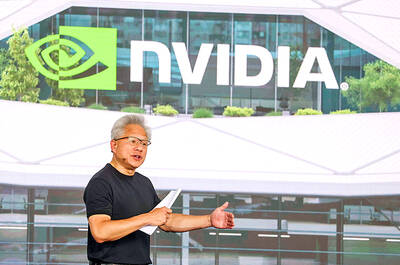
‘BOOMING’: ’ The number of partners we have here is incredible. You can see from their stock prices. They’re doing so well, they’re so happy,’ Jensen Huang said Nvidia Corp’s spending in Taiwan has ballooned to about US$150 billion a year, 10 times the US$10 billion to US$15 billion the company spent five years ago, Nvidia chief executive officer Jensen Huang (黃仁勳) said yesterday, suggesting Taiwan’s strategic importance in the global artificial intelligence (AI) supply chain. “Taiwan is the epicenter of the AI revolution. This is where the chips come, packaging comes. This is where the systems are made. This is where AI supercomputers were created,” Huang said at a meeting for the company’s employees in Beitou-Shilin Technology Park (北投士林科技園區) in Taipei, the planned site of Nvidia’s Taipei headquarters. “Taiwan


 RSS
RSS