


To combat fraud, the Ministry of Finance has required eight state-run banks to install artificial intelligence (AI)-powered facial recognition systems in automated teller machines (ATMs), the Liberty Times (sister paper of the Taipei Times) reported yesterday.
If people are wearing helmets, face masks, dark glasses or other headwear, ATMs would display a warning and require them to show their faces before operating the machines, the report said.
If people transfer money while talking on the phone, ATMs would urge them to stay alert to potential fraud, the report said.
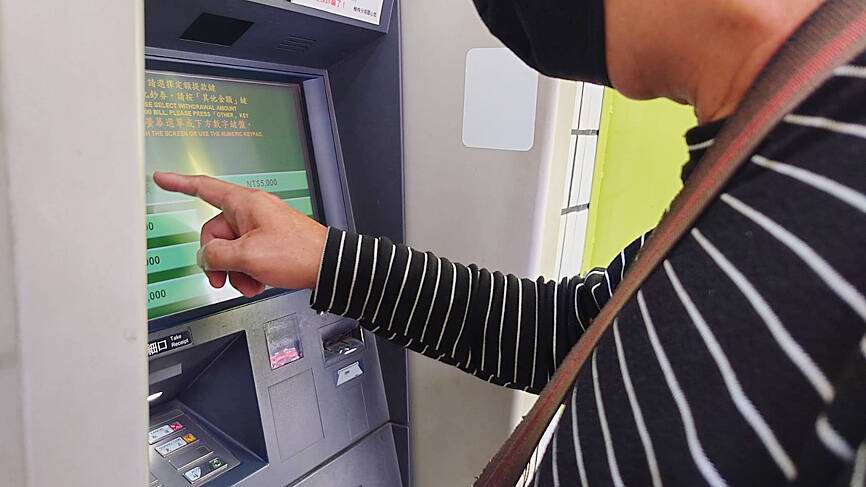
Photo: Hung Jui-chin, Taipei Times
The eight banks are Bank of Taiwan Co (臺灣銀行), Land Bank of Taiwan Co (土地銀行), Hua Nan Commercial Bank Ltd (華南銀行), Taiwan Cooperative Bank Ltd (合作金庫銀行), First Commercial Bank Ltd (第一銀行), Chang Hwa Commercial Bank Ltd (彰化銀行), Mega International Commercial Bank Co (兆豐銀行) and Taiwan Business Bank Ltd (臺灣企銀).
About 1 to 2 percent of the more than 5,000 ATMs operated by the eight state-run banks have facial recognition systems. The ministry wants to lift the ratio to 20 percent by the end of this year, the report said.
The move comes as the ministry and the Financial Supervisory Commission have weighed using facial recognition systems in ATMs to combat fraud since last year, as fraudsters often use the machines to get untraceable cash, with money mules wearing helmets or masks to evade detection.
From July last year to January this year, more than 117,000 ATM fraud hotspots across the country were identified by investigators, according to statistics compiled by the National Police Agency.
Some privately run banks including CTBC Bank Co (中國信託銀行) and Taishin International Bank Co (台新銀行) are introducing anti-fraud ATMs, as the commission weighs whether more financial institutions should use the AI systems to deny access to fraudsters.

LEVERAGE: China did not ‘need to fire a shot’ to deny Taiwan airspace over Africa when it owns ‘half the continent’s debt,’ a US official said, calling it economic warfare The EU has raised concerns about overflight rights following the delay of President William Lai’s (賴清德) planned state visit to the Kingdom of Eswatini after three African nations denied overflight clearance for his charter at the last minute. Taiwanese allies Paraguay and Saint Kitts and Nevis, as well as several US lawmakers and the Inter-Parliamentary Alliance on China (IPAC) condemned China for allegedly pressuring the countries. Lai was scheduled to fly directly to Taiwan’s only African ally from yesterday to Sunday to celebrate the 40th anniversary of King Mswati III’s accession and his 58th birthday, but Seychelles, Mauritius and Madagascar suddenly revoked
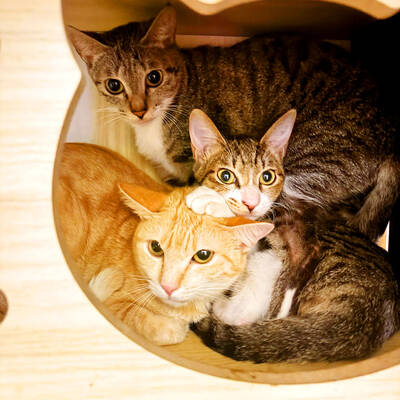
The number of pet cats in Taiwan surpassed that of pet dogs for the first time last year, reaching 1,742,033, a 32.8 percent increase from 2023, the Ministry of Agriculture said yesterday, citing a survey. By contrast, the number of pet dogs declined slightly by 1.2 percent over the same period to 1,462,528, the ministry said. Despite the shift, households with dogs still slightly outnumber those with cats by 1.2 percent. However, while the number of households with multiple dogs has remained relatively stable, households keeping more than two cats have increased, contributing to the overall rise in the feline population. The trend
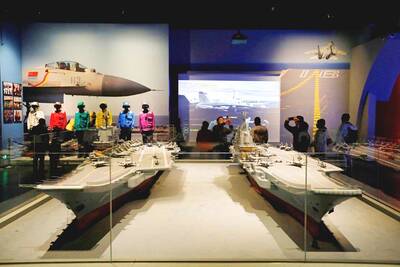
China on Wednesday teased in a video an aircraft carrier that could be its fourth, and the first using nuclear power, while making an allusion to Taiwan and vowing to further build up its islands, as it looks to boost maritime power, secure resources and bolster territorial claims. The video, issued on the eve of the 77th founding anniversary of the Chinese People’s Liberation Army Navy, featured fictional officers with names that are homophones of three commissioned aircraft carriers, the Liaoning (遼寧), Shandong (山東) and Fujian (福建). Titled Into the Deep, it showed a 19-year-old named “Hejian” (何劍) joining the group, sparking
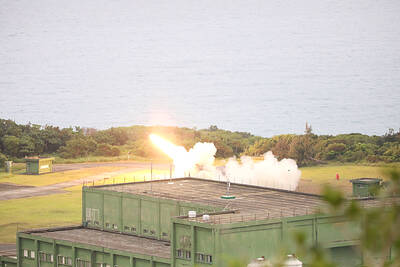
Taiwan has signed six arms procurement offers from the US totaling more than NT$208 billion (US$6.59 billion) covering long-range precision strike systems, missile stockpile replenishment and joint production of large-caliber ammunition, the Ministry of National Defense said yesterday. The government’s proposed NT$1.25 trillion special defense budget has been stalled in the Legislative Yuan as opposition lawmakers question the amount and procurement items, while the Presidential Office and defense ministry say that the full amount is necessary to safeguard Taiwan. Minister of National Defense Wellington Koo (顧立雄) on Monday briefed the legislature’s Foreign Affairs and National Defense Committee on the defense budget for


 RSS
RSS