


Mutual visits between Taiwan and Japan reached a record-high 8.213 million last year, with visits by members of Japan’s ruling and opposition parties also setting a new record at 120, the Taiwan-Japan Relations Association said yesterday.
Mutual visits have steadily increased after the COVID-19 pandemic, displaying the vibrant interactions and exchanges between the two nations across various sectors, including tourism, said Lin Yu-hui (林郁慧), deputy secretary-general of the Ministry of Foreign Affairs’ affiliated agency.
Japanese lawmakers made more than 120 visits last year, demonstrating how much they value and support Taiwan, she added.
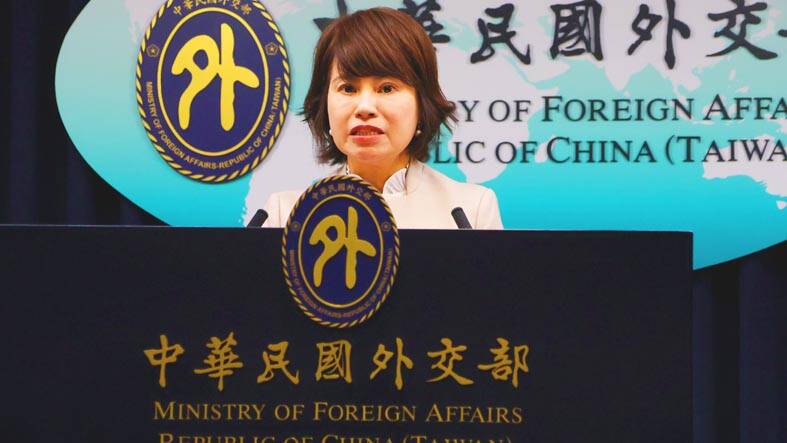
Photo: Taipei Times
On trade and investment, Japan was Taiwan’s fourth-largest trade partner and a major source of foreign investment and technical expertise, while Taiwan was Japan’s third-largest trade partner last year, Lin said.
“Last year, bilateral trade totaled more than US$84.85 billion and bilateral investment reached more than US$3.031 billion, also demonstrating the close and friendly economic and trade exchanges between the two sides,” she said.
Asked about Chinese Ministry of Foreign Affairs spokesman Guo Jiakun’s (郭嘉昆) comments about Premier Cho Jung-tai’s (卓榮泰) visit to Japan, Lin said the visit showed the deep friendship between Taiwan and Japan.
Cho on Saturday flew to Tokyo to cheer for Taiwan’s national team at a World Baseball Classic game.
Asked about the trip, Guo told a news briefing in Beijing on Monday that it was “sneaky and shameful behavior that is beneath contempt.”
Cho “harbored sinister motives” and “sneaked into Japan to engage in surreptitious ‘independence’ provocations,” he said.
Beijing resolutely opposes Japan’s attempts to play “edge ball” or seek breakthroughs on the Taiwan issue, Guo said.
Japan must bear all the consequences for indulging provocative and reckless behavior, he said, adding that China would continue to unwaveringly strike “Taiwan independence” separatist forces and resolutely oppose interference in the Taiwan issue by external forces.
Dismissing Guo’s comments, Lin said: “Taiwan and Japan are close neighbors whose people share a deep friendship. Both sides belong to the camp of free and democratic nations, sharing core values, including freedom, democracy, human rights and the rule of law.”
“We maintain close and friendly cooperative relations across all fields, serving as important partners and precious friends to one another, as well as a force for good in maintaining peace and stability in the Indo-Pacific region,” she said.
Japanese Prime Minister Sanae Takaichi has long supported Taiwan, while her Cabinet is also very Taiwan-friendly, including Japanese Chief Cabinet Secretary Minoru Kihara and Japanese Minister of Foreign Affairs Toshimitsu Motegi, who have both openly expressed wishes to deepen exchanges and cooperation with Taiwan, Lin said.
“Steadily advancing Taiwan-Japan relations is the Japanese government’s basic stance and a social consensus,” she added.
The ministry is looking forward to the continuous expansion of exchanges and cooperation between Taiwan and Japan across various fields, and upholding the “integrated diplomacy” concept, and the ministry will continue to work closely with Japan to deepen a comprehensive partnership based on mutual benefit, Lin said.

‘NO SECURITY RISK’: The Railway Bureau reassured the public that the technicians’ activities were limited to technical guidance and did not involve sensitive systems The Railway Bureau yesterday said it had invited eight Chinese technicians to assist with an airport MRT construction project. The bureau issued the confirmation after an Internet user said Chinese nationals had entered the construction zone of Taiwan Taoyuan International Airport’s Terminal 3 project. They asked why “individuals from an enemy state” were allowed access to such a major national infrastructure project, which raised serious concerns over Taiwan’s industrial safety, sensitive systems and information security. The bureau’s Northern Region Engineering Branch Office said subcontractor Taiwan Handle Industrial Co (台灣手把工業) of the Taoyuan airport MRT’s “Contract No. CU05 Project A14 Station Civil, MEP &

A US uncrewed surface vessel (USV) encountered multiple Chinese warships during an autonomous transit of the Taiwan Strait, US defense company Seasats said in a statement on Wednesday. Seasats announced that a Lightfish USV had completed the first autonomous transit of the Taiwan Strait. Over five days, the USV traversed the entire length of the Strait while constantly monitoring surface vessel traffic, the company said. The Lightfish encountered multiple Chinese warships, one of which was a Chinese People’s Liberation Army Navy (PLAN) Type 056 corvette, it said. The Chinese vessels were operating “well within Taiwan’s exclusive economic zone without transmitting their identity via the
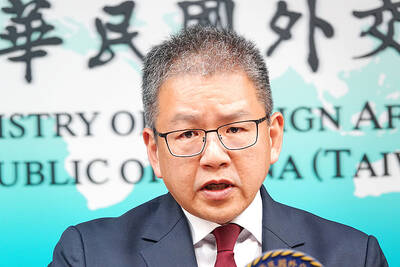
Taiwan is still in the process of assessing the possibility of recruiting workers from Eswatini, the Ministry of Foreign Affairs said yesterday, adding that its goal is to help Eswatini upgrade its vocational training centers. If there are plans to recruit workers from Eswatini, safeguarding national security, protecting public health and ensuring the employment rights of Taiwanese would be prerequisites, Department of West Asian and African Affairs Director-General Yen Chia-liang (顏嘉良) told a news conference. Key considerations would also include filling labor shortages in specific industries, and fostering bilateral professional and technical exchanges, he said. Yen was asked about the progress of labor
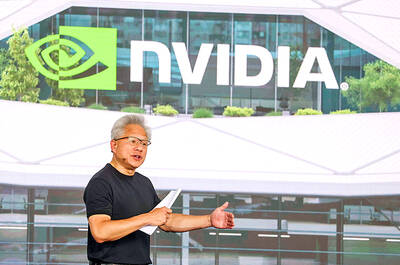
‘BOOMING’: ’ The number of partners we have here is incredible. You can see from their stock prices. They’re doing so well, they’re so happy,’ Jensen Huang said Nvidia Corp’s spending in Taiwan has ballooned to about US$150 billion a year, 10 times the US$10 billion to US$15 billion the company spent five years ago, Nvidia chief executive officer Jensen Huang (黃仁勳) said yesterday, suggesting Taiwan’s strategic importance in the global artificial intelligence (AI) supply chain. “Taiwan is the epicenter of the AI revolution. This is where the chips come, packaging comes. This is where the systems are made. This is where AI supercomputers were created,” Huang said at a meeting for the company’s employees in Beitou-Shilin Technology Park (北投士林科技園區) in Taipei, the planned site of Nvidia’s Taipei headquarters. “Taiwan


 RSS
RSS