


President William Lai (賴清德) on Sunday night congratulated Japanese Prime Minister Sanae Takaichi and her Liberal Democratic Party (LDP) on their historic landslide victory in Japan’s general election earlier in the day.
The decisive win “clearly demonstrates the trust and expectations of Japanese voters for Sanae Takaichi’s leadership and vision,” Lai wrote in Chinese and Japanese on X.
As Taiwan and Japan continue to face regional challenges, Lai said he looks forward to working with Takaichi, based on shared values and the spirit of mutually beneficial cooperation, to jointly promote peace and prosperity in the Indo-Pacific region.
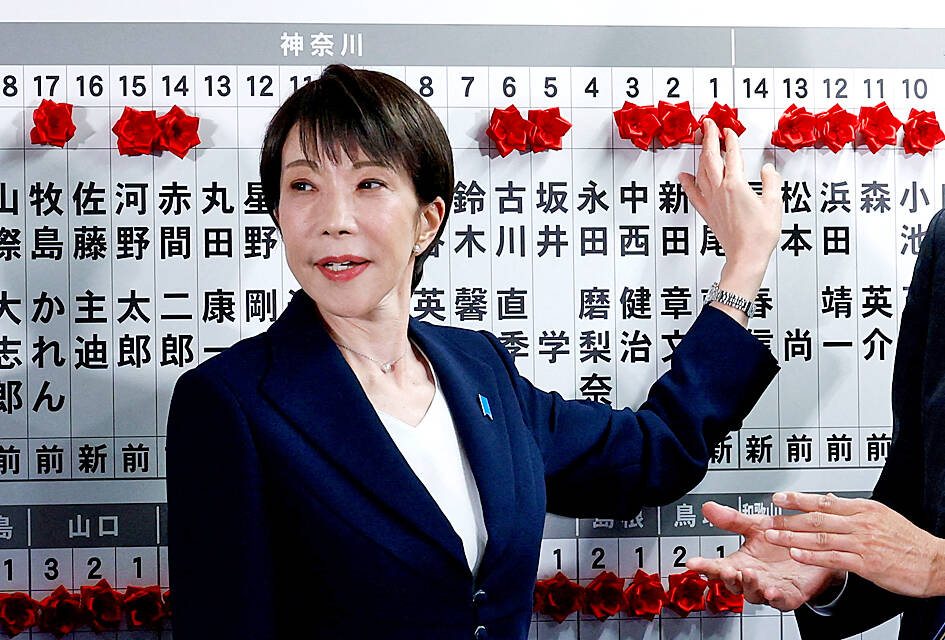
Photo: Reuters
He also extended his best wishes for Japan’s sustainable development and the well-being of its people, as it strives to build a prosperous and secure future under Takaichi’s leadership.
The Ministry of Foreign Affairs yesterday also issued a statement congratulating Takaichi and the members of the Japan-ROC Diet Members Consultative Council, a Taiwan-Japan parliamentary group, on behalf of the government and people of Taiwan.
Representative to Japan Lee Yi-yang (李逸洋) said he believes Taiwan-Japan relations would continue to grow under Takaichi’s leadership, particularly in economics and business.
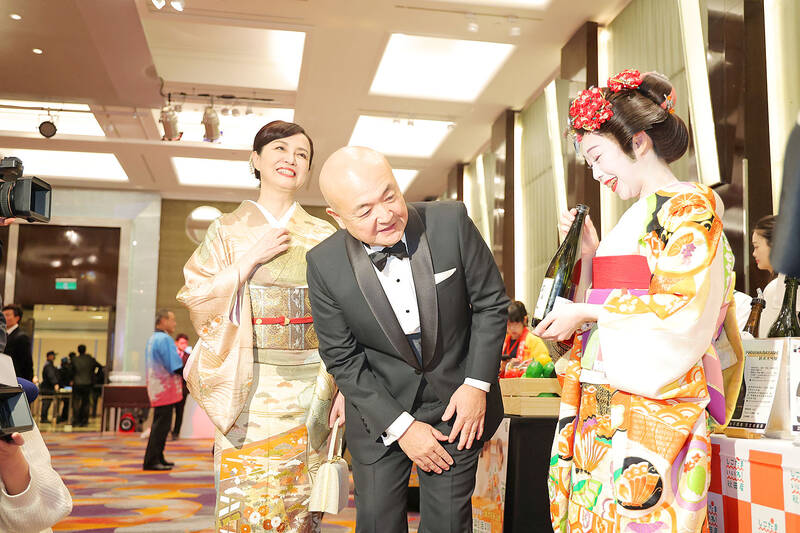
Photo: CNA
Sunday’s snap polls were held to elect all 465 seats in the House of Representatives, the lower house in the Diet.
The LDP, which held 198 seats before the election, won 316 on Sunday, securing the biggest majority for a single party in post-World War II Japan. The LDP and its coalition partner the Japan Innovation Party jointly won 352 seats.
American Institute in Taiwan (AIT) Director Raymond Greene last night said that, under the leadership of Takaichi, he looks forward to deeper coordination and cooperation among the US, Japan,and Taiwan to jointly promote regional stability and prosperity.
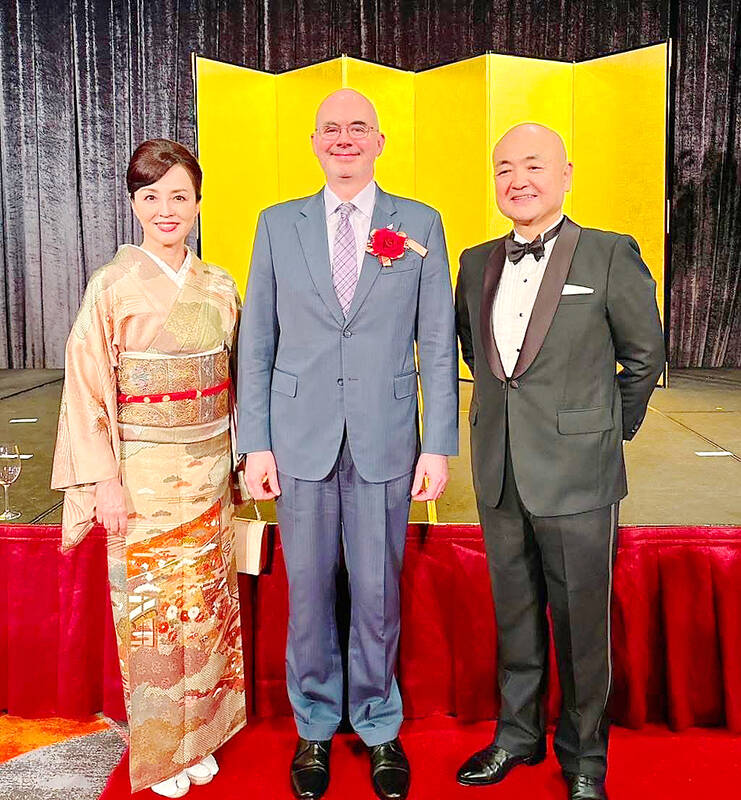
Photo: Taipei Times
Greene posted the message on AIT’s Facebook page after attending an event hosted by the Japan-Taiwan Exchange Association in Taipei celebrating the birthday of the Japanese emperor.
Foundation on Asia-Pacific Peace Studies CEO Dong Li-wen (董立文) cited Takaichi’s remarks in November about a potential Taiwan contingency and how it contrasts with the approach of her predecessor, Shigeru Ishiba, who had a more moderate stance toward Beijing.
Beijing did not merely pressure her in the hope that she would walk back her words, but also sought to isolate her internationally and domestically, Dong said.
However, after a month, it found that the approach did not work either way, he said.
Dong attributed the LDP’s sweeping victory to Takaichi’s firm position, saying it has created greater diplomatic leeway for Japan and set the tone for a “pro-US, anti-China and Taiwan-friendly” policy direction.
Kuo Yu-jen (郭育仁), director of National Sun Yat-sen University’s Center for Japanese Studies, said the election results would help the Takaichi administration push forward its proposed ¥9.04 trillion (US$57.8 billion) defense budget.
About one-third of the spending would be directed toward Japan’s Southwest Islands — defined as the islands south of Kyushu — which are widely seen as strategically critical in a Taiwan-related contingency, Kuo said.
Dong said that relations between Tokyo and Beijing are likely to deteriorate further as the two sides “interact coldly.”
Kuo urged Japan to follow the US’ example by enacting a Japanese version of the Taiwan Assurance Implementation Act to facilitate exchanges with Taiwanese officials.
Taiwanese defense analyst Su Szu-yun (蘇紫雲) said Takaichi’s assertion that a Taiwan contingency might trigger Japan’s collective self-defense is consistent with the US’ national security strategy emphasizing collective defense, and could contribute to stability in the Taiwan Strait and enhanced trilateral security and industrial cooperation.
Additional reporting by Aaron Tu and Huang Chin-hsuan

‘NO SECURITY RISK’: The Railway Bureau reassured the public that the technicians’ activities were limited to technical guidance and did not involve sensitive systems The Railway Bureau yesterday said it had invited eight Chinese technicians to assist with an airport MRT construction project. The bureau issued the confirmation after an Internet user said Chinese nationals had entered the construction zone of Taiwan Taoyuan International Airport’s Terminal 3 project. They asked why “individuals from an enemy state” were allowed access to such a major national infrastructure project, which raised serious concerns over Taiwan’s industrial safety, sensitive systems and information security. The bureau’s Northern Region Engineering Branch Office said subcontractor Taiwan Handle Industrial Co (台灣手把工業) of the Taoyuan airport MRT’s “Contract No. CU05 Project A14 Station Civil, MEP &

A US uncrewed surface vessel (USV) encountered multiple Chinese warships during an autonomous transit of the Taiwan Strait, US defense company Seasats said in a statement on Wednesday. Seasats announced that a Lightfish USV had completed the first autonomous transit of the Taiwan Strait. Over five days, the USV traversed the entire length of the Strait while constantly monitoring surface vessel traffic, the company said. The Lightfish encountered multiple Chinese warships, one of which was a Chinese People’s Liberation Army Navy (PLAN) Type 056 corvette, it said. The Chinese vessels were operating “well within Taiwan’s exclusive economic zone without transmitting their identity via the
Taiwan is still in the process of assessing the possibility of recruiting workers from Eswatini, the Ministry of Foreign Affairs said yesterday, adding that its goal is to help Eswatini upgrade its vocational training centers. If there are plans to recruit workers from Eswatini, safeguarding national security, protecting public health and ensuring the employment rights of Taiwanese would be prerequisites, Department of West Asian and African Affairs Director-General Yen Chia-liang (顏嘉良) told a news conference. Key considerations would also include filling labor shortages in specific industries, and fostering bilateral professional and technical exchanges, he said. Yen was asked about the progress of labor
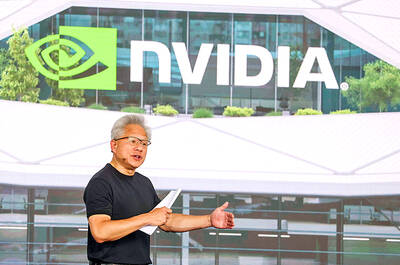
‘BOOMING’: ’ The number of partners we have here is incredible. You can see from their stock prices. They’re doing so well, they’re so happy,’ Jensen Huang said Nvidia Corp’s spending in Taiwan has ballooned to about US$150 billion a year, 10 times the US$10 billion to US$15 billion the company spent five years ago, Nvidia chief executive officer Jensen Huang (黃仁勳) said yesterday, suggesting Taiwan’s strategic importance in the global artificial intelligence (AI) supply chain. “Taiwan is the epicenter of the AI revolution. This is where the chips come, packaging comes. This is where the systems are made. This is where AI supercomputers were created,” Huang said at a meeting for the company’s employees in Beitou-Shilin Technology Park (北投士林科技園區) in Taipei, the planned site of Nvidia’s Taipei headquarters. “Taiwan


 RSS
RSS