


Southeast Asian countries should steadfastly maintain restraint and adhere to international law as acts of aggression across Asia and “unilateral actions” elsewhere in the world threaten the rules-based global order, Manila’s top diplomat said yesterday.
ASEAN also does not recognize the Burmese elections that ended this month, Philippine Secretary of Foreign Affairs Theresa Lazaro said.
She did not provide details of the geopolitical alarm she raised before her counterparts in the 11-member ASEAN who were holding their first major closed-door meetings this year in the Philippines’ central seaside city of Cebu.
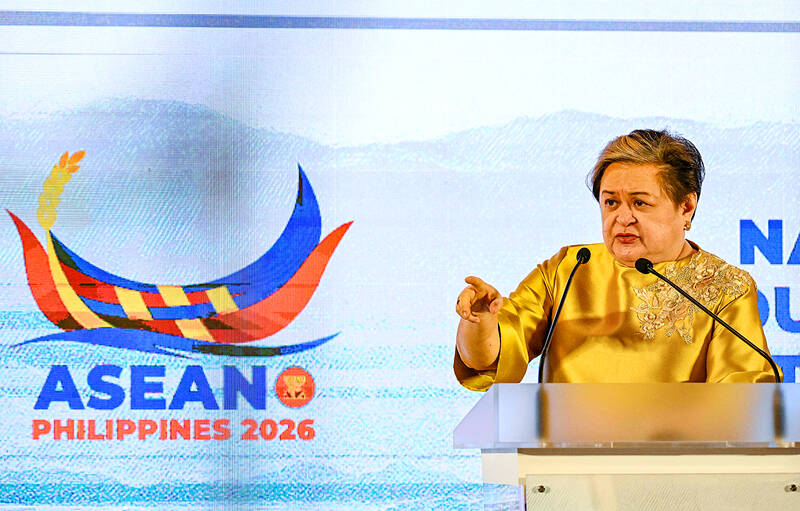
Photo: AFP
However, China’s intensifying aggressive stance on Taiwan and in the disputed South China Sea have troubled the region for years, while several members have expressed deep concern over the secretive US strike that resulted in the arrest of deposed Venezuelan president Nicolas Maduro on orders from US President Donald Trump.
Calling out China and the US, among the largest trading and defense partners of ASEAN members, has been a dilemma and diplomatic tightrope.
“Across our region, we continue to see tensions at sea, protracted internal conflicts and unresolved border and humanitarian concerns,” Lazaro said in her opening speech before ASEAN counterparts.
“At the same time, developments beyond Southeast Asia, including unilateral actions that carry cross-regional implications, continue to affect regional stability and erode multilateral institutions and the rules-based international order,” she said.
“These realities underscore the interim importance of ASEAN’s time-honored principles of restraint, dialogue and adherence to international law in seeking to preserve peace and stability to our peoples,” she said.
Meanwhile, ASEAN’s nonrecognition of the elections in Myanmar, which a military-backed party claimed to have won, is a major blow to efforts by the country’s military rulers to gain international recognition.
The regional bloc, which includes Myanmar, has refused to recognize the military-ruled government since the army forcibly wrested power from Aung San Suu Kyi’s elected government in 2021. The power grab has plunged the impoverished country in a deadly civil war.
Asked in a news conference if the bloc did not recognize the elections in Myanmar, Lazaro said: “Yes, as of now,” adding that ASEAN “has not endorsed the three phases of the elections that were held.”
Lazaro did not elaborate how the regional bloc’s stance could possibly change.

SILENCING CRITICS: In addition to blocking Taiwan, China aimed to prevent rights activists from speaking out against authoritarian states, a Cabinet department said The Ministry of Foreign Affairs (MOFA) yesterday condemned transnational repression by Beijing after RightsCon, a major digital human rights conference scheduled to be held in Zambia this week, was abruptly canceled due to Chinese pressure over Taiwanese participation. This year’s RightsCon, the world’s largest conference discussing issues “at the intersection of human rights and technology,” was scheduled to take place from tomorrow to Friday in Lusaka, and expected to draw 2,600 in-person attendees from 150 countries, along with 1,100 online participants. However, organizers were forced to cancel the event due to behind-the-scenes pressure from China, the ministry said, expressing its “strongest condemnation”
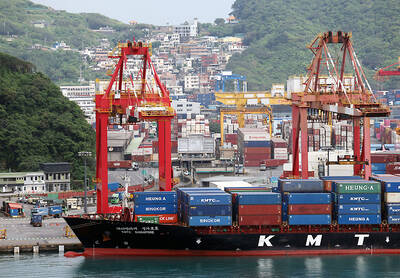
Taiwan’s economy grew far faster than expected in the first quarter, as booming demand for artificial intelligence (AI) applications drove a surge in exports, spilling over into investment and consumption, the Directorate-General of Budget, Accounting and Statistics (DGBAS) said yesterday. GDP growth was 13.69 percent year-on-year during the January-to-March period, beating the DGBAS’ February forecast by 2.23 percentage points and marking the most robust growth in nearly four decades, DGBAS senior official Chiang Hsin-yi (江心怡) told a news conference in Taipei. The result was powered by exports, which remain the backbone of Taiwan’s economy, Chiang said. Outbound shipments jumped 51.12 percent year-on-year to
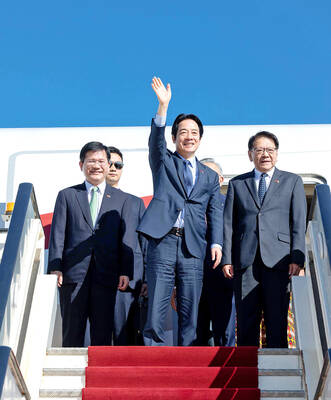
DELAYED BUT DETERMINED: The president’s visit highlights Taiwan’s right to international engagement amid regional pressure from China President Willaim Lai (賴清德) yesterday arrived in Eswatini, more than a week after his planned visit to Taiwan’s sole African ally was suspended because of revoked overflight permits. “The visit, originally scheduled for April 22, was postponed due to unforeseen external factors,” Lai wrote on social media. “After several days of careful arrangements by our diplomatic and national security teams, we successfully arrived today.” Lai said he looked forward to further deepening Taiwan-Eswatini relations through closer cooperation in the economy, agriculture, culture and education, as well as advancing the nation’s international partnerships. The president was initially scheduled to arrive in time to celebrate
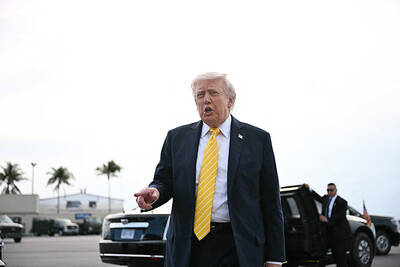
Iran’s Islamic Revolutionary Guard Corp (IRGC) yesterday said the US faced a choice between an “impossible” military operation or a “bad deal” with Tehran, after US President Donald Trump disparaged Iran’s latest peace proposal. Negotiations between the two countries have been deadlocked since a ceasefire came into effect on April 8, with only one round of direct peace talks held so far. Iran’s Tasnim and Fars news agencies reported that Tehran had submitted a 14-point proposal to mediator Pakistan, but Trump was quick to cast doubt on it. “I will soon be reviewing the plan that Iran has just sent to us, but


 RSS
RSS