


Iranian supreme leader Ayatollah Ali Khamenei on Saturday said “several thousand people” died in this month’s anti-government demonstrations, his first acknowledgment of the deadly scale of the unrest.
Some of those were killed “brutally and inhumanely,” Khamenei said without offering detail in a public meeting broadcast on state TV.
He accused the US and Israel of aiding the killings and said the Islamic republic has evidence to support the claim.
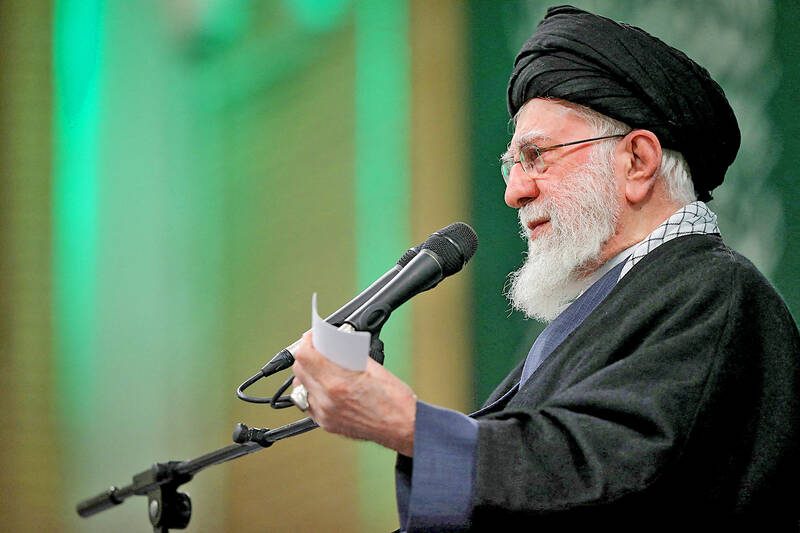
Photo: Office of the Iranian Supreme Leader / West Asia News Agency via REUTERS
Iran does not intend to push the country toward war, but would not allow domestic or international criminals to go unpunished, Khamenei said.
He said US President Donald Trump was culpable for “deaths, damage and accusations he has inflicted on the Iranian people,” and that Washington’s broader policy goal was to place Iran under military, political and economic domination.
The toll suggested by Khamenei was in line with estimates from human rights groups and others that about 3,500 people had perished. The groups estimate that more than 22,000 people have been detained.
Trump told Politico that Iran needs new leadership, and said Khamenei is guilty of “the complete destruction of the country and the use of violence at levels never seen before.”
The protests have taken place during a record-long Internet blackout for Iran’s population of about 92 million people.
Earlier, local media reported that Internet connectivity had been partially restored, even as most residents appeared to remain largely cut off from the outside world.
Iran’s government shut down Internet and mobile phone services on Jan. 8 to quell rising unrest sparked by a currency crisis late last month.
“Internet access has now been restored for some subscribers,” the semiofficial Mehr news agency said, without specifying which restrictions had been lifted or whether users had regained access to international platforms and services.
The semiofficial Fars news agency also reported that mobile text messages had been reactivated after being blocked earlier.
The Internet traffic monitoring group NetBlocks said there had been a “very slight rise” in connectivity on Saturday, adding that overall access remained at about 2 percent of normal levels, with “no indication of a significant return.”
Users in Iran appeared largely offline as of early Saturday afternoon, with few signs of activity evident on platforms such as Telegram, Instagram and X — services they previously accessed via virtual private networks.
Near-total communications blackouts have become a familiar tool for Iranian authorities during critical situations, from this month’s nationwide protests to the June conflict with Israel. That has cut off much of the population from the global Internet and diverted users onto a government-controlled domestic network that operates independently of the wider web.
Earlier on Saturday, Fars cited authorities, who were not identified, as saying that Internet and other communications services were being gradually restored, but that some restrictions would remain in place “as long as security conditions require.”
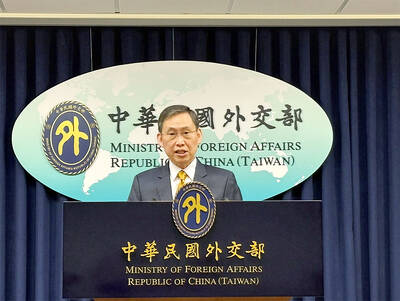
A Ministry of Foreign Affairs official yesterday said that a delegation that visited China for an APEC meeting did not receive any kind of treatment that downgraded Taiwan’s sovereignty. Department of International Organizations Director-General Jonathan Sun (孫儉元) said that he and a group of ministry officials visited Shenzhen, China, to attend the APEC Informal Senior Officials’ Meeting last month. The trip went “smoothly and safely” for all Taiwanese delegates, as the Chinese side arranged the trip in accordance with long-standing practices, Sun said at the ministry’s weekly briefing. The Taiwanese group did not encounter any political suppression, he said. Sun made the remarks when
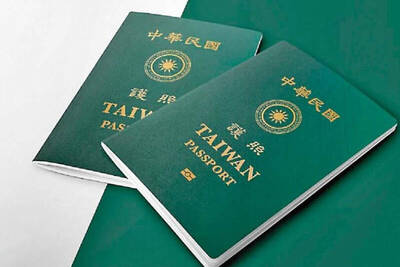
The Taiwanese passport ranked 33rd in a global listing of passports by convenience this month, rising three places from last month’s ranking, but matching its position in January last year. The Henley Passport Index, an international ranking of passports by the number of designations its holder can travel to without a visa, showed that the Taiwan passport enables holders to travel to 139 countries and territories without a visa. Singapore’s passport was ranked the most powerful with visa-free access to 192 destinations out of 227, according to the index published on Tuesday by UK-based migration investment consultancy firm Henley and Partners. Japan’s and

BROAD AGREEMENT: The two are nearing a trade deal to reduce Taiwan’s tariff to 15% and a commitment for TSMC to build five more fabs, a ‘New York Times’ report said Taiwan and the US have reached a broad consensus on a trade deal, the Executive Yuan’s Office of Trade Negotiations said yesterday, after a report said that Washington is set to reduce Taiwan’s tariff rate to 15 percent. The New York Times on Monday reported that the two nations are nearing a trade deal to reduce Taiwan’s tariff rate to 15 percent and commit Taiwan Semiconductor Manufacturing Co (TSMC, 台積電) to building at least five more facilities in the US. “The agreement, which has been under negotiation for months, is being legally scrubbed and could be announced this month,” the paper said,

MIXED SOURCING: While Taiwan is expanding domestic production, it also sources munitions overseas, as some, like M855 rounds, are cheaper than locally made ones Taiwan and the US plan to jointly produce 155mm artillery shells, as the munition is in high demand due to the Ukraine-Russia war and should be useful in Taiwan’s self-defense, Armaments Bureau Director-General Lieutenant General Lin Wen-hsiang (林文祥) told lawmakers in Taipei yesterday. Lin was responding to questions about Taiwan’s partnership with allies in producing munitions at a meeting of the legislature’s Foreign Affairs and National Defense Committee. Given the intense demand for 155mm artillery shells in Ukraine’s defense against the Russian invasion, and in light of Taiwan’s own defensive needs, Taipei and Washington plan to jointly produce 155mm shells, said Lin,


 RSS
RSS