


US delivery of AGM-154C Joint Standoff Weapons (JSOW) would be delayed to 2027-2028, as Taiwan opted for the new Block 3 version that requires restarting production lines and system integration, the Ministry of National Defense said yesterday.
The Legislative Yuan’s Foreign Affairs and National Defense Committee invited the ministry to deliver a briefing on arms procurement delays, including F-16V Block 70 jets, AGM-154C JSOW and Mark 48 heavy torpedoes.
The AMG-154C glide bombs were originally scheduled to be delivered this and next year, but procuring the latest version of the weapons requires restarting production lines, sourcing materials and system integration, so delivery has been reset for 2027-2028, the ministry said.
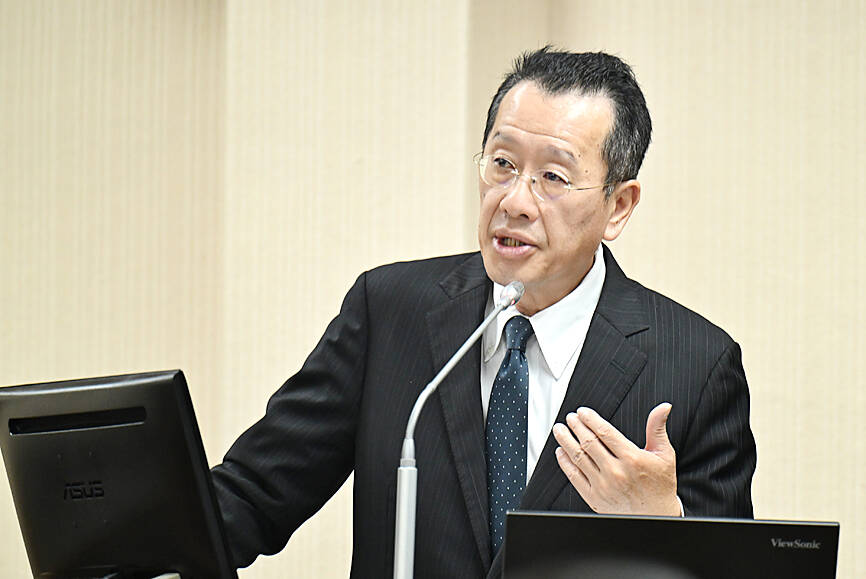
Photo: Chen Yi-kuan, Taipei Times
Democratic Progressive Party (DPP) Legislator Wang Ting-yu (王定宇) said that the air force has required these bombs for a long time, and pilots told him they have been waiting for them when he visited the front lines.
As the delay is related to procuring the latest model of the bombs, Wang asked whether future purchases would also include older models.
Department of Strategic Planning Director Lieutenant General Huang Wen-chi (黃文?) said that the military is procuring AMG-154C Block 3 bombs, which are a generation ahead of what the US is currently using.
Air force Chief of Staff Lieutenant General Lee Ching-jan (李慶然) said that according to meetings with the US, full delivery is scheduled for 2027-2028.
Meanwhile, US delivery of Taiwan’s order of 66 F-16V Block 70 jets has been delayed due to production problems, but some of them might be delivered on time next year, Minister of National Defense Wellington Koo (顧立雄) said.
All 66 aircraft were originally scheduled to be delivered by the end of next year.
Fifty of the Lockheed Martin jets are already on the production line, and by the end of this year, 10 of the multirole jets are expected to roll off the assembly line, after which they are to undergo test flights before being delivered to Taiwan, Koo said in response to questions by DPP Legislator Loh Mei-ling (羅美玲).
“We want the public to know that this does not mean there is no progress,” Koo said. “The work is moving ahead at full speed, with two shifts working 20 hours a day.”
“If the tests go well, I think we can expect some of the F-16Vs to be delivered next year,” he added.
Lee said that Taiwan must send personnel to the US to inspect and take delivery of the jets, after which a contingent would stay there to undergo training on the aircraft before flying back to Taiwan..
Pressed by Huang on whether the US might deliver only one F-16V next year, Lee said it would be “more than that,” citing the latest US report on the matter.
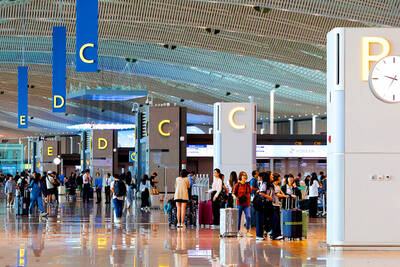
South Korea has adjusted its electronic arrival card system to no longer list Taiwan as a part of China, a move that the Ministry of Foreign Affairs said would help facilitate exchanges between the two sides. South Korea previously listed “Taiwan” as “Taiwan (China)” in the drop-down menus of its online arrival card system, where people had to fill out where they came from and their next destination. The ministry had requested South Korea make a revision and said it would change South Korea’s name on Taiwan’s online immigration system from “Republic of Korea” to “Korea (South),” should the issue not be

The Legislative Yuan’s Finance Committee yesterday approved proposed amendments to the Amusement Tax Act (娛樂稅法) that would abolish taxes on films, cultural activities and competitive sporting events, retaining the fee only for dance halls and golf courses. The proposed changes would set the maximum tax rate for dance halls and golf courses at 50 and 20 percent respectively, with local governments authorized to suspend the levies. Article 2 of the act says that “amusement tax shall be levied on tickets sold or fees charged by amusement places, facilities or activities” in six categories: “Cinema; professional singing, story-telling, dancing, circus, magic show, acrobatics

Tainan, Taipei and New Taipei City recorded the highest fines nationwide for illegal accommodations in the first quarter of this year, with fines issued in the three cities each exceeding NT$7 million (US$220,639), Tourism Administration data showed. Among them, Taipei had the highest number of illegal short-term rental units, with 410. There were 3,280 legally registered hotels nationwide in the first quarter, down by 14 properties, or 0.43 percent, from a year earlier, likely indicating operators exiting the market, the agency said. However, the number of unregistered properties rose to 1,174, including 314 illegal hotels and 860 illegal short-term rental
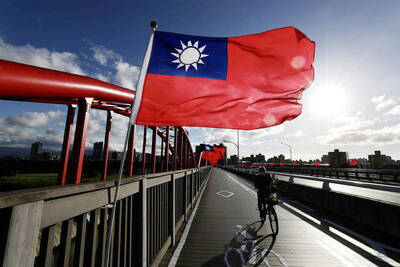
INFLATION UP? The IMF said CPI would increase to 1.5 percent this year, while the DGBAS projected it would rise to 1.68 percent, with GDP per capita of US$44,181 The IMF projected Taiwan’s real GDP would grow 5.2 percent this year, up from its 2.1 percent outlook in January, despite fears of global economic disruptions sparked by the US-Iran conflict. Taiwan’s consumer price index (CPI) is projected to increase to 1.5 percent, while unemployment would be 3.4 percent, roughly in line with estimates for Asia as a whole, the international body wrote in its Global Economic Outlook Report published in the US on Monday. The figures are comparatively better than the IMF outlook for the rest of the world, which pegged real GDP growth at 3.1 percent, down from 3.3 percent


 RSS
RSS