


At least one man was killed in violence at a rally in Peru’s capital on Wednesday, said Peruvian President Jose Jeri, whose accession days ago has failed to stamp out angry protests against the political class in the South American nation.
The Peruvian Ombudsman’s Office said that 102 people were injured — 24 civilians and 78 police — updating earlier tolls.
Demonstrations led by young people brought thousands of Peruvians, frustrated by the authorities’ failure to resolve a worsening crime crisis, onto the streets in Lima and several other cities.
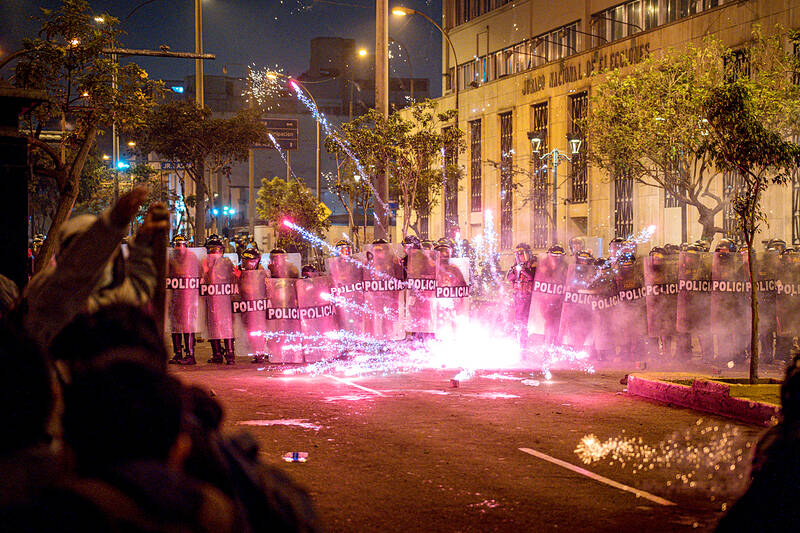
Photo: EPA
Some protesters tried to breach the security barrier around the Peruvian Congress as night fell, a correspondent said.
Others in the crowd also hurled stones and lit fireworks.
Police in riot gear responded with tear gas.
“I regret the death of 32-year-old citizen Eduardo Ruiz Sanz,” Jeri said on X, without elaborating on the circumstances.
Non-governmental organization the National Human Rights Coordinator said that the man might have been shot by a plainclothes police officer.
Images showed the blood-covered face of a police officer who had been hit by a stone.
Jeri also said the “peaceful demonstration” had been infiltrated by criminals seeking to “cause chaos.”
The South American country has been rocked by protests for weeks. Lawmakers on Friday last week voted to impeach then-Peruvian president Dina Boluarte for “permanent moral incapacity,” who critics blamed for a surge in crime and accused of corruption.
“I think there is general discontent because nothing has been done,” 49-year-old freelancer Amanda Meza told reporters while marching toward Congress.
“There’s no security from the state,” she said, adding that cases of extortion and contract killings “have grown massively in Peru.”

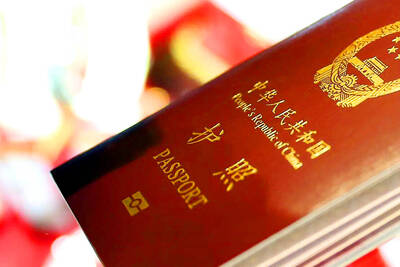
The Ministry of the Interior (MOI) is to tighten rules for candidates running for public office, requiring them to declare that they do not hold a Chinese household registration or passport, and that they possess no other foreign citizenship. The requirement was set out in a draft amendment to the Enforcement Rules of the Public Officials Election and Recall Act (公職人員選舉罷免法 ) released by the ministry on Thursday. Under the proposal, candidates would need to make the declaration when submitting their registration forms, which would be published in the official election bulletin. The move follows the removal of several elected officials who were
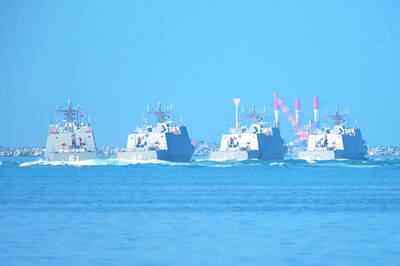
FOUR DESIGNATED AREAS: Notices were issued for live-fire exercises in waters south and northwest of Penghu, northeast of Keelung and west of Kaohsiung, they said The military is planning three major annual exercises across the army, navy and air force this month, with the navy’s “Hai Chiang” (海強, “Sea Strong”) drills running from today through Thursday, the Ministry of National Defense said yesterday. The Hai Chiang exercise, which is to take place in waters surrounding Taiwan, would feature P-3C Orion maritime patrol aircraft and S-70C anti-submarine helicopters, the ministry said, adding that the drills aim to bolster the nation’s offshore defensive capabilities. China has intensified military and psychological pressure against Taiwan, repeatedly sending warplanes and vessels into areas near the nation’s air defense identification zone and across
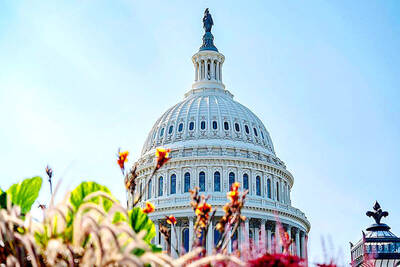
SENATE RECOMMENDATION: The National Defense Authorization Act encourages the US secretary of defense to invite Taiwan’s navy to participate in the exercises in Hawaii The US Senate on Thursday last week passed the National Defense Authorization Act (NDAA) for Fiscal Year 2026, which strongly encourages the US secretary of defense to invite Taiwan’s naval forces to participate in the Rim of the Pacific (RIMPAC) exercise, as well as allocating military aid of US$1 billion for Taiwan. The bill, which authorizes appropriations for the military activities of the US Department of Defense, military construction and other purposes, passed with 77 votes in support and 20 against. While the NDAA authorizes about US$925 billion of defense spending, the Central News Agency yesterday reported that an aide of US
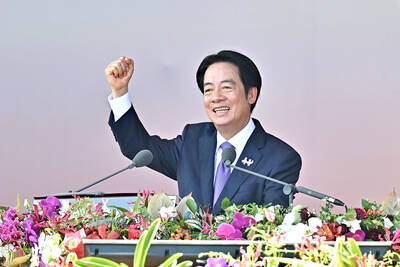
NATIONAL DAY: The ‘Taiwan Dome’ would form the centerpiece of new efforts to bolster air defense and be modeled after Israel’s ‘Iron Dome,’ sources said President William Lai (賴清德) yesterday pledged to strengthen the nation’s air defense capabilities and build a “T-Dome” system to create a safety net against growing military threats from China. “We will accelerate our building of the T-Dome, establish a rigorous air defense system in Taiwan with multi-layered defense, high-level detection and effective interception, and weave a safety net for Taiwan to protect the lives and property of citizens,” he said in his National Day address. In his keynote address marking the Republic of China’s (ROC) 114th anniversary, Lai said the lessons of World War II have taught nations worldwide “to ensure that


 RSS
RSS