


A US appeals court on Friday ruled that many of US President Donald Trump’s tariffs, which have upended global trade, were illegal — but allowed them to remain in place for now, giving him time to take the fight to the US Supreme Court.
The seven to four ruling by the US Court of Appeals for the Federal Circuit affirmed a lower court’s finding that Trump had exceeded his authority in tapping emergency economic powers to impose wide-ranging duties.
However, the judges allowed the tariffs to stay in place through mid-October — and Trump swiftly made clear he would put the time to use.
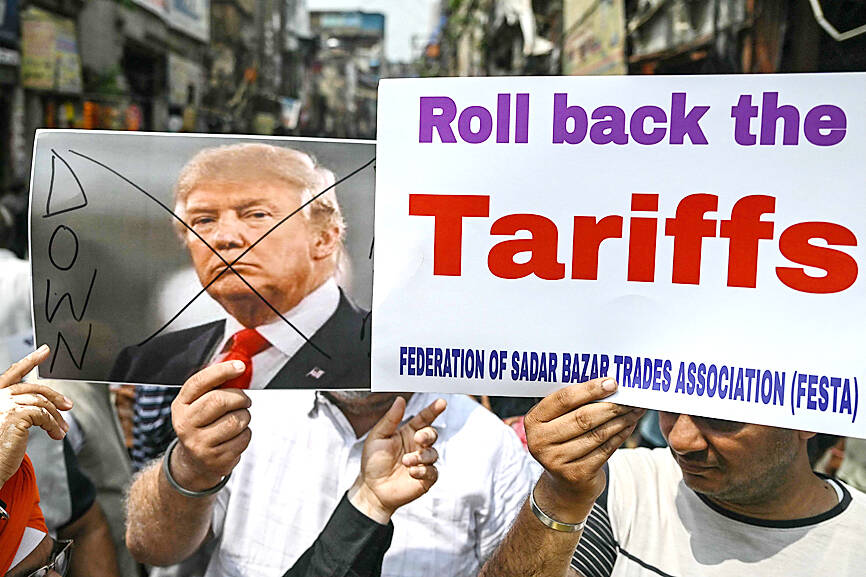
Photo: AFP
The appeals court “incorrectly said that our Tariffs should be removed, but they know the United States of America will win in the end,” he wrote on social media.
He added that he would fight back “with the help of the United States Supreme Court.”
The decision is a blow to Trump, who has wielded duties as a wide-ranging economic policy tool.
It could also cast doubt over deals Trump has struck with major trading partners such as the EU, and raised the question of what would happen to the billions of US dollars collected by the US since the tariffs were put in place if the conservative-majority Supreme Court does not back him.
Friday’s case does not deal with sector-specific tariffs that the Trump administration has also imposed on steel, aluminum, autos and other imports.
Since returning to the presidency in January, Trump has invoked the International Emergency Economic Powers Act (IEEPA) to impose tariffs on almost all US trading partners, with a 10 percent baseline level and higher rates for dozens of economies.
He has invoked similar authorities to slap separate tariffs on Mexico, Canada and China over the flow of deadly drugs into the US.
The Court of International Trade in May ruled that Trump overstepped his authority with across-the-board global levies, blocking most of the duties from taking effect, but the appeals court later put the ruling on hold to consider the case.
Friday’s ruling said that “the statute bestows significant authority on the President to undertake a number of actions in response to a declared national emergency, but none of these actions explicitly include the power to impose tariffs, duties, or the like, or the power to tax.”
It added that it was not addressing if Trump’s actions should have been taken as a matter of policy or deciding whether IEEPA authorizes any tariffs at all.
Instead, it sought to resolve the question of whether Trump’s tariffs and those imposed over trafficking were authorized, with the document saying: “We conclude they are not.”
In a supplementary filing just hours before the appeals court released its decision, Trump Cabinet officials said that ruling the global tariffs illegal and blocking them would hurt US foreign policy and national security.
“Such a ruling would threaten broader US strategic interests at home and abroad, likely lead to retaliation and the unwinding of agreed-upon deals by foreign-trading partners,” US Secretary of Commerce Howard Lutnick said.
They could also “derail critical ongoing negotiations” with partners, he added.
US Secretary of the Treasury Scott Bessent said that suspending the effectiveness of tariffs “would lead to dangerous diplomatic embarrassment.”
Several legal challenges have been filed against the tariffs Trump invoked citing emergencies.
If these tariffs are ultimately ruled illegal, companies could possibly seek reimbursements.
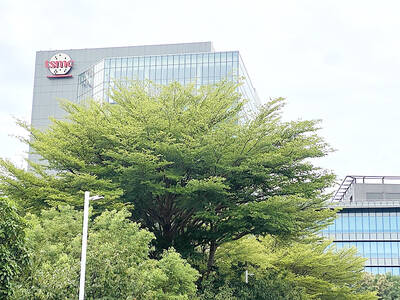
Taiwan Semiconductor Manufacturing Co (TSMC, 台積電) is expected to start construction of its 1.4-nanometer chip manufacturing facilities at the Central Taiwan Science Park (CTSP, 中部科學園區) as early as October, the Chinese-language Liberty Times (the Taipei Times’ sister newspaper) reported yesterday, citing the park administration. TSMC acquired land for the second phase of the park’s expansion in Taichung in June. Large cement, construction and facility engineering companies in central Taiwan have reportedly been receiving bids for TSMC-related projects, the report said. Supply-chain firms estimated that the business opportunities for engineering, equipment and materials supply, and back-end packaging and testing could reach as high as

CHAMPIONS: President Lai congratulated the players’ outstanding performance, cheering them for marking a new milestone in the nation’s baseball history Taiwan on Sunday won their first Little League Baseball World Series (LLBWS) title in 29 years, as Taipei’s Dong Yuan Elementary School defeated a team from Las Vegas 7-0 in the championship game in South Williamsport, Pennsylvania. It was Taiwan’s first championship in the annual tournament since 1996, ending a nearly three-decade drought. “It has been a very long time ... and we finally made it,” Taiwan manager Lai Min-nan (賴敏男) said after the game. Lai said he last managed a Dong Yuan team in at the South Williamsport in 2015, when they were eliminated after four games. “There is
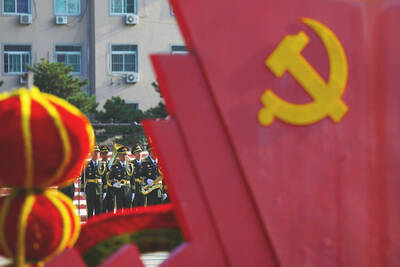
Democratic nations should refrain from attending China’s upcoming large-scale military parade, which Beijing could use to sow discord among democracies, Mainland Affairs Council Deputy Minister Shen You-chung (沈有忠) said. China is scheduled to stage the parade on Wednesday next week to mark the 80th anniversary of Japan’s surrender in World War II. The event is expected to mobilize tens of thousands of participants and prominently showcase China’s military hardware. Speaking at a symposium in Taichung on Thursday, Shen said that Chinese Minister of Foreign Affairs Wang Yi (王毅) recently met with Indian Prime Minister Narendra Modi during a visit to New Delhi.
FINANCES: The KMT plan to halt pension cuts could bankrupt the pension fund years earlier, undermining intergenerational fairness, a Ministry of Civil Service report said The Chinese Nationalist Party (KMT) caucus’ proposal to amend the law to halt pension cuts for civil servants, teachers and military personnel could accelerate the depletion of the Public Service Pension Fund by four to five years, a Ministry of Civil Service report said. Legislative Speaker Han Kuo-yu (韓國瑜) on Aug. 14 said that the Act Governing Civil Servants’ Retirement, Discharge and Pensions (公務人員退休資遣撫卹法) should be amended, adding that changes could begin as soon as after Saturday’s recall and referendum. In a written report to the Legislative Yuan, the ministry said that the fund already faces a severe imbalance between revenue


 RSS
RSS