


Minister of Economic Affairs J.W. Kuo (郭智輝) yesterday said that if domestic fuel costs rise 10 percent due to a potential closure of the Strait of Hormuz amid rising Middle East tensions, it could push up the nation’s consumer price index (CPI) by 0.3 percentage points.
Imported crude oil and natural gas shipped to Taiwan via the Strait of Hormuz account for less than 20 percent of total imports, Kuo told a meeting of the legislature’s Economics Committee in Taipei.
However, if the vital waterway were blocked, ships would need to reroute, potentially delaying deliveries, and driving up international oil prices and domestic fuel costs, he said.
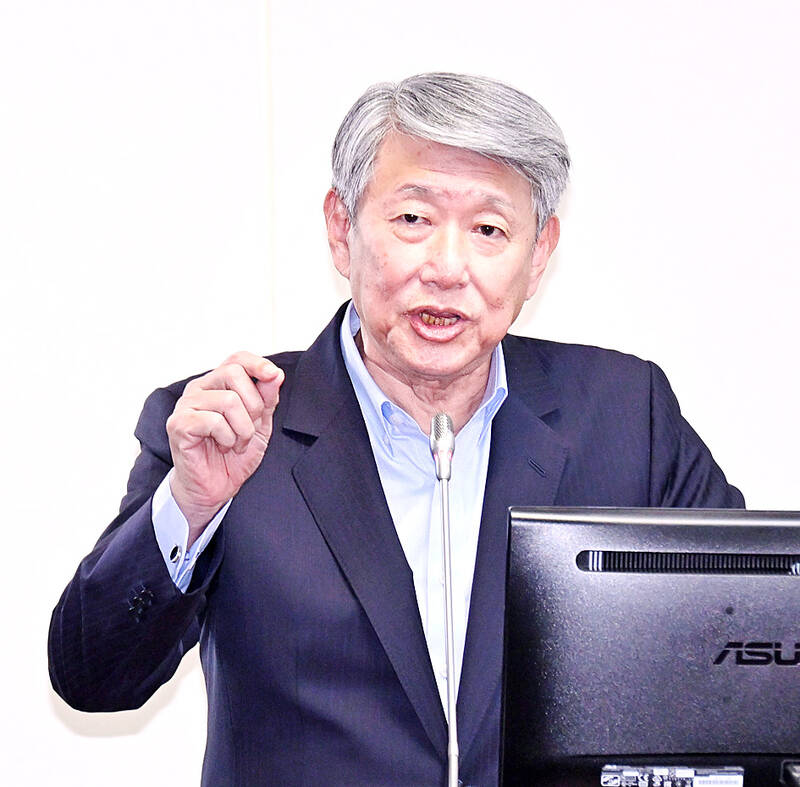
Photo: Fang Pin-chao, Taipei Times
The minister’s remarks came after Iran’s parliament yesterday approved a measure backing the closure of the Strait of Hormuz after US airstrikes on Tehran’s nuclear facilities.
Kuo said the ministry has been closely monitoring the situation in the Middle East since last week and has countermeasures ready should crude oil prices rise to US$100, US$120 or even US$140 per barrel, from about US$80 per barrel.
The ministry has developed a calculation module that would handle the situation cautiously if Iran were to close the waterway, Kuo said.
Asked by KMT Legislator Cheng Cheng-chien (鄭正鈐) about the impact of rising oil prices on the CPI, Kuo said that a 10 percent increase in oil prices would raise the CPI by 0.3 percentage points, while a 1 percent rise in electricity prices would lift the CPI by about 0.027 points.
Nevertheless, Kuo said he believes the Executive Yuan would maintain the existing mechanism to keep domestic fuel prices the lowest among neighboring Asian nations.
State-run CPC Corp, Taiwan (台灣中油) yesterday said that amid rising geopolitical tensions in the Middle East, it has adopted a risk diversification strategy by sourcing crude oil and liquefied natural gas from multiple nations, while its fuel reserves meet regulatory safety requirements and can ensure stable domestic supply.
The company would closely monitor developments in the Middle East and follow government policies to stabilize prices amid fluctuations in global oil and gas prices, CPC said in a statement.
Imported crude oil from the Middle East accounted for 39 percent of CPC’s total oil imports last year, mainly from Saudi Arabia and the United Arab Emirates, with shipments loaded and departing from the Persian Gulf, a CPC official told the Taipei Times by telephone on condition of anonymity.
About 25 percent of CPC’s imported natural gas came from Qatar, with both oil and gas shipments inevitably passing through the Strait of Hormuz, the official said.
To cope with the latest developments in the Middle East, CPC plans to procure oil and gasoline from other regions in the short term, adjust its refined oil export plans based on the situation and ask its liquefied natural gas suppliers to boost supply, the company said.
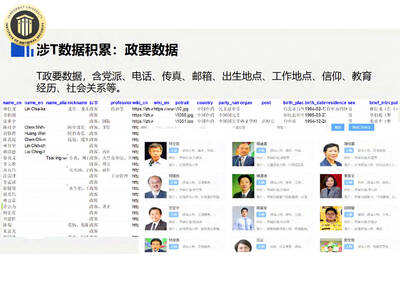
NETWORK-MAPPING PROJECT: The database contains 170 detailed files of Taiwanese politicians and about 23 million records of household registration data in Taiwan China has developed a network-mapping project targeting political figures and parties in Taiwan to monitor public opinion during elections and to craft tailored influence campaigns aimed at dividing Taiwanese society, according to documents leaked by Chinese technology firm GoLaxy (中科天璣). The documents, collected by Taipei-based Doublethink Lab, showed a database was specifically created to gather detailed information on Taiwanese political figures, including their political affiliations, job histories, birthplaces, residences, education, religion and a brief biography about them. Several notable Taiwanese politicians are in the database, including President William Lai (賴清德), former president Tsai Ing-wen (蔡英文), Minister of Foreign Affairs Lin Chia-lung (林佳龍),
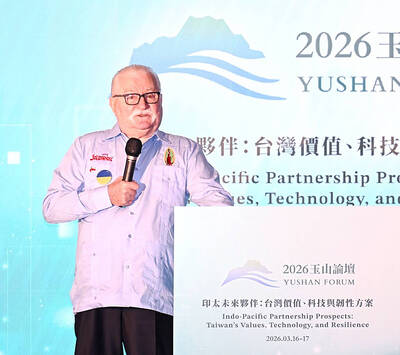
RECOGNITION: Former Fijian prime minister Mahendra Chaudhry said that Taiwan’s New Southbound Policy serves as a stabilizing force in the Indo-Pacific region Taiwan can lead the unification of the Chinese people, Nobel Peace Prize laureate and former Polish president Lech Walesa said in Taipei yesterday, adding that as the world order is changing, peaceful discussion would find good solutions, and that the use of force and coercion would always fail. Walesa made the remarks during his keynote address at a luncheon of the Yushan Forum in Taipei, titled “Indo-Pacific Partnership Prospects: Taiwan’s Values, Technology and Resilience,” organized by the Taiwan-Asia Exchange Foundation with the Ministry of Foreign Affairs. Walesa said that he had been at the forefront of a big peaceful revolution and “if
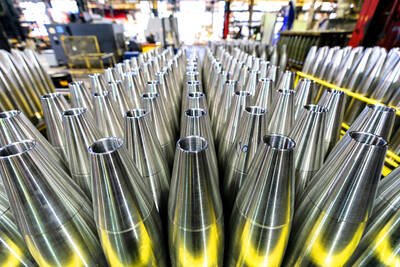
UPGRADED MISSILE: The Chungshan Institute of Science and Technology is reportedly to conduct a live-fire test of the Hsiung Feng III anti-ship missile on Thursday next week The US Army is planning to build new facilities to boost explosives production and strengthen its supply chain, a move aimed at addressing munitions shortages and supporting obligations to partners including Taiwan, Ukraine and Israel, Defense News reported. The army has issued a sources sought notice for a proposed Center of Excellence at the Blue Grass Army Depot in Kentucky, the report said. The facility would serve as a hub within the US industrial base for the production of key military explosives, including research department explosives (RDX) and high melting explosives (HMX), while also supporting research and development of next-generation materials. The proposed
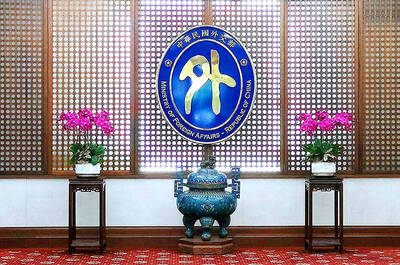
SOUTH KOREA DISPUTE: If Seoul continues to ignore its request, Taiwan would change South Korea’s designation on its arrival cards, the foreign ministry said If South Korea does not reply appropriately to a request to correct Taiwan’s name on its e-Arrival card system before March 31, the government would take corresponding measures to change how South Korea is labeled on the online Taiwan Arrival Card system, the Ministry of Foreign Affairs said yesterday. South Korea’s e-Arrival card system lists Taiwan as “China (Taiwan)” in the “point of departure” and “next destination” fields. Taipei has asked Seoul to change the wording. Since March 1, South Koreans who hold government-issued Alien Resident Certificates (ARC) have been identified as from “South Korea” rather than the “Republic of Korea,” the


 RSS
RSS