


Starting this year, June 15 is to be observed as Police Day, with all police agencies and academies granted the day off, the Ministry of the Interior announced yesterday.
The move follows the Legislative Yuan’s passage last month of amendments to the Act on Implementing Memorial Days and State Holidays (紀念日及節日實施辦法), which designated several new national holidays.
These include Confucius’ birthday on Sept. 28, the anniversary of the Battle of Guningtou on Oct. 25, Constitution Day on Dec. 25, and Little New Year — the day before Lunar New Year’s Eve.
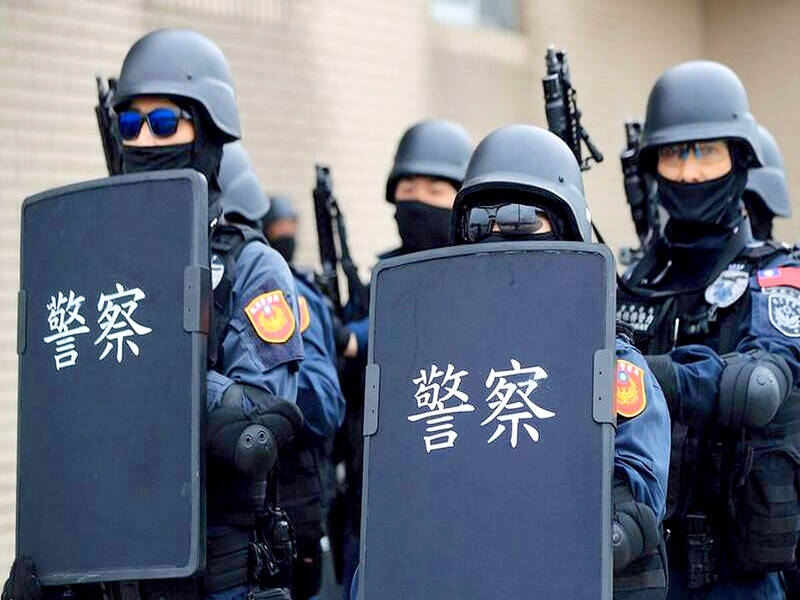
Photo: Taipei Times
The amendments also stipulated that Firefighters’ Day on Jan. 19 and Police Day on June 15 are to be recognized as holidays in accordance with regulations.
The holiday is to commend police officers for their hard work in fighting crime on the front lines and protecting the public 365 days a year, the ministry said.
It expressed hope that the holiday would help boost morale among active-duty officers and trainees, it said.
Faculty and students at Central Police University and Taiwan Police College would also have the day off, National Police Agency Director Hsu Shu-chen (許淑貞) told the Chinese-language Liberty Times (sister paper of the Taipei Times).
Standard police operations would continue as normal to ensure that public safety would be maintained, the ministry said, adding that the public can remain at ease.
Police agencies and academies may adjust leave arrangements for personnel based on factors such as local conditions, security considerations and operational needs, it said.
The aim is to enhance the capacity of police forces to safeguard national security and stability, it added.
Similar leave arrangements apply to other public service professions: The Ministry of National Defense grants service members a day off on Sept. 3 for Armed Forces Day, the Coast Guard Administration observes Coast Guard Day on Nov. 8 and civil servants mark Workers’ Day on May 1.

President William Lai (賴清德) yesterday criticized the nuclear energy referendum scheduled for Saturday next week, saying that holding the plebiscite before the government can conduct safety evaluations is a denial of the public’s right to make informed decisions. Lai, who is also the chairman of the Democratic Progressive Party (DPP), made the comments at the party’s Central Standing Committee meeting at its headquarters in Taipei. ‘NO’ “I will go to the ballot box on Saturday next week to cast a ‘no’ vote, as we all should do,” he said as he called on the public to reject the proposition to reactivate the decommissioned
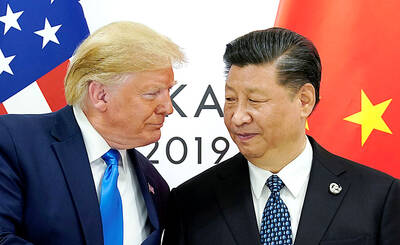
US President Donald Trump on Friday said that Chinese President Xi Jinping (習近平) told him China would not invade Taiwan while Trump is in office. Trump made the remarks in an interview with Fox News, ahead of talks with Russian President Vladimir Putin over Moscow’s invasion of Ukraine. “I will tell you, you know, you have a very similar thing with President Xi of China and Taiwan, but I don’t believe there’s any way it’s going to happen as long as I’m here. We’ll see,” Trump said during an interview on Fox News’ Special Report. “He told me: ‘I will never do
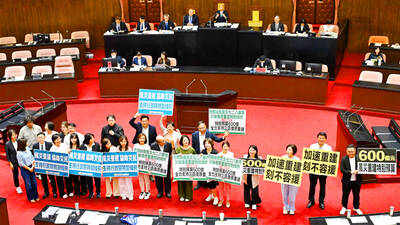
The Legislative Yuan yesterday approved an aid and recovery package authorizing the government to allocate up to NT$60 billion (US$1.99 billion) for regions hit by Typhoon Danas and subsequent torrential rains last month. Proposed by the Executive Yuan on Aug. 7, the bill was passed swiftly after ruling and opposition lawmakers reached a consensus in inter-party talks on relief funding and assistance for disaster-stricken areas. The package increases the government’s spending cap from the originally proposed NT$56 billion to NT$60 billion, earmarked for repairing and rebuilding infrastructure, electricity systems, telecommunications and cable TV networks, cultural heritage sites and other public facilities.
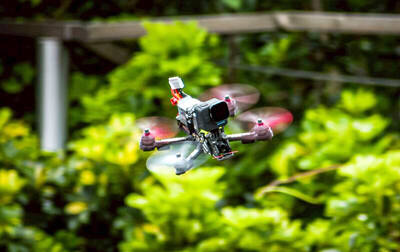
FLEXIBLE FORCE: Only about 10 percent of small drones reach their target, an expert said, which is why it is important to make it easier to procure large numbers of drones The military is planning to recategorize military drones as “consumables/munitions,” rather than as aircraft, to speed up the procurement process, the army said yesterday. The Army Command Headquarters said the decision was made because drones, like munitions, need to be rapidly replaced, and thus should be categorized as consumables/munitions “to meet the army’s practical needs.” The headquarters’ confirmation came after the Chinese-language Liberty Times (the Taipei Times’ sister paper) early yesterday reported that the army was about to make the classification change based on the example of the US, which is Taiwan’s biggest arms provider. US Secretary of Defense Pete Hegseth announced a


 RSS
RSS