


Five senior members of Hong Kong’s Democratic Party, the territory’s biggest and last remaining major opposition party, said that Chinese officials or intermediaries have warned the party to disband or face serious consequences, including possible arrests.
The Democratic Party, which was founded in 1994 in the years before Hong Kong’s historic return from British to Chinese rule, has over the past few decades been the flagship opposition party that has united the territory’s democratic forces to push Beijing on democratic reforms and to uphold its freedoms.
Amid a years-long national security crackdown by China after pro-democracy protests in 2019, the Democratic Party is to hold an extraordinary general meeting tomorrow to seek members’ views and possibly pave the way for the group’s dissolution.
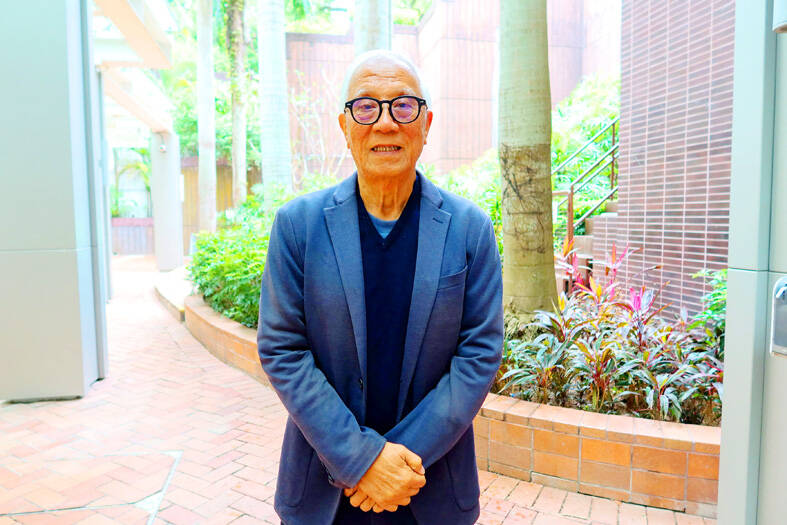
Photo: Reuters
Party Chairman Lo Kin-hei (羅健熙) has not given a concrete reason for the likely disbandment, but five senior Democratic Party members told Reuters they had been told in meetings with Chinese officials or people linked to Beijing in recent months that the party should close.
Fred Li (李華明), a veteran party member and former lawmaker, said a Chinese official had told him this should be done before the legislative elections in December.
“The meaning is that we should be gone by then,” Li said. “The message was very direct.”
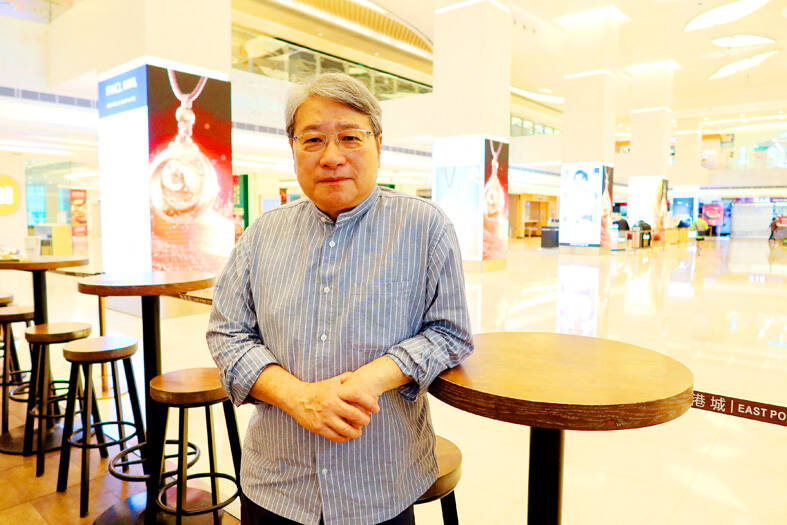
Photo: Reuters
Li declined to identify the person, but said the tone was very different from frequent exchanges he has had with Chinese officials over many years.
There were no immediate responses to requests for comment from the Hong Kong Liaison Office, China’s main representative body in Hong Kong, or from the Hong Kong government.
Four other senior Democratic Party members also said they had been warned in recent months by middlemen linked to Beijing, some of whom said the party would face “serious consequences” if it did not disband. Three declined to be identified given the sensitivity of the matter.
Yeung Sum (楊森), one of the party’s founding members, said Beijing’s move in 2021 to overhaul Hong Kong’s electoral system to only allow “patriots” to run for public office had effectively marginalized the party by removing it from mainstream politics.
The party now holds no seats in Hong Kong’s legislature.
“We just keep a voice of advocacy for the people of Hong Kong on social and political issues, but still we are under pressure,” said Yeung, who was also approached by a middleman.
Two Asian and two Western diplomats say they are aware of the veiled threats to the Democratic Party.
“For a long time it seemed like Beijing could live with the situation of having the party around as a figment of opposition,” said one Western envoy.
“It seems they are leaving nothing to chance. The message is it is time to close down once and for all,” said the diplomat, who was not authorized to speak publicly.

SILENCING CRITICS: In addition to blocking Taiwan, China aimed to prevent rights activists from speaking out against authoritarian states, a Cabinet department said The Ministry of Foreign Affairs (MOFA) yesterday condemned transnational repression by Beijing after RightsCon, a major digital human rights conference scheduled to be held in Zambia this week, was abruptly canceled due to Chinese pressure over Taiwanese participation. This year’s RightsCon, the world’s largest conference discussing issues “at the intersection of human rights and technology,” was scheduled to take place from tomorrow to Friday in Lusaka, and expected to draw 2,600 in-person attendees from 150 countries, along with 1,100 online participants. However, organizers were forced to cancel the event due to behind-the-scenes pressure from China, the ministry said, expressing its “strongest condemnation”
Taiwan’s economy grew far faster than expected in the first quarter, as booming demand for artificial intelligence (AI) applications drove a surge in exports, spilling over into investment and consumption, the Directorate-General of Budget, Accounting and Statistics (DGBAS) said yesterday. GDP growth was 13.69 percent year-on-year during the January-to-March period, beating the DGBAS’ February forecast by 2.23 percentage points and marking the most robust growth in nearly four decades, DGBAS senior official Chiang Hsin-yi (江心怡) told a news conference in Taipei. The result was powered by exports, which remain the backbone of Taiwan’s economy, Chiang said. Outbound shipments jumped 51.12 percent year-on-year to
DELAYED BUT DETERMINED: The president’s visit highlights Taiwan’s right to international engagement amid regional pressure from China President Willaim Lai (賴清德) yesterday arrived in Eswatini, more than a week after his planned visit to Taiwan’s sole African ally was suspended because of revoked overflight permits. “The visit, originally scheduled for April 22, was postponed due to unforeseen external factors,” Lai wrote on social media. “After several days of careful arrangements by our diplomatic and national security teams, we successfully arrived today.” Lai said he looked forward to further deepening Taiwan-Eswatini relations through closer cooperation in the economy, agriculture, culture and education, as well as advancing the nation’s international partnerships. The president was initially scheduled to arrive in time to celebrate
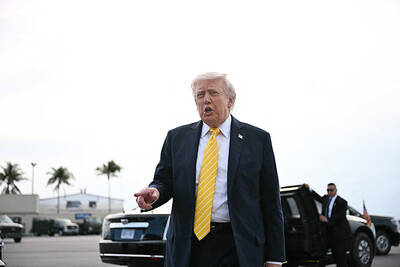
Iran’s Islamic Revolutionary Guard Corp (IRGC) yesterday said the US faced a choice between an “impossible” military operation or a “bad deal” with Tehran, after US President Donald Trump disparaged Iran’s latest peace proposal. Negotiations between the two countries have been deadlocked since a ceasefire came into effect on April 8, with only one round of direct peace talks held so far. Iran’s Tasnim and Fars news agencies reported that Tehran had submitted a 14-point proposal to mediator Pakistan, but Trump was quick to cast doubt on it. “I will soon be reviewing the plan that Iran has just sent to us, but


 RSS
RSS