


A 30-year-old Hong Kong political party that used to lead the territory’s pro-democracy camp before Beijing cracked down on dissent is starting preparations to shut down, its leader said on Thursday.
“We are going to proceed and study on the process and procedure that is needed for the disbanding,” Democratic Party chairman Lo Kin-hei (羅健熙) said.
Lo said the final decision to dissolve the party must be left to a members’ vote, without saying when that would take place.
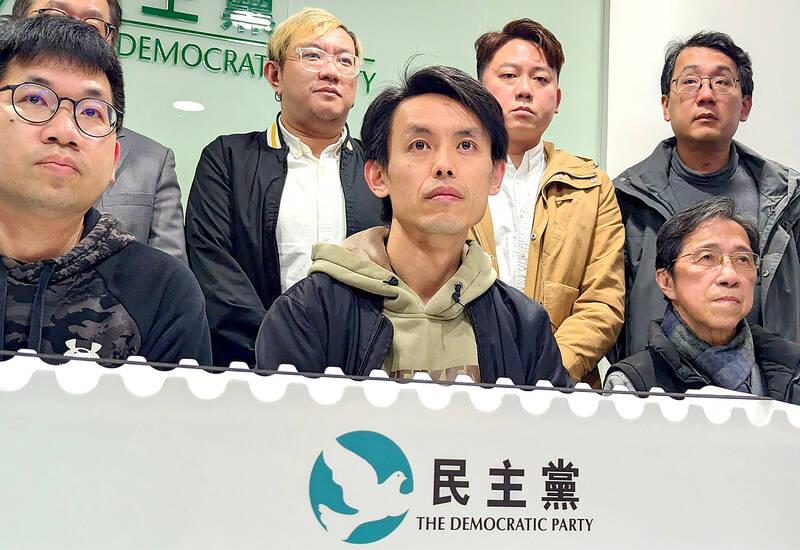
Photo: AFP
“We considered the overall political environment in Hong Kong and all those future plans that we can foresee, and that is the decision that we make,” Lo told reporters.
The Democratic Party was founded in 1994, near the end of British colonial rule, when Hong Kong’s leading liberal groups merged.
Early leaders of the Democratic Party played a key role in shaping the “one country, two systems” formula, a constitutional arrangement that promised Hong Kong a high degree of autonomy and rights protections.
After the territory was handed over to China in 1997, the party became the most influential voice of opposition in the Hong Kong Legislative Council and led peaceful street demonstrations, but the party’s fortunes declined after Beijing tightened its grip and imposed a national security law, following huge and often violent pro-democracy protests in 2019.
“Developing democracy in Hong Kong is always difficult,” Lo said on Thursday. “We see a lot of civil society groups or political parties disbanding.”
Asked whether the party had been pressured by Beijing to fold, Lo said he would not disclose details of internal discussions.
Four of the party’s former lawmakers — including former Democratic Party chairman Wu Chi-wai (胡志偉) — are serving prison sentences after being found guilty of subversion under the national security law last year.
The party no longer holds any legislative seats after Hong Kong revamped its electoral system in 2021 to ensure only “patriots” can take office.
A three-person task force that includes Lo is to study the legal and accounting rules on party dissolution.
The party has 400 members and is not experiencing acute financial stress, Lo said.
A vote to dissolve the party would require the support of 75 percent of meeting participants.
Lo said he hoped Hong Kong can return to values such as “diversity, inclusion and democracy” that underpinned its past success.
Well-known figures from the party include Martin Lee (李柱銘) — hailed by some as Hong Kong’s “Father of Democracy” — as well as Albert Ho (何俊仁), who organized annual vigils to mark the 1989 Tiananmen Square crackdown.
Hong Kong’s second-largest opposition group, the Civic Party, dissolved in 2023.
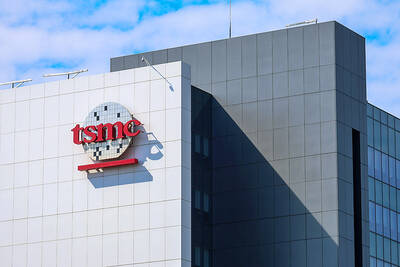
Taiwan Semiconductor Manufacturing Co (TSMC, 台積電), the world’s largest foundry service provider, yesterday said that global semiconductor revenue is projected to hit US$1.5 trillion in 2030, after the figure exceeds US$1 trillion this year, as artificial intelligence (AI) demand boosts consumption of token and compute power. “We are still at the beginning of the AI revolution, but we already see a significant impact across the whole semiconductor ecosystem,” TSMC deputy cochief operating officer Kevin Zhang (張曉強) said at the company’s annual technology symposium in Hsinchu City. “It is fair to say that in the past decade, smartphones and other mobile devices were
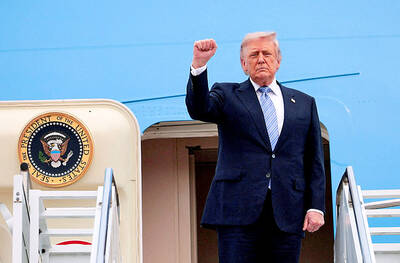
US-CHINA SUMMIT: MOFA welcomed US reassurance of no change in its Taiwan policy; Trump said he did not comment when Xi talked of opposing independence US President Donald Trump yesterday said he has not made a decision on whether to move forward with a major arms package for Taiwan after hearing concerns about it from Chinese President Xi Jinping (習近平). Trump’s comments on Taiwan came as he flew back to Washington after wrapping up critical talks in which both leaders said important progress was made in stabilizing US-China relations even as deep differences persist between the world’s two biggest powers on Iran and Taiwan. “I will make a determination,” Trump said, adding: “I’ll be making decisions. But, you know, I think the last thing we need right

TAIWAN ISSUE: US treasury secretary Scott Bessent said on the first day of meetings that ‘it wouldn’t be a US-China summit without the Taiwan issue coming up’ There were no surprises on the first day of the summit between US President Donald Trump and Chinese President Xi Jinping (習近平), the Mainland Affairs Council (MAC) said yesterday, as the government reiterated that cross-strait stability is crucial to the Asia-Pacific region, as well as the world. As the two presidents met for a highly anticipated summit yesterday, Chinese state media reported that Xi warned Trump that missteps regarding Taiwan could push their two countries into “conflict.” Trump arrived in China with accolades for his host, calling Xi a “great leader” and “friend,” and extending an invitation to visit the White House
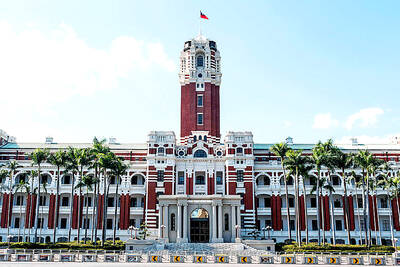
SECURITY: Taipei presses the US for arms supplies, saying the arms sales are not only a reflection of the US security commitment to Taiwan but also serve as a mutual deterrent against regional threats Taiwan is committed to preserving the cross-strait “status quo” and contributing to regional peace and stability, the Presidential Office said yesterday. “It is an undeniable fact that the Republic of China is a sovereign and independent democratic nation,” Presidential Office spokeswoman Karen Kuo (郭雅慧) reiterated, adding that Beijing has no right to claim sovereignty over Taiwan. The statements came after US President Donald Trump warned against Taiwanese independence. Trump wrapped up a state visit to Beijing on Friday, during which Chinese President Xi Jinping (習近平) had pressed him not to support Taiwan. Taiwan depends heavily on US security backing to deter China from carrying


 RSS
RSS