


Opposition lawmakers yesterday voted against the Executive Yuan’s request to reconsider amendments to the Constitutional Court Procedure Act (憲法訴訟法), an expected outcome that thwarted the executive branch’s bid to overturn the bill.
In a revote yesterday, lawmakers from the Chinese Nationalist Party (KMT) and the Taiwan People’s Party (TPP), who together form a majority in the legislature, again endorsed the new measures they pushed through last month.
The vote in the 113-seat legislature was 62-51 along partisan lines, with two independents joining the opposition parties.
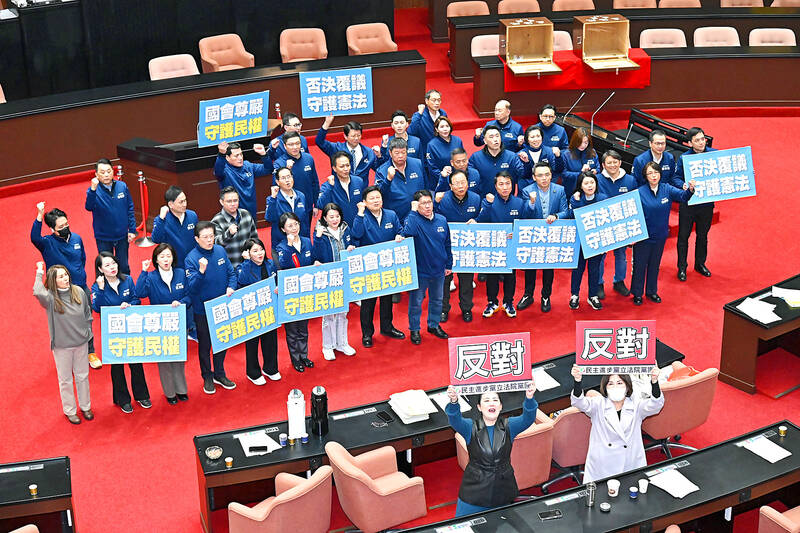
Photo: Tu Chien-jung, Taipei Times
The amendments mandate that a minimum of 10 Constitutional Court justices hear and rule on a case, and require that a ruling of unconstitutionality be supported by at least nine justices.
Currently, the Constitutional Court does not set a quorum for reviewing cases and allows rulings to be made by a simple majority vote.
Lawmakers yesterday debated the veto without inviting Premier Cho Jung-tai (卓榮泰) to the proceedings before holding an open ballot to decide if it was to be overridden.
Democratic Progressive Party (DPP) caucus secretary-general Tsai Yi-yu (蔡易餘) said that Taiwan must have a functioning Constitutional Court to preserve the public’s right to protect themselves through legal remedies.
The amendments would require the Constitutional Court to have a quorum of 10 judges to hear a case and a supermajority of nine to rule against the constitutionality of a law or measure, Tsai said.
That would render the court virtually useless and contravene the powers the Constitution invested in the judiciary, he added.
KMT Legislator Lo Chih-chiang (羅智強) said that the DPP should stop opposing the amendments because a KMT-commissioned poll showed 56.7 percent of respondents were in favor of the changes.
TPP Legislator Vivian Huang (黃珊珊) said that a few Constitutional Court judges should not be allowed to decide the nation’s future and that the legislature was well within its rights to change the quorum.
In response to the vote outcome, Cabinet spokeswoman Michelle Lee (李慧芝) said later yesterday that the Executive Yuan would consider its next steps toward safeguarding the constitutional order after the legislature completes its vote on overriding the veto.
DPP caucus chief executive Rosalia Wu (吳思瑤) said that her caucus is prepared to fight the amendments by measures up to and including asking the Constitutional Court to rule on their constitutionality.
Presidential Office spokeswoman Karen Kuo (郭雅慧) said that President William Lai (賴清德) respects the decisions of the Executive Yuan and the DPP caucus, and would consider every legal recourse in defense of the nation’s democratic constitutional order.
The court has only eight justices — all appointed by the DPP — after seven completed their terms in October last year.
How any legal battle involving the Constitutional Court could proceed remains unclear.
Under normal procedures, the amendments would have to take effect — which would require them to be signed into law by the president — before the Constitutional Court could rule on their constitutionality.
However, if they have taken effect, the eight justices would not meet the threshold set and could not rule on the case.
The government could try again to add justices to the court.
Lai previously nominated seven candidates to replace the seven members whose terms ended on Oct. 31 last year, but all of them were rejected by the legislature last month.
Lai has yet to name new nominees.
Additional reporting by AFP, Chung Li-hua and Su Yung-yao
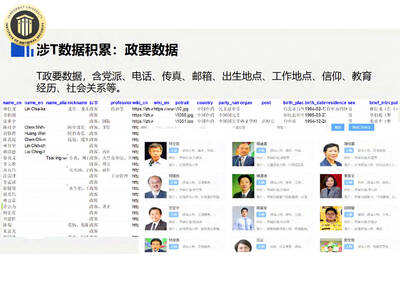
NETWORK-MAPPING PROJECT: The database contains 170 detailed files of Taiwanese politicians and about 23 million records of household registration data in Taiwan China has developed a network-mapping project targeting political figures and parties in Taiwan to monitor public opinion during elections and to craft tailored influence campaigns aimed at dividing Taiwanese society, according to documents leaked by Chinese technology firm GoLaxy (中科天璣). The documents, collected by Taipei-based Doublethink Lab, showed a database was specifically created to gather detailed information on Taiwanese political figures, including their political affiliations, job histories, birthplaces, residences, education, religion and a brief biography about them. Several notable Taiwanese politicians are in the database, including President William Lai (賴清德), former president Tsai Ing-wen (蔡英文), Minister of Foreign Affairs Lin Chia-lung (林佳龍),

KEY INDUSTRY: The vice premier discussed a plan to create a non-red drone supply chain by next year, which has been allocated a budget of more than NT$7.2 billion The government has budgeted NT$44.2 billion (US$1.38 billion) to cultivate Taiwan’s uncrewed aerial vehicle (UAV) industry over the next five years, which would make the nation a major player in the industry’s democratic supply chain in the Asia-Pacific region, Premier Cho Jung-tai (卓榮泰) said yesterday. Cho made the remarks during a visit to the facilities of Cub Elecparts Inc (為升電裝). Democratic Progressive Party (DPP) Legislator Chen Su-yueh (陳素月) and Chinese Nationalist Party (KMT) Legislator Hsieh Yi-fong (謝依鳳) also participated in the trip. Cub Elecparts has transitioned from the automotive industry to the defense industry, which is the top priority among the nation’s

UPGRADED MISSILE: The Chungshan Institute of Science and Technology is reportedly to conduct a live-fire test of the Hsiung Feng III anti-ship missile on Thursday next week The US Army is planning to build new facilities to boost explosives production and strengthen its supply chain, a move aimed at addressing munitions shortages and supporting obligations to partners including Taiwan, Ukraine and Israel, Defense News reported. The army has issued a sources sought notice for a proposed Center of Excellence at the Blue Grass Army Depot in Kentucky, the report said. The facility would serve as a hub within the US industrial base for the production of key military explosives, including research department explosives (RDX) and high melting explosives (HMX), while also supporting research and development of next-generation materials. The proposed
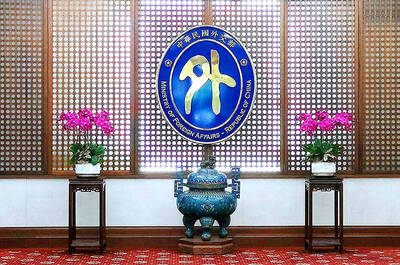
SOUTH KOREA DISPUTE: If Seoul continues to ignore its request, Taiwan would change South Korea’s designation on its arrival cards, the foreign ministry said If South Korea does not reply appropriately to a request to correct Taiwan’s name on its e-Arrival card system before March 31, the government would take corresponding measures to change how South Korea is labeled on the online Taiwan Arrival Card system, the Ministry of Foreign Affairs said yesterday. South Korea’s e-Arrival card system lists Taiwan as “China (Taiwan)” in the “point of departure” and “next destination” fields. Taipei has asked Seoul to change the wording. Since March 1, South Koreans who hold government-issued Alien Resident Certificates (ARC) have been identified as from “South Korea” rather than the “Republic of Korea,” the


 RSS
RSS