


North Korean leader Kim Jong-un vowed his country would “invariably support” Russia’s war in Ukraine as he met Russia’s defense chief, the North’s state media reported yesterday.
A Russian military delegation led by Russian Minister of Defense Andrei Belousov arrived in North Korea on Friday, amid growing international concern about the two countries’ expanding cooperation after North Korea sent thousands of troops to Russia last month.
The official Korean Central News Agency (KCNA) said that Kim and Belousov reached “a satisfactory consensus” on boosting strategic partnership and defending each country’s sovereignty, security interests and international justice in the face of the rapidly changing international security environments in a Friday meeting.
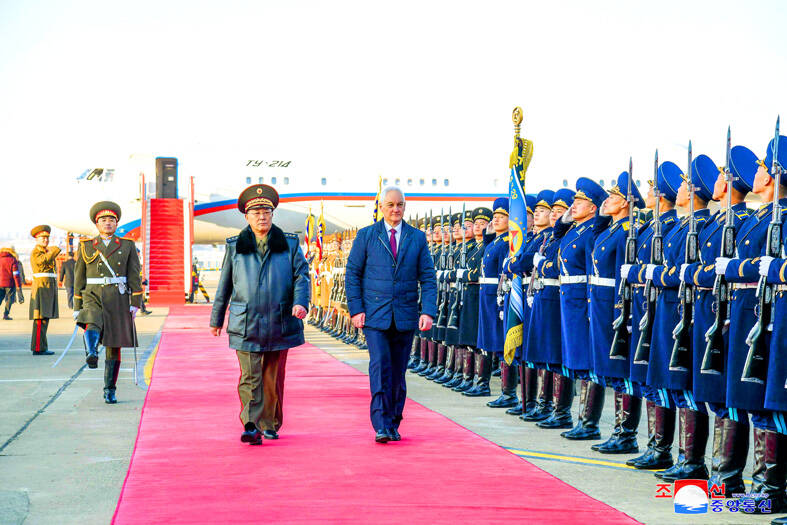
Photo: AFP
Kim said that North Korea “will invariably support the policy of the Russian Federation to defend its sovereignty and territorial integrity from the imperialists’ moves for hegemony,” KCNA said.
“It is an exercise of the right to self-defense for Russia to take resolute action to make the hostile forces pay the price,” Kim was quoted as saying.
Kim slammed a US decision last month to let Ukraine strike targets inside Russia with US-supplied longer-range missiles as a direct intervention in the conflict.
He called recent Russian strikes on Ukraine “a timely and effective measure” to demonstrate Russia’s resolve, the news agency said.
According to US, Ukrainian and South Korean assessments, North Korea has sent more than 10,000 troops to Russia and some of them have already begun engaging in combat on the frontlines.
North Korea and Russia have not formally confirmed the North Korean troops’ movements, and have steadfastly denied reports of weapons shipments.
South Korea, the US and their partners are concerned that Russia could give North Korea advanced weapons technology in return, including help to build more powerful nuclear missiles.
Last week, South Korean national security adviser Shin Won-sik told a local TV program that Seoul assessed that Russia has provided air defense missile systems to North Korea.
He said Russia also appeared to have given economic assistance to North Korea and various military technologies, including those needed for the North’s efforts to build a reliable space-based surveillance system.
In June, Kim and Russian President Vladimir Putin signed a treaty requiring both countries to provide immediate military assistance if either is attacked.
It is considered the two countries’ biggest defense deal since the end of the Cold War.

The Tourism Administration yesterday announced that it would reward repeat international visitors with incentives of up to NT$8,000 to boost inbound tourism. The incentives are available to all international tourists, it said, adding that repeat visitors would be rewarded with NT$5,000 and would receive an additional NT$3,000 if they bring travel companions. The nation received 2,990,657 inbound visitors during the first quarter, marking a 3.8 percent increase from the same period last year, agency data showed. Japanese nationals are among groups visiting Taiwan the most. About 1.48 million Japanese tourists arrived last year, a year-on-year increase of more than 12
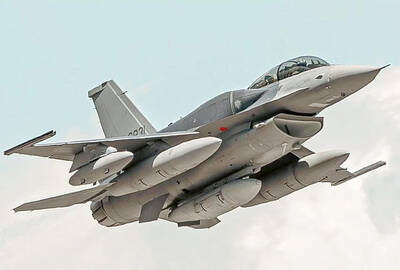
66 FIGHTER JETS: The aircraft is likely undergoing preparations for its transfer to Taiwan — a significant step forward in the nation’s modernization program, a lawmaker said The first of Taiwan’s order of F-16V Block 70 aircraft has been sighted in Texas ahead of delivery, Democratic Progressive Party (DPP) Legislator Wang Ting-yu (王定宇) said. Taiwan’s first F-16V Block 70 two-seat aircraft, tail number 6831, was seen flying from Lockheed Martin’s production facility in Greenville, South Carolina, to Naval Air Station Joint Reserve Base Fort Worth in Texas, Wang wrote on Facebook yesterday. The plane is likely undergoing preparations for its transfer to Taiwan, marking a significant step forward in the Republic of China Air Force’s modernization program, Wang said, citing military analysts. The F-16V Block 70 is a new-build version
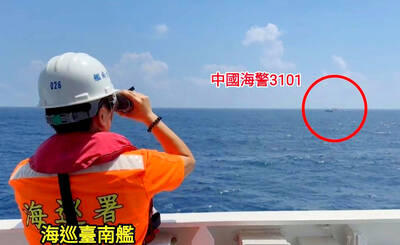
‘BRAZEN’: The holiday did not stop China from activities that infringe on Taiwan’s maritime jurisdiction, but the CGA is ready to defend the nation, Kuan Bi-ling said Beijing is intensifying maritime pressure on Taiwan, but the nation will never yield, Ocean Affairs Council Deputy Minister Sung Chen-en (宋承恩) said. The Coast Guard Administration (CGA) has adopted a “shadowing and monitoring” approach to avoid falling into a Chinese trap to escalate tensions and deepen the conflict, Sung said in an interview published yesterday in the Chinese-language Liberty Times (the Taipei Times’ sister newspaper). China Coast Guard formations patrolling waters east of Taiwan, as well as official Chinese vessels entering areas around Itu Aba Island (Taiping Island, 太平島) and Pratas Islands (Dongsha Islands, 東沙群島) show Beijing’s attempts to significantly step up
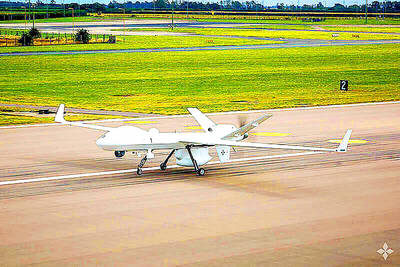
BOOST: By operating the same advanced systems as the US military, Taiwan would be better positioned to share and integrate intelligence with partners, an expert said The first batch of MQ-9B SkyGuardian drones has arrived in Taiwan, and is being assembled and tested by drone manufacturer General Atomics and the military ahead of flight trials as part of the air force’s acquisition to bolster its aerial surveillance capabilities, a source said yesterday. The air force allocated a budget of NT$21.7 billion (US$687 million) from 2022 to 2029 to procure four MQ-9B uncrewed aerial vehicles (UAVs) manufactured by General Atomics along with associated equipment such as ground control stations. The US has agreed to deliver the four MQ-9Bs to Taiwan in two batches this year and next


 RSS
RSS