


Hospital visits for enterovirus infection continued to increase last week and are approaching a 10-year high, the Centers for Disease Control (CDC) said yesterday.
Cases have surpassed the peak of the summer outbreak and are expected to continue to increase until mid-to-late next month, the agency said, advising caregivers to help children practice good hygiene to prevent infection.
There were 26,077 hospital visits for enterovirus infection last week, up 14.8 percent from the previous week, CDC Epidemic Intelligence Center Deputy Director Lee Chia-lin (李佳琳) said.

Photo: Taipei Times
While enterovirus outbreaks usually peak during the summer, recent weekly hospital visits have already surpassed the peak weekly number this summer (20,382) and are nearing the 10-year record of 27,013 visits, she said.
While 46 percent of the cases last week were small children aged four or younger, the ratio of older children falling sick has been increasing in the past few weeks, Lee said.
Children aged five to nine accounted for 38 percent and those aged 10 to 14 made up 10 percent, she said.
CDC Deputy Director-General Philip Lo (羅一鈞) said the 14.8 percent increase in hospital visits last week was higher than previous weeks, so the agency has revised its forecast by pushing back the estimated peak period for the outbreak to mid-or-late next month.
Winter outbreaks of enterovirus are less frequent, with the previous one occurring in 2016 to 2017, he said, adding that an estimated 29,000 to 30,000 hospital visits are projected for the peak week this year, and the winter outbreak might fall below the epidemic threshold (11,000 visits per week) in mid-to-late January.
As coxsackievirus A16 remains the dominant strain, the likely reason behind the rise in the number of cases and infections among older children is because very few were infected during the COVID-19 pandemic, resulting in a decline of herd immunity — so called “immunity debt,” Lo said.
The CDC has asked elementary and junior-high schools to encourage children to practice good hygiene to prevent the spread of the disease, he added.
Meanwhile, 70,718 hospital visits for flu-like illnesses were reported last week, and the accumulated 250 serious flu cases — including 41 deaths, all of whom were unvaccinated — since the start of the season on Oct. 1 are the highest numbers during the same period in a decade, Lee said.
Lo said the average flu vaccination coverage rates this season have reached 40.9 percent for people aged 65 or older and 53.8 percent for pre-elementary-school children.
Keelung has achieved a remarkable 74.2 coverage rate for young children, he added.
Invited to share his strategy, Keelung Department of Health Director Chang Shian-cheng (張賢政) said the city used multiple approaches to promote flu vaccination, including localized TV and radio broadcasts, social media (such as the city’s parent-child care account on Line), digital advertising boards at workplaces and playgrounds, as well as sending customized messages.
The department also encouraged clinics to become contracted flu vaccination sites — 31 percent of the city’s clinics and hospitals administer flu vaccines, including all clinics in the central government’s “Holistic Physicians for Young Children” project, he said.
Nighttime and weekend vaccination stations were also opened to increase accessibility, he said.
Chang encouraged other local health departments to also make good use of their resources and strengths to promote flu vaccination.

Taiwan Semiconductor Manufacturing Co (TSMC, 台積電), the world’s largest foundry service provider, yesterday said that global semiconductor revenue is projected to hit US$1.5 trillion in 2030, after the figure exceeds US$1 trillion this year, as artificial intelligence (AI) demand boosts consumption of token and compute power. “We are still at the beginning of the AI revolution, but we already see a significant impact across the whole semiconductor ecosystem,” TSMC deputy cochief operating officer Kevin Zhang (張曉強) said at the company’s annual technology symposium in Hsinchu City. “It is fair to say that in the past decade, smartphones and other mobile devices were
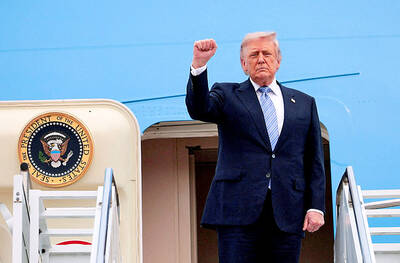
US-CHINA SUMMIT: MOFA welcomed US reassurance of no change in its Taiwan policy; Trump said he did not comment when Xi talked of opposing independence US President Donald Trump yesterday said he has not made a decision on whether to move forward with a major arms package for Taiwan after hearing concerns about it from Chinese President Xi Jinping (習近平). Trump’s comments on Taiwan came as he flew back to Washington after wrapping up critical talks in which both leaders said important progress was made in stabilizing US-China relations even as deep differences persist between the world’s two biggest powers on Iran and Taiwan. “I will make a determination,” Trump said, adding: “I’ll be making decisions. But, you know, I think the last thing we need right

TAIWAN ISSUE: US treasury secretary Scott Bessent said on the first day of meetings that ‘it wouldn’t be a US-China summit without the Taiwan issue coming up’ There were no surprises on the first day of the summit between US President Donald Trump and Chinese President Xi Jinping (習近平), the Mainland Affairs Council (MAC) said yesterday, as the government reiterated that cross-strait stability is crucial to the Asia-Pacific region, as well as the world. As the two presidents met for a highly anticipated summit yesterday, Chinese state media reported that Xi warned Trump that missteps regarding Taiwan could push their two countries into “conflict.” Trump arrived in China with accolades for his host, calling Xi a “great leader” and “friend,” and extending an invitation to visit the White House
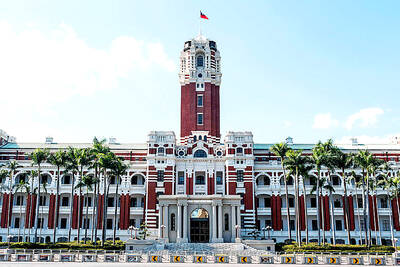
SECURITY: Taipei presses the US for arms supplies, saying the arms sales are not only a reflection of the US security commitment to Taiwan but also serve as a mutual deterrent against regional threats Taiwan is committed to preserving the cross-strait “status quo” and contributing to regional peace and stability, the Presidential Office said yesterday. “It is an undeniable fact that the Republic of China is a sovereign and independent democratic nation,” Presidential Office spokeswoman Karen Kuo (郭雅慧) reiterated, adding that Beijing has no right to claim sovereignty over Taiwan. The statements came after US President Donald Trump warned against Taiwanese independence. Trump wrapped up a state visit to Beijing on Friday, during which Chinese President Xi Jinping (習近平) had pressed him not to support Taiwan. Taiwan depends heavily on US security backing to deter China from carrying


 RSS
RSS